Citizen Portal
Sign In

Laguna Beach planning commission approves facade remodel at 1110 Glenary Street with conditions after weeks of debate

5956700 · October 16, 2025

Loading...

AI-Generated Content: All content on this page was generated by AI to highlight key points from the meeting. For complete details and context, we recommend watching the full video. so we can fix them.

Summary

The Planning Commission conditionally approved design review 23‑1480 to remodel a commercial building at 1110 Glenary Street after months of hearings and a city council remand; commissioners required photo documentation and restrictions on materials, window muntins, guardrail design and paving tone.

The Laguna Beach Planning Commission on Oct. 15 voted 3–1 to approve design review application 23‑1480, a proposed facade remodel and site improvements at 1110 Glenary Street, after a lengthy public hearing in which neighbors, heritage advocates and the applicant debated how much of the site’s distinctive “crazy quilt” brickwork must be retained.

The project before the commission would change doors and windows, add new exterior materials, reduce eave overhangs, revise roofing and upgrade landscaping and lighting on the two‑story commercial building. Staff recommended conditional approval and concluded the action is exempt from the California Environmental Quality Act (CEQA).

Why it matters: The property contains extensive irregular “crazy quilt” brickwork that several commissioners, Council members and dozens of residents described as a defining neighborhood feature. The council previously remanded the project to the commission with direction “to maximize the retention of the existing brick features.” The commission’s conditions for approval are intended to balance that direction with the applicant’s goal of remaking the building for continued commercial use.

Planning staff presented the project history and explained the council remand. Assistant planner Anthony (presenting on behalf of Assistant Planner Jessica Mendoza) summarized earlier findings from the city’s historic consultant and the council’s direction, and said staff’s view is that the latest plans “maximize the extent of this feature on all frontages of the building including retaining the chimney.” He also told the commission there is a reconstruction/photodocumentation requirement in the draft resolution: “condition number 16 in your draft resolution sets forth a requirement for a reconstruction plan and extensive photo documentation to address the replacement of the existing Crazy Quilt brick features where it is proposed for removal and replacement.”

Residents and neighborhood groups opposed much of the proposed design. Anne Kane, speaking for Village Laguna, urged the commission to reject the application, arguing the proposal “does not match its style or the distinctively Laguna Beach brickwork” and asked the commission to “require that it maintains its neighborhood compatibility.” Several other speakers, including heritage committee members and neighbors, pressed the commission to keep more of the building’s existing detailing, asked for samples of the proposed windows and said the standing‑seam metal roof and glass rear railing felt “too contemporary.”

The applicant’s team said it had revised materials and colors since the last hearing to respond to council and commission direction. The architect on behalf of the owner described which brickwork would be “protect in place” and which would be removed and reinstalled after waterproofing and repair. On efforts to reuse materials, staff read a mason’s assessment that was supplied by the applicant: “Everything that is here, we can source to put it back exactly the way it was,” the mason wrote, and estimated roughly “50 to 70% of the existing Crazy Quilts … materials can be carefully reclaimed and reused.”

Commission discussion centered on three recurring concerns: (1) how the council instruction to “maximize retention” should be interpreted, (2) the extent of proposed removal and reinstallation of brick to allow waterproofing and new openings, and (3) the visual effect of certain contemporary materials (standing‑seam roof, glass guardrail, and simplified window grids). Commissioner Whiting questioned the meaning of “preserve,” asking, “preserve means to maintain existing, basically. In other words, don't touch it,” and asked whether the applicant’s approach (remove, document, repair, and reinstall in‑kind where necessary) met the council’s intent. Staff replied the council motion specifically directed the commission “to maximize the retention of the existing brick features,” and that maximizing retention can include documented in‑kind replacement where necessary to cure water intrusion and structural issues.

To address neighborhood concerns the commission attached conditions that the applicant agreed to or that staff will enforce administratively. Key conditions read into the record and adopted in the motion include: requiring the post adjacent to the corner building entrance to remain in place; submission of a revised color and materials board for staff approval; use of either a darker taupe cobblestone in a brick module or a brick paving compatible with the dominant hue of the crazy‑quilt brick (final choice to be subject to staff review); replacing the proposed glass alley‑side guardrail with a wood picket guardrail; and requiring that window replacements use a divided‑light (muntin) pattern to match the existing grid pattern.

Staff also emphasized that city inspections and the reconstruction plan/photo documentation (Condition 16) must be approved by staff before the city will issue a final building certificate. As staff summarized earlier in the hearing, “There will be periodic inspections that will incur throughout the construction process … the city would not issue a building final unless the work truly is in kind.”

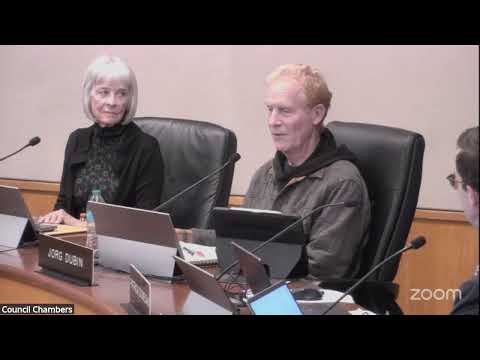
The commission’s vote followed a motion to approve the project subject to the conditions read into the record. The roll call on the final motion was: Commissioner Sadler — yes; Commissioner Whiting — yes; Commissioner Dubin — no; Chair Kellenberg — yes. Chair Pro Tem Goldman had signed off earlier in the meeting and was not recorded on the final roll call.

Ending note: The commission’s conditional approval concludes a multiyear review that included the applicant’s earlier continuances, a historic assessment by the city’s consultant, a Planning Commission denial in 2024 and an appeal to city council, which remanded the project to the commission. The approval includes staff review steps and periodic inspections; the project will proceed to building permits and construction, and remains subject to the city’s enforcement of the reconstruction plan and photo‑documentation conditions.

Votes at a glance: - Consent calendar (procedural): approved unanimously (Commissioners Sadler, Whiting, Dubin, Chair Pro Tem Goldman, Chair Kellenberg — all “yes” on the consent roll call at the start of the meeting). - Design Review 23‑1480 (1110 Glenary Street): approved (yes — Sadler, Whiting, Kellenberg; no — Dubin; Goldman not recorded on final roll call).