Get Full Government Meeting Transcripts, Videos, & Alerts Forever!
Get email alerts on the Energy Storage topic
No spam. Unsubscribe anytime.
Arapahoe County approves Front Range battery storage project on Lowry Trust land
Summary
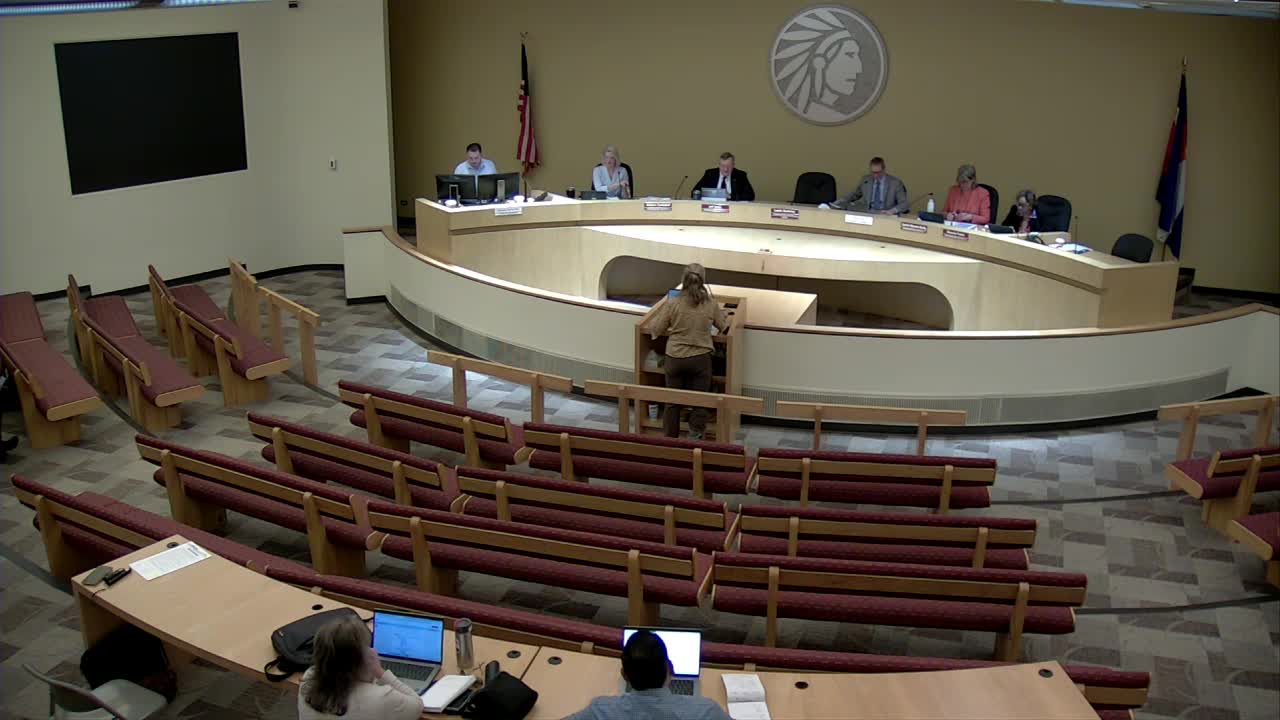
Arapahoe County commissioners voted May 13 to approve a 19.1-acre battery energy storage site on Lowry Trust land adjacent to Xcel Energy’s Harvest Mile substation, approving both a minor subdivision and a use-by-special-review with 10-41 standards.
Arapahoe County commissioners voted May 13 to approve applications from Front Range Energy Storage LLC to subdivide 19.1 acres of Lowry Trust land and site a battery energy storage system adjacent to the Harvest Mile substation.
The approvals were for case PM23-001 (minor subdivision) and UASI23-001 (use by special review with 10-41 standards). The board’s motions—made by Commissioner Jeff Baker (minor subdivision) and Commissioner Mina Campbell (USR/10-41) and seconded as recorded—carried with all present commissioners voting aye; Commissioner Sumi was absent and excused.
The project applicant, Plus Power/Front Range Energy Storage, described the site as a 19.1-acre lot carved from a 102.75-acre parcel owned by the Lowry Trust. Company representatives said the installation would contain rows of enclosed battery containers, switchgear, a site-specific substation and detention facilities and would interconnect to Xcel Energy at the Harvest Mile substation. Todd Messinger, land-use counsel for the applicant, said: “This is a game changer of a project.”
Why it matters
County staff and the applicant told commissioners the facility is intended to store electricity during periods of excess generation and return it to the grid during times of high demand, improving reliability and supporting renewable integration. Applicant materials estimated the project’s nameplate capacity at about 250 megawatts (1,000 megawatt-hours), and the developer said it expects to generate tax revenues to the county; the developer estimated approximately $15,000,000 in taxes would flow to Arapahoe County (source: Plus Power presentation).
Record, conditions and concerns
Planner Molly Orkild Larsen told the board that both applications met required land development and subdivision criteria and that referrals produced no outstanding engineering or fire-service obstacles; Sable Altura Fire District staff were present as technical backup. The Planning Commission had recommended approval (minor subdivision 5–2; USR 6–1). County staff’s recommended conditions were incorporated into the motions, which included requirements that the applicant: - address all public works and development staff comments prior to signature of final plans; - convey required right-of-way and provide an avigation and hazard easement; - perform nesting raptor and burrowing owl surveys if earth-moving occurs during species-sensitive periods and follow Colorado Parks and Wildlife guidance if nests/owls are identified; - record and bond a decommissioning plan and update its cost estimate every five years; and - make a one-time payment of $50,000 to the county for landscaping at the Arapahoe County Fairgrounds (payment due at first building permit), adjusted annually for inflation.
Commissioner questions focused on long-term site restoration, emergency response, and future technology upgrades. In response, the applicant said the facility would be decommissioned and the site returned to approximate previous conditions if the project was retired, and that a decommissioning bond and five-year review cycle would be recorded. Brian Scholl, a safety consultant, described the regulatory and fire-safety testing regime for battery systems and said the battery equipment to be used would be “highly tested, highly regulated, and that’s the key component.” The applicant said site interconnection to Harvest Mile would be above ground, the site is designed for emergency access, and the proposed development would not require water and sewer for full-time staff because no permanent on-site staffing is planned.
Timeline and next steps
Applicants said they submitted permits in March 2023 and expect to continue interconnection and development-agreement negotiations with Xcel Energy. They told the board they anticipate moving toward construction in 2028; a specific commercial operation date was discussed by the applicant but not specified in the record. The board approved the subdivision and the USR/10-41 subject to the conditions listed above; staff will proceed with final plan signatures and related development-agreement work.
Public comment and economic development
Kip Shirotis of the Regional Economic Advancement Partnership spoke in support, saying the project would convert otherwise difficult-to-reuse property adjacent to a Superfund site into productive infrastructure and could support technical career pathways for local students. No members of the public spoke in opposition during the hearing.
What the board approved (action summary)
The board approved the minor subdivision (PM23-001) and the use-by-special-review with 10-41 component (UASI23-001) with the conditions described above. The motions were recorded on the public record and carried with all commissioners present voting aye; Commissioner Sumi was absent and excused.
Arapahoe County staff and the applicant said more detailed site plans, interconnection agreements and a development agreement will follow; the county will monitor compliance with the wildlife, decommissioning and landscaping conditions.
Ending
County staff will return with final plan signatures and any needed follow-up materials tied to interconnection and the development agreement. The board’s approvals permit the project to proceed to the next regulatory and contract stages required for construction and interconnection.