Get Full Government Meeting Transcripts, Videos, & Alerts Forever!
Get email alerts on the Economic Impact Mardi Gras topic
No spam. Unsubscribe anytime.
Tulane economist: Mardi Gras generates about $24.4 million in Terrebonne Parish economic activity
Summary
A Tulane University study presented to the council estimated Mardi Gras 2025 produced about $24.4 million in direct and ripple economic activity for Terrebonne Parish, adding roughly 130 jobs and returning about $0.56 on each public dollar spent in increased sales tax revenues.
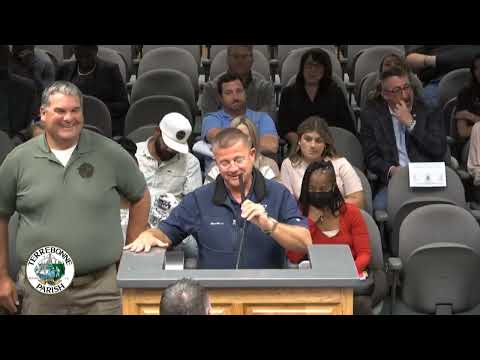
Tony Weiss, a senior professor of practice in economics at Tulane University, presented the findings of an economic-impact study on the 2025 Mardi Gras season in Terrebonne Parish to the council on Wednesday.
Weiss said his team calculated a total economic impact of roughly $24,400,000 for the 2025 Mardi Gras season, driven by three primary spending sources: parade crews and crew members, out-of-town visitors, and other in‑parish spending tied to events. The study estimated the season supported more than 130 additional jobs, added about $7,600,000 in household earnings and generated more than $700,000 in additional sales-tax revenue; Weiss reported a public-return estimate of $1.56 for every public dollar spent.
Weiss described the study as conservative. His team collected data via crowd surveys along parade routes, interviews with business leaders, crew surveys, STR hotel data, mobility data from DataFi, and public-records requests. He said the work attempted to avoid double counting and to remove spending from visitors who were in town for reasons other than Mardi Gras.
Councilmembers praised the analysis and asked about methods for capturing local resident spending and second-order effects. Weiss said local spending is difficult to measure without business revenue figures and warned such figures increase the study’s complexity; he said he erred on the conservative side. Councilmember Truskler noted the study provides a baseline and encouraged follow-up work, including additional studies on the seafood industry.
Why it matters Weiss framed Mardi Gras as both cultural and economic: while the festival is not staged primarily as a revenue generator, it constitutes a measurable input to the local economy, the tourism industry and small businesses. The council may use the data to inform planning, budgeting and requests for public investment in festival infrastructure.
Next steps Weiss said he is available for follow-up questions and the council indicated interest in additional economic studies for other key sectors, including seafood and broader event impacts.