
Board advances technology policy updates; members debate pace of AI, privacy and acceptable-use changes
Get AI-powered insights, summaries, and transcripts
Subscribe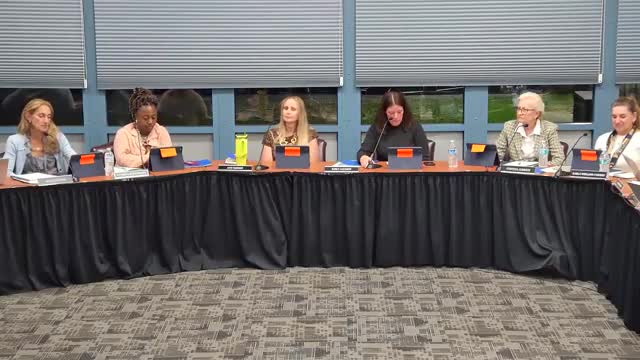
Summary
The Talbot County Board of Education adopted updated staff and student acceptable-use policies and discussed a longer-term technology plan and AI guidance, with one board member voting against the student policy citing the need for a broader rewrite.
The Talbot County Board of Education on Oct. 15 adopted revisions to district technology policies for staff and students and directed staff to return with more comprehensive guidance on artificial intelligence and other emerging instructional tools.
Why it matters: The changes affect how staff and students may use district electronic devices, how the district will treat private and personal information, and the procedures around classroom applications and peripherals such as 3D printers. Board members said they want clearer protocols for AI-powered tools and broader “acceptable use” practices beyond simple word substitutions.
What the board approved
- Policy 5.8 (staff use of electronic devices): The board adopted edits that replace the word “computer” with “electronic devices,” add language protecting private and personal information, and consolidate acceptable-use expectations for employees. The presenter said the update closes language gaps from older drafts.
- Policy 10.32 (acceptable use for students and Internet safety): The board adopted a second-reader version of the student acceptable-use policy. The administration said updates include references to peripheral devices (for example, 3D printers) and reflect current filtering and access practices. The motion passed but one board member voiced objection and said the policy needs a more ambitious rewrite given the roughly 20-year gap since earlier undertakings.
Discussion highlights and administration responses
The board’s technology staff described filtering and monitoring procedures and the mixture of on-premises and cloud (software-as-a-service) servers the district uses for applications such as PowerSchool and other instructional programs. Mr. Wilson, a district technology presenter, summarized the filtering approach: “We block most — we block everything that we believe is inappropriate,” and added that staff settings differ from student settings.
Administrators said some services (for example, PowerSchool, Diligent and other SaaS products) run in the cloud while other district servers and applications are on premises; staff emphasized that to an end user the difference is generally indistinguishable. The board also heard that an AI-focused conference in December and planned roundtables will inform a multi-year technology and AI plan.
Board concerns
One board member said the draft policy felt like “a few words here and there” rather than the deeper revision needed for modern technology and AI concerns; that member announced a planned “no” vote on the student acceptable-use policy but supported moving forward with additional review. Other members said the policies incorporate important updates and requested a near-term follow-up incorporating AI guidance and updated administrative regulations (ARs).
Next steps
District technology leadership will develop a three-year technology plan and convene roundtables to produce AI guidance and more detailed ARs for staff and student practices. The policy committee will return to the board with follow-up drafts and implementation guidance.
Sources and attribution: Statements and procedural descriptions above are drawn from in-meeting presentations by Mr. Steve Wilson and Mr. Belson (technology staff) and board discussion recorded at the Oct. 15 Talbot County Board of Education public session.