
Committee moves ballot-harvesting bill forward as draft amid debate on designees and protections for homebound voters
Get AI-powered insights, summaries, and transcripts
Subscribe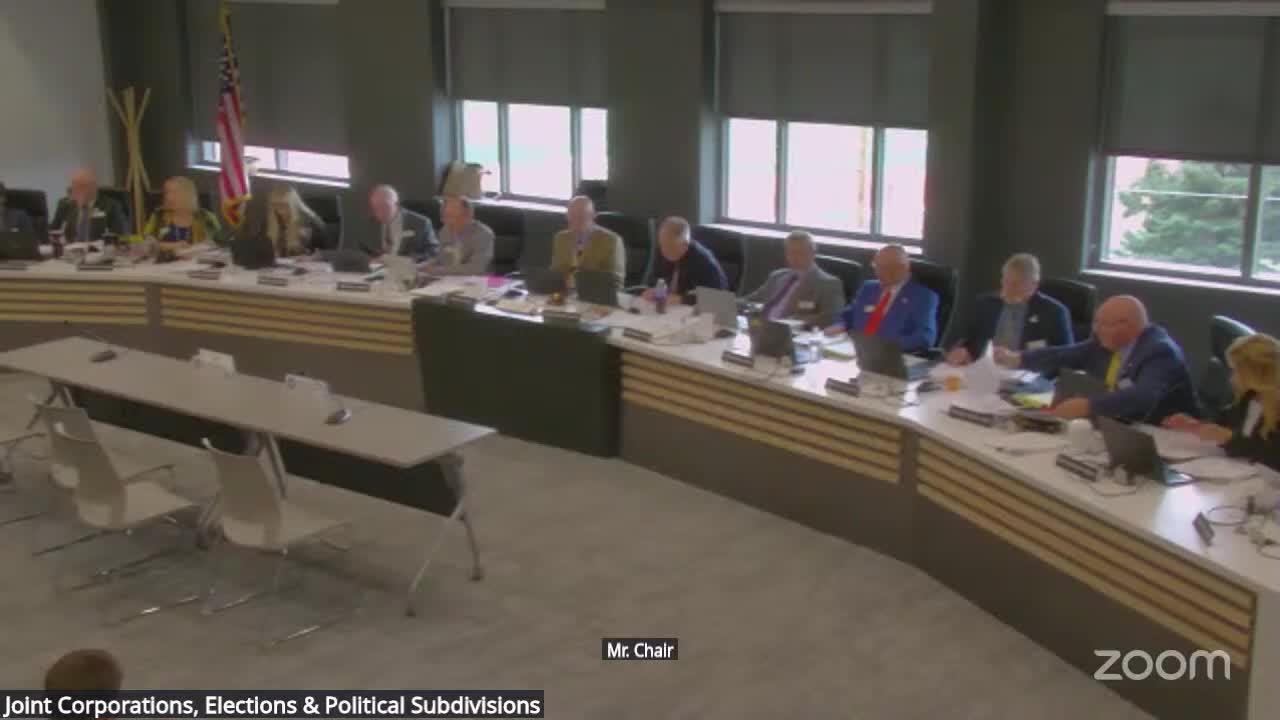
Summary
The committee moved 26 LSO 0042, a ballot-harvesting prohibition, forward as a draft for the next meeting after extended discussion about who may deliver ballots for others, limits for residential facilities, signature verification and safeguards for homebound voters.
The Corporations, Elections & Political Subdivisions Committee advanced 26 LSO 0042, the ballot-harvesting prohibition, as a draft for further work after extended discussion about exceptions for residential facilities, limits on who may return ballots, and how to protect homebound voters.
Representative Weber moved the bill; Representative Webb seconded. Committee members considered multiple amendments suggested by county clerks and the secretary of state’s office, including language to require clerks to transmit “copies of” absentee-voter affidavits rather than original affidavits and a proposal to permit a residential facility to deliver up to five absentee ballots on behalf of qualified electors residing at the facility.
Several members expressed concern about striking the right balance between preventing ballot misuse and ensuring access for voters who cannot travel. Senator Bonner proposed changing permissive language so clerks “shall provide notice” to an elector when a ballot was improperly delivered; clerks’ representatives requested latitude and urged a compromise to require a clerk to “shall attempt to provide notice,” which the committee adopted.
A central point of debate was whether a voter could designate a designee (an authorized person in writing) to deliver a ballot and whether that change would broaden the pool of people returning ballots. County clerks explained current practice for residential facilities: facilities provide clerk offices a list of interested residents, clerks verify registration, clerks send applications or ballots to the facility, and facility staff typically distribute and return ballots. Julie Friess of the clerks’ association described the process and noted barcodes and signature processes that help prevent multiple returns of the same ballot.
Committee members agreed the matter requires additional work to address edge cases—signature verification, documentation of designees, and protections for vulnerable voters—and voted to take the bill as a draft to the next meeting. The committee asked the secretary of state’s office and clerks’ representatives to collaborate on specific language and to propose effective dates.
Votes at a glance: a voice vote carried the motion to advance 26 LSO 0042 as a draft for the next meeting; the committee requested follow-up from the secretary of state and the clerks’ association to reconcile implementation details.
Outlook: Staff and stakeholders will return recommended language on designees, residential facility delivery limits, signature checks, and effective dates at the committee’s next meeting.