Get Full Government Meeting Transcripts, Videos, & Alerts Forever!
Get email alerts on the Special Education Compliance topic
No spam. Unsubscribe anytime.
Parent tells board she obtained emergency court order after special-education services were withheld
Summary
A Lacey Township parent told the school board she obtained an emergency court order after the district failed to provide services required under her child’s IEP and said she received no follow-up from district officials.
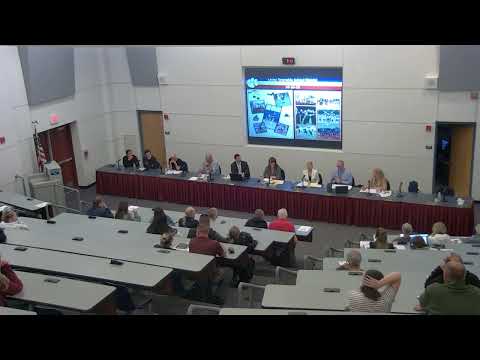
A parent told the Lacey Township Board of Education on Monday that the district failed to provide services and therapies required by her child’s individualized education program (IEP), forcing her to seek emergency judicial relief.
Ashley Meyer said she brought concerns to the board in July after her child did not receive mandated services. Meyer said she filed emergency due-process proceedings, represented herself at a hearing and was awarded an emergency court order in August requiring the district to comply within days. “No one from the board or the superintendent contacted me, apologized, checked in, invited me to speak in closed session about my experience, or followed up with me in any way,” Meyer said.
Meyer also said she received a district letter stating an IEP amendment would be implemented despite her declining proposed wording; she said the Executive County Superintendent’s office confirmed that a parent’s consent is required for an IEP amendment made without a meeting. She added she filed complaints with the State Department of Education that resulted in findings of district noncompliance.
Meyer said her concerns were with administration, not classroom teachers, and described ongoing hostility in the Special Education Department. “To date, my child is still facing issues and hostility with Lacey School’s Special Education Department,” she told the board.
The board president acknowledged Meyer’s concerns but said the board could not comment on matters involving litigation or individual students because they are confidential and legally protected. The board emphasized its commitment to listening respectfully but did not provide additional details publicly.
Why it matters: Special-education disputes involve students’ legally protected services and can result in state findings or court orders that require districts to deliver specified supports and sometimes pay for corrective services. Parents and advocates often expect district follow-up after court orders or state findings, and here the parent said that follow-up was not provided.
What the board said: The board read a brief statement recognizing the concerns and reiterating that it could not comment on confidential student or litigation matters in public session, and that it remains committed to responding professionally.
Next steps: The parent urged the board to make special education a priority. The board did not announce any public process changes during the meeting; the parent was advised to pursue the avenues available through the county executive superintendent and the State Department of Education as appropriate.