Get Full Government Meeting Transcripts, Videos, & Alerts Forever!
Get email alerts on the Dpw Operations Budget topic
No spam. Unsubscribe anytime.
DPW operations budget: small net increase, staffing shifts in fleet and sanitation
Summary
Budget staff told committee the DPW operations 2026 budget is slightly larger overall, with a 1% operating cost increase and reorganization that reduces some positions while adding others in fleet and administration to support Workday implementation and fleet maintenance.
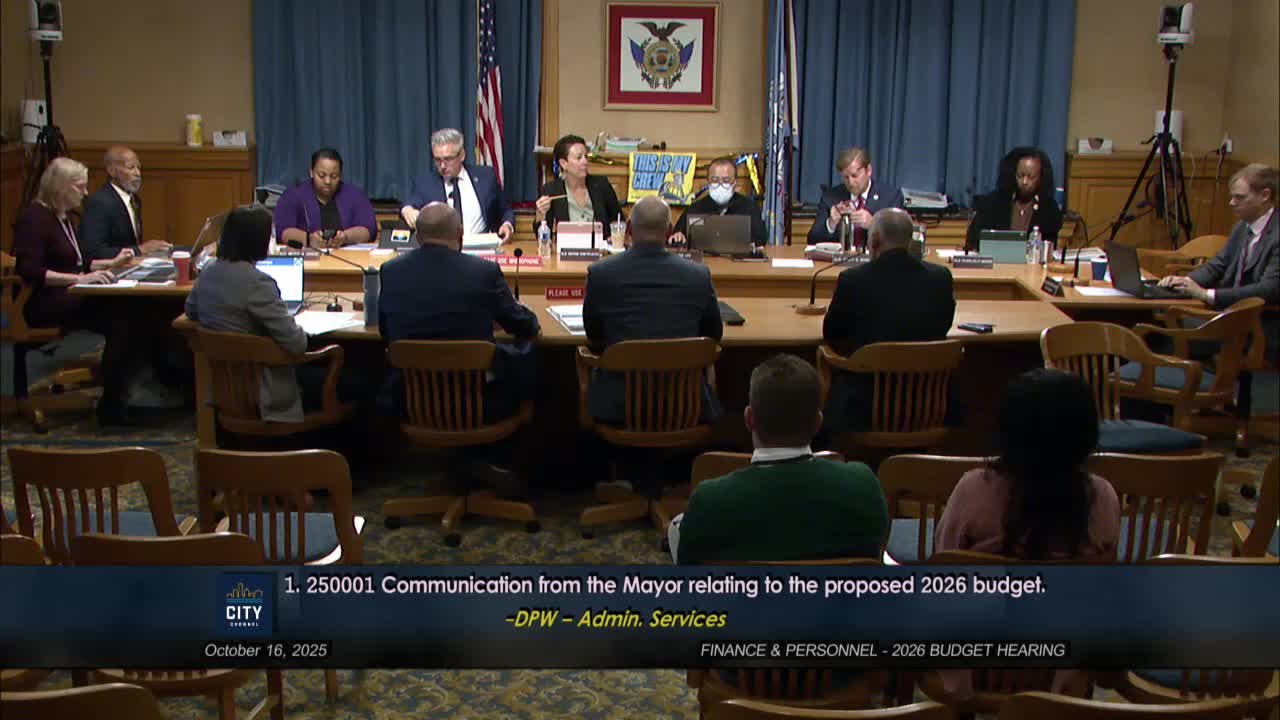
City budget staff and DPW leadership presented the proposed 2026 operations budget Oct. 16, describing a $108.4 million operating budget (up about 1 percent) and $124.6 million total including capital and grants. Mason Lavey of the Budget Management Division said salaries increase modestly — roughly 1 percent — even as total positions drop by 9 (771 positions total) and full-time-equivalent staff drop by 11.
The department said position changes target three areas: administration, fleet services and sanitation. In administration a Systems Integration Project Leader (moved from auxiliary to a 50/50 capital and O&M funded role) will shepherd the DPW's Workday rollout and integration of financial and HR systems. Fleet services gains a Fleet Business Operations Manager and two vehicle service technicians (the latter 100% reimbursable) to increase preventive maintenance capacity; sanitation reconfigured laborer and equipment operator staffing to provide more CDL-backed equipment operators and flexibility, reducing an estimated $350,000 in salary costs.
DPW operations highlighted special fund adjustments: a projected drop in vacant-lot maintenance contract costs, reduced Raisinger Buy program removals (from 90 homes removed to 50) and full funding to maintain salt and waste special funds at supply targets (salt inventory budgeted at 45,000 tons). Capital spending includes $14.3 million for fleet replacements, tree planting, stump removal and irrigation work; the sewer fund and general obligation borrowing split anticipated capital costs.
Revenue projections reflect a $4.3 million increase versus current-year estimates, driven by solid waste, stormwater and snow-and-ice fees. Budget staff emphasized that some previously assumed revenues were re-estimated more conservatively based on year-to-date activity. DPW leaders said they will continue efficiency efforts tied to Workday, telematics and fleet modernization.
Committee members pressed on open-records workloads, fleet age (average snowplow and refuse packer ages were cited as over industry targets), salt purchasing and whether the new positions would be noticeable to residents. DPW leaders said some investments are meant to increase preventive maintenance and reduce long-run operating costs.
No final action was taken by the committee during the presentation; budget items will proceed through the council budgeting process.