Get Full Government Meeting Transcripts, Videos, & Alerts Forever!
Get email alerts on the Bylaws topic
No spam. Unsubscribe anytime.
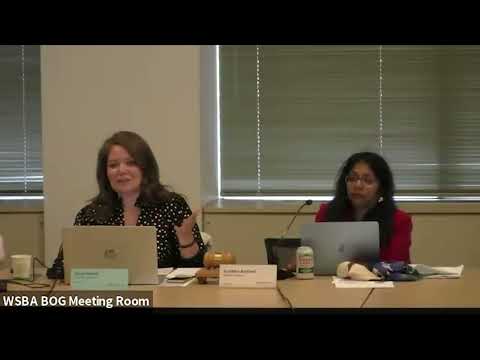
Bar Association governors pull bylaw amendment from consent calendar, approve license‑fee exemption after procedural debate
Summary
The Bar Association Board of Governors removed a bylaw amendment on a license fee exemption from the consent calendar for discussion, debated whether bylaw changes should require two readings, and then voted unanimously to approve the amendment on its second reading.
The Bar Association Board of Governors on Oct. 19 removed a proposed bylaw amendment on a license fee exemption from the consent calendar for discussion and then voted unanimously to adopt the change on its second reading.
The board’s executive leadership first honored a request to take the amendment off the consent calendar so the full board could discuss procedure. Executive Director Nivet told governors that the amendment originated with the Budget and Audit Committee, not the Governance Committee: “this came from the budget and audit committee, not the governance committee,” she said, adding it had been discussed at the board’s July meeting.
Governors debated whether bylaw changes should routinely be presented to the full board for discussion rather than routed on the consent calendar. Governor Mary Rathbone said she prefers that bylaw amendments “come before the board even if it is something that is agreed upon,” arguing the practice helps ensure proper procedure. Former Governor Williams Ruth stressed the association’s existing practice, saying, “Bylaws are on a 2 read schedule,” and urged that any change to that process be made deliberately and codified so stakeholders have an opportunity to comment.
Several governors suggested sending the procedural question to the Governance Committee for consideration. Executive Director Nivet and other governors noted the Budget and Audit Committee had handled the substantive amendment and that the intent was not to circumvent review.
After discussion, Governor Bloom moved to approve the bylaw amendment on the license fee exemption and the board voted by roll call to adopt the change. The motion passed unanimously.
The board also held and approved its consent calendar, excluding the bylaw amendment that had been pulled for discussion. That consent vote likewise passed by roll call with no recorded opposition.
The board did not amend the text of the proposed license‑fee exemption during the meeting; discussion focused on process rather than on the amendment’s substantive language. Several governors said they expect the Governance Committee to consider whether the association’s rules should more clearly require bringing bylaw amendments to the full board for discussion.
The board’s meeting packet lists the proposed amendment at page 21 of the materials and indicates the item was before the board as a second reading. Executive Director Nivet said the item had been discussed in July and that the board had previously reached consensus to place it on the consent calendar.
No outside authorities or legal statutes were cited during the recorded discussion. The board recorded a roll‑call vote and returned to the agenda after the vote.