
EPA, contractors outline drum-by-drum plan to remove 51,000 buried barrels near Springfield aquifer
Get AI-powered insights, summaries, and transcripts
Subscribe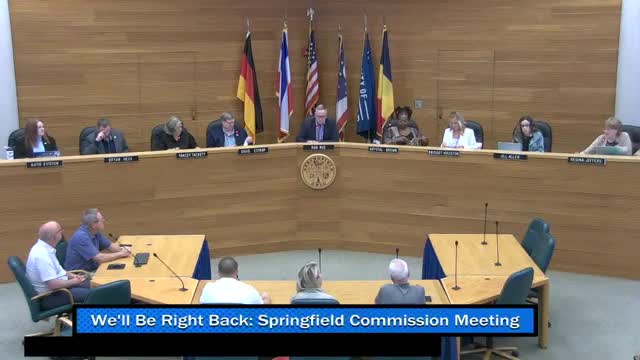
Summary
U.S. and state environmental officials and contractors told the Springfield City Commission they have submitted a 30% remedial design and plan to remove roughly 51,000 drums from the Tremont/Fremont City barrel field in phased work that must proceed slowly to protect the regional aquifer.
U.S. and state environmental officials and the contractors overseeing the Tremont (also referred to in presentation as the Fremont City) barrel field told the Springfield City Commission the site is now at the 30% remedial-design stage and that they plan to remove roughly 51,000 buried drums “one barrel at a time.”
The officials said the drums — buried in the mid-1970s in an unlined facility — are close enough to the regional aquifer used for drinking water that the cleanup must proceed slowly to avoid creating new contamination. “This is not gonna be a quick process nor should it be,” Robert Rule of Demaximus said, describing a phased removal and onsite staging approach. Rule also said the responsible parties are paying for the work under a binding consent decree.
The 30% design has been submitted to U.S. EPA and Ohio EPA for review; contractors said more detailed design and specifications will come with later submittals. Officials said they completed one baseline groundwater sampling event last November–December and plan two more baseline events — one this fall/winter and one in the spring — before active construction begins so the remedial activities can be measured against pre-construction conditions.
Why it matters: presenters and commissioners emphasized the site’s proximity to the aquifer used by area wells, saying the cleanup must avoid mobilizing contamination. A representative said the site is about a mile and a half “as the crow flies” from wells that supply drinking water to Springfield and surrounding farm wells.
How the work will proceed: contractors described a north-to-south, phased excavation that will remove buried drums and segregate materials by hazard category. Removed drums will be moved to a consolidation area for inspection and hazardous-material sampling (a “hazcat” sample) and then bulked with chemically compatible materials for off-site disposal. Liquids will be collected in onsite tanks, trucked to approved disposal facilities, or incinerated off-site. The contractors showed cross-sections of a replacement hazardous-waste cell that will include low-permeability clay, two high-density polyethylene (HDPE) liners, leak-detection layers and a leachate collection system; the cell will be capped with multiple layers, including a geosynthetic clay liner and at least 30 inches of soil.
Officials said the drums are in roughly 25–30-foot-deep cells; slope angles for heavy equipment mean excavation footprints will be wider than the cells themselves (presenters described a 75-foot hole expanding to about 200 feet to permit safe access). Rule estimated that, on good days, crews might remove about 100 drums per day but cautioned removal rates will vary depending on conditions and drum integrity.
Monitoring and safety: U.S. EPA staff described a site-wide monitoring plan under the Superfund program that will establish baseline groundwater conditions, then continue monitoring through the remedial action to ensure work is protective of groundwater and public health. Presenters said perimeter and worker-area air monitoring will be used and that first-responder briefings were ongoing. Commissioners asked about operating hours and onsite staffing; presenters said work would occur in daylight hours with multiple teams performing different tasks (air monitoring, drum removal, sampling, bulking, lab testing) and that the site will be closed to the public when work begins.
Timing and oversight: presenters said the remedial design is on track to be completed in 2026, with a 90–95% submittal expected in December 2025 and final design milestones guided by the consent decree and agency approvals. U.S. EPA staff said many technical reviewers — hydrogeologists, engineers and Ohio EPA reviewers — are coordinating comments, which lengthens review time. The presenters stressed the cleanup is subject to a federal court order and the principal responsible parties have agreed to fund and carry out the work.
Costs and funding: commissioners asked about cost. Presenters said the consent decree initially estimated just over $27 million but that the current estimate is “well above” that figure; they emphasized costs are being borne by the responsible parties, not by Springfield taxpayers.
What remains unresolved: presenters said additional design and monitoring details will be filled in by the 90–100% design submittals and that some drums may be heavily degraded and not recoverable intact. They reiterated the removal approach and monitoring are designed to avoid causing new releases during remediation.
The commission received the briefing during its work session; no formal vote was taken at the meeting.