Get Full Government Meeting Transcripts, Videos, & Alerts Forever!
Get email alerts on the Finance Audit topic
No spam. Unsubscribe anytime.
Independent auditors report material weaknesses and federal findings in 2024 Shreveport financial audit
Summary
Carr, Riggs & Ingram presented the city’s 2024 audited financial statements, reporting an unmodified opinion on the financials but several repeated material weaknesses, new federal award findings related to ARPA reporting, and management-letter comments that the council asked staff to address with a follow-up audit and finance meeting.
City auditors told the Shreveport City Council on Sept. 9 that the city’s 2024 financial statements received an unmodified (clean) audit opinion, but the audit identified multiple material weaknesses, two new federal-award findings and several repeat issues that require corrective action.
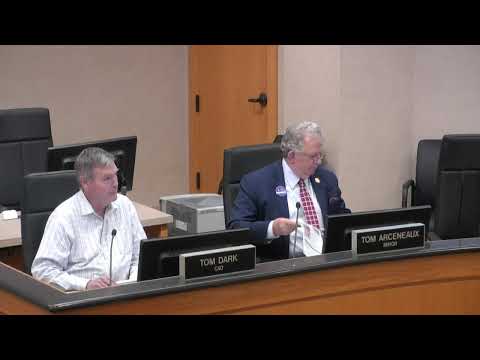
Josh Trahan, audit partner with Carr, Riggs & Ingram, presented the audit. Trahan said the firm issued a clean opinion on the financial statements but listed findings that included: compensated-absence tracking errors, large receivables related to property-standards liens, repeated material adjustments required to the books, a long-running federal-award reporting and monitoring weakness, and a new issue involving wire-transfer approvals and segregation of duties. Auditors also reported self‑disclosed instances of misappropriation and payroll irregularities.
Trahan said the single-audit component—required because federal awards increased to about $54 million in 2024—produced two federal findings tied to ARPA (the Coronavirus State and Local Fiscal Recovery Fund): a control deficiency around suspension and debarment checks, and reporting errors that will require amended reports to federal agencies. The auditors said other major federal programs tested—Choice Neighborhood Implementation Grants and certain community development block grants—did not generate reportable compliance failures in the presentation sample.
Council members said several issues had appeared in prior years’ reports and asked the administration for a concrete corrective-action timeline. Vice Chair (audit committee) said she would convene an audit and finance meeting to press for goals; Finance director and staff said they had already begun meeting with the auditors, planned training for in-house accounting staff, and were considering a dedicated position to handle compensated-absence calculations.
Auditors also reported management-letter comments on ethics training (33% failure in a sample of 60 employees), bank reconciliation improvements, budget noncompliance (funds exceeding statutory thresholds), retainage schedules for construction projects, and a new comment on journal-entry processes. Trahan said the city’s overall government-wide net position reflected changes in capital assets and pension/OPEB valuations but that an unmodified opinion still represents the best available audit outcome for financial reporting.
Council members asked for a follow-up meeting with the audit team and administration to convert the audit recommendations into specific corrective steps and timelines.