Get Full Government Meeting Transcripts, Videos, & Alerts Forever!
Get email alerts on the Economic Development Film Entertainment topic
No spam. Unsubscribe anytime.
Council hears detailed pitch for downtown film and entertainment economic development district
Summary
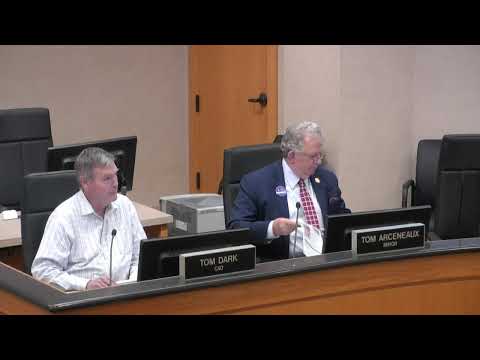
Shreveport City Council members spent much of their Sept. 9 meeting questioning an administration-drafted proposal to create an economic development district intended to incentivize large-scale private investment in downtown redevelopment tied to film and television production.
Shreveport City Council members spent much of their Sept. 9 meeting questioning an administration-drafted proposal to create an economic development district intended to incentivize large-scale private investment in downtown redevelopment tied to film and television production.
Attorney Bousada, who briefed the council, described the arrangement as a “success dependent incentive” that would reimburse a developer only after it delivered results. “The whole the prize of all this is the film and the television production,” Bousada said, explaining the proposal aims to keep pre-production, production and post-production activity in Shreveport rather than sending post-production work to other states.
Council members sought clarity about how incentives would follow property sales, oversight of the district, and the effect on longtime downtown businesses. Councilman Butcher and others asked whether an incentive attached to a property would increase its market value and potentially benefit future buyers. Bousada said individual projects within the district would be vetted by an economic development corporation board and that final approvals would come back to the council as the board of the new district, but he also said there was no automatic guarantee that any particular property would receive funds.
Several council members urged transparency and protections for existing local businesses. Councilman Butcher said his constituents worry that a high-profile investor would gain an outsized advantage over smaller, long-standing downtown business owners; he asked whether a district incentive could make it harder for local business owners to compete. Council members Green and Guelcher said they supported moving the city forward while stressing that the council must preserve oversight authority.
Bousada and other speakers emphasized the risk-based design of the incentive: according to the presentation, the developer must make substantial upfront investment—Bousada said the proposal assumes about $50 million of private investment—before any tax-derived incentives would flow, and the district would use an “additional 2% economic development levy” only after the developer met performance thresholds. Bousada said the district differs from a narrow, single-project TIF because it is broader in intent and process.
The ordinance creating the film and entertainment district (item 96 on the council agenda) was introduced for further consideration and a public hearing on Oct. 14. The council did not adopt the ordinance at the Sept. 9 meeting.
A number of council members asked for further details and documents to be made available publicly, including underwriting standards used by the economic development corporation board, application and vetting procedures for tenants seeking a share of district funds, and a clearer statement of which downtown parcels would initially be included. The council also discussed the district’s potential to increase property values downtown and to attract sustained film-industry jobs beyond transient shooting schedules.
Council members who spoke repeatedly framed support for the concept as conditional: several said they want the city to pursue redevelopment but not at the expense of leaving small, existing businesses without a path to benefit.
The item will return for a required public hearing and further council action on Oct. 14.