Get Full Government Meeting Transcripts, Videos, & Alerts Forever!
Get email alerts on the Capital Projects topic
No spam. Unsubscribe anytime.
Selectmen approve change orders on firehouse/headquarters renovation; contingency remains
Summary
The board approved a set of proposed change orders for the municipal firehouse/headquarters renovation that included credits and additional work for hidden conditions, insulation, structural ties and floor work; staff said contingency remains after the net changes.
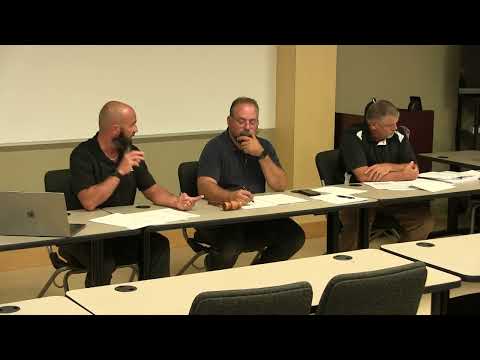
The Board of Selectmen approved a package of proposed change orders for the firehouse/headquarters renovation at its Oct. 7 meeting.
Project manager Pete (surname not specified in transcript) summarized proposed change orders that included a credit for removed countertops ($3,808.12), unforeseen ledge removal for interceptor piping ($4,979.02), a $12,000 credit for unused roof repair allowance, plumbing credits for coring that could not be completed ($1,522.50), underpinning work ($2,524.76), filling a crawl space for a level floor ($4,736.63), bell-tower pit fill ($1,738.04), wall-tie and structural details ($2,734.87), closet door rework ($782.06), beam replacement and masonry repair in a sagging corner ($5,454.56), header reinforcement over two preexisting doors ($3,925.46), adding R-19 insulation on a flat-roof bay ($10,466.73), cutting and repouring a 9-by-12 floor area to remove a 3-inch pitch ($3,999), and installing a floor drain and sanitary connection with associated floor cutting and plumbing ($6,918.14).
Pete reported that the combination of credits and additional work would leave project contingency in the area of around 80 (percent), after accounting for approximately $42,000 in change-order activity to date (figures presented as estimates in the meeting). Selectmen moved to approve the change orders as described and approved them by voice vote; the transcript does not record a numeric roll call.
Selectmen noted many of the additional costs stemmed from “sight unseen” conditions in an 1876 building and that the change orders primarily addressed unforeseen structural and plumbing conditions uncovered during demolition and renovation.