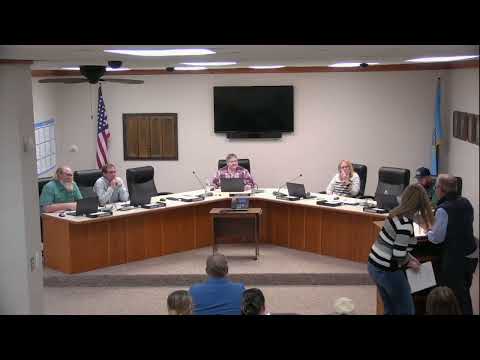
Commissioners seek rule requiring council to state hardship findings when overturning variance denials
Loading...
Summary
Brandon planning commissioners discussed drafting language to require the City Council to consider the same hardship and uniqueness factors as the Board of Adjustment when overturning variance denials and proposed a joint meeting with council to discuss the change.
Members of the Brandon Planning and Zoning Commission discussed proposing a change to the city’s appeal process that would require the City Council to make specific, affirmative findings on hardship and uniqueness when overturning a denial of a variance by the Board of Adjustment.
The discussion followed a recent case in which the city council overturned the board’s denial of a variance for a three-season porch. Commissioners described frustration that appeals to council sometimes produce no written hardship findings, which complicates later precedent and makes it harder for staff and future applicants to rely on a consistent record.
City staff summarized proposed wording that would amend the appeal language to instruct council to consider the same determining factors used by the Board of Adjustment, pointing to chapter 15-24-f of the municipal code as the source of those factors. A staff member read draft language from meeting materials: “In order to overturn or modify denial of a variance application by the board of adjustment, the city council shall consider the determining factors considered by the board of adjustment as outlined in chapter 15 24-f,” and would require “specific affirmative findings” to overturn a denial.
Commission discussion covered alternatives: deleting the appeal to council entirely so parties would proceed to district court, or clarifying the record so council decisions include explicit findings that mirror the board’s variance criteria. Several commissioners said they welcome a joint meeting between the commission and council to discuss the proposed language and the broader implications for zoning precedent; one commissioner asked staff to begin discussions with council about the change.
Legal context was raised during the conversation: speakers noted that courts have set precedent on what constitutes a hardship; staff and the city attorney said courts generally defer to government decisions unless they are arbitrary. Commissioners said clearer council findings would produce a more robust administrative record and reduce inconsistent precedents, such as variances granted without documented hardship that later complicate enforcement and ordinance interpretation.
No formal motion was recorded to change the ordinance at this meeting; commissioners directed staff to pursue discussion with council and indicated they would bring any formal draft language back for consideration. Planning staff said they would likely begin outreach to council in the next month and recommended a joint session to discuss the proposal and potential options for ordinance language or removal of council appeal rights.
Commissioners emphasized the goal of transparency and consistency so future variance decisions create a clear public record.