Get Full Government Meeting Transcripts, Videos, & Alerts Forever!
Get email alerts on the Economic Development Program topic
No spam. Unsubscribe anytime.
City staff outlines 'Invest Bend' economic development program, seeks BDAB input on priorities and funding
Summary
City of Bend staff presented an outline for a new 'Invest Bend' economic development program Oct. 20, describing four work areas — urban renewal, contracted partners, advocacy and internal programs — and asking the Bend Economic Development Advisory Board for feedback on priorities and skills needed to pursue state and federal funding.
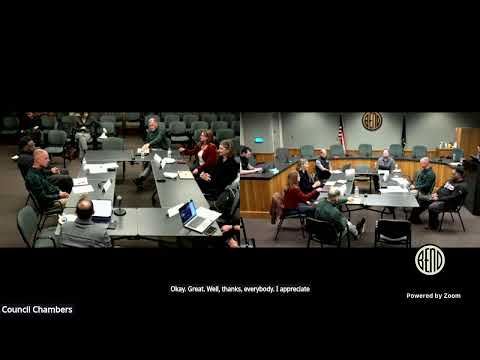
BEND, Ore. — City of Bend staff presented an initial plan Oct. 20 for a new economic development program — referred to in the meeting as Invest Bend — and asked the Bend Economic Development Advisory Board for input on priorities, staffing and funding approaches ahead of a program rollout over the next year.
Katie, who is leading the city’s economic development effort, told the advisory board the work divides into four bodies: (1) urban renewal (the Bend Urban Renewal Agency, or BURA) focused on tax-increment investments in districts such as the Bend Central District, Juniper Ridge and Murphy Crossing; (2) contracted work performed by partners such as EDCO and Visit Bend for recruitment and destination marketing; (3) economic advocacy to pursue state and federal infrastructure and program funds; and (4) city-run economic development programs including business support, commercial and industrial development, permitting and regional collaboration.
“We’re putting together the economic development plan — really putting it together for a start,” Katie said. “It is a start up. It is a year and a half. It's till the end of this biennium. And during this time, we'll have the program developed.”
Katie asked the board to vet draft themes and prioritize where BDAB’s expertise should be applied. She said staff will convene two focus groups and return to BDAB on Nov. 3 with themes and draft strategies; staff aim to have fleshed-out strategies and a proposed budget by the first half of 2026.
Board members broadly supported prioritizing business retention and making Bend easier for companies to operate. Several members urged the city to target state and federal funding opportunities — including opportunity zones and enterprise-zone incentives — and to build technical capacity to package public‑private investments so private capital will follow public infrastructure.
Members raised concern about limited city resources. Katie said potential funding sources for the program include urban renewal tax increment, business-license revenue, general fund allocations and outside grants; she also noted the constraints of urban renewal funds, which must be reinvested in the renewal districts that generate them. She said some initial staffing increases are planned but the program will prioritize work for the next year within current resources.
The board discussed the need for clearer advisory roles between BDAB and Urban Renewal advisory bodies. Staff said the city is evaluating how Urban Renewal advisory work interfaces with the economic development program and that certain urban renewal decisions will continue through BURA and specific advisory committees while the city refines the program.
Other details discussed during the meeting: a forthcoming council presentation on the urban renewal/investment elements scheduled for December and a city goal to present a more detailed economic development plan in early 2026. Staff signaled they will bring refined program themes to BDAB on Nov. 3 and said additional focus groups will provide feedback on priorities.
Why it matters: Bend leaders face a constrained fiscal climate and uncertain economic outlook; BDAB’s input will shape how the city prioritizes limited funds, pursues state and federal grants, and structures programs to retain and grow local businesses.