
Longwood manager presents $62 million proposed budget for fiscal 2025-26; general fund reserves remain strong
Get AI-powered insights, summaries, and transcripts
Subscribe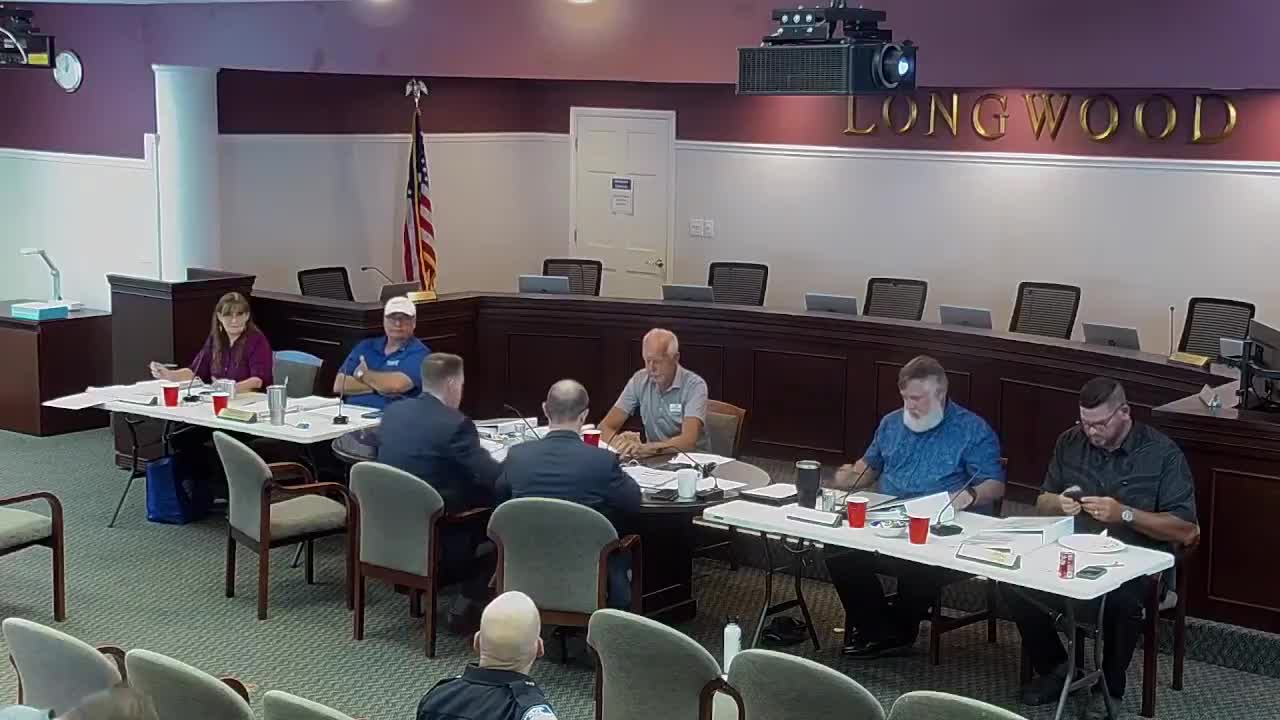
Summary
City Manager presented a proposed $62,000,409 budget for fiscal year 2025-26 at a July 21 budget work session, citing a drop in overall spending from one-time ARPA uses, continued inflationary pressures, and a recently filled finance position. The proposal holds the tax rate steady and projects a 27% general fund reserve.
The Longwood City Manager presented the proposed fiscal year 2025-26 budget at a July 21 budget work session, saying the document totals $62,000,409.25 in expected revenues and proposes $47,000,000 in expenditures.
The presentation, which city staff said was assembled during a vacancy in the finance director role, emphasized a roughly 15% year-over-year revenue decline driven largely by one-time American Rescue Plan Act (ARPA) spending in the current year and an 18% reduction in proposed spending compared with the current year. The City Manager also told commissioners that a conditional job offer has been extended for the city’s finance and budget manager position and the new hire is scheduled to start two weeks after the meeting.
City Manager’s overview and why it matters
The proposed $62 million budget covers all revenue sources, including grants and utilities, and, as presented, does not raise the city’s tax rate. The City Manager described the spending reduction as a function of one-time federal ARPA funds being used in the current fiscal year and said the proposal defers certain capital projects until a newly filled finance director can reassess the city’s longer-term financial position. He also noted the city’s general fund reserve stands at 27%.
What staff told commissioners
Staff outlined the budget drivers: inflation (reported at 2.9% in the presentation), higher costs for contractual services, equipment, vehicle maintenance and insurance (property and casualty noted as increasing roughly 8.5% and health insurance roughly 9.2%), and a marked increase in retirement plan contributions for police and fire (reported as 34.49%, a nearly 9 percentage-point year-over-year rise). The manager described recruitment and retention pressures and extended vacancies — particularly in finance — as contributors to personnel costs and operational strain.
The presentation also included areas of fiscal improvement and revenue growth. Ad valorem revenue was described as up (presented as roughly 6.82%) with no accompanying tax-rate increase, and staff highlighted new sponsorship revenues in leisure services, an expanding septic-to-sewer abatement program supported by grants and low-interest state loans, and small declines in fuel costs. Staff said certain capital projects and a full review of fee structures (including utility fees as the septic-to-sewer program grows) will be revisited later in the year once financial leadership is fully staffed.
Department summaries and staffing
Directors from departments including finance, human resources, IT, public works, police, fire, leisure services, community development and building-inspection gave brief line-item or program summaries. Highlights included modest staffing changes (the total city positions were reported to move from 174.5 to 175.5, reflecting one new finance position), targeted operating savings in several departments, and an emphasis on employee development and succession planning. The City Manager and multiple directors credited cross-department collaboration for producing the proposal while the finance director vacancy lasted.
Formal actions and next steps
At the start of the session a procedural motion to suspend the rules was offered and seconded and affirmed by voice vote. Staff said the purpose of the work session was to present highlights, answer questions and record requested changes; they expect the commission to provide feedback and staff to continue refining the budget. The City Manager asked for direction on a set of follow-up items that included further review of utility fee structures, capital project timing, and two specific projects discussed later in the session: the Lewis House historic structure and Fire Station 15.
Ending note
Commissioners and department directors emphasized continued review, with staff available for follow-up. The City Manager told the commission staff will remain available to support continued review and will return with requested clarifications and any amendments requested by the commission.