
Longwood residents press commission on vape shops, zoning and small-business mix
Get AI-powered insights, summaries, and transcripts
Subscribe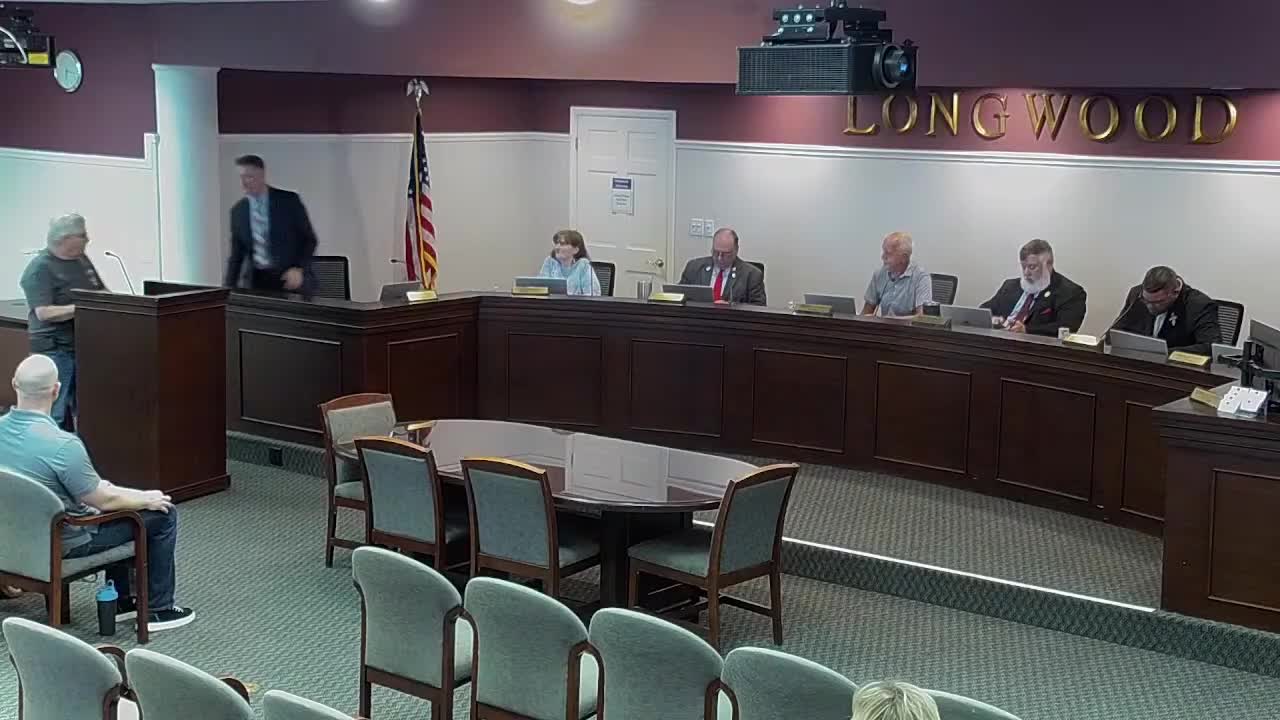
Summary
Two residents urged the Longwood City Commission on July 21 to address a rise in vape shops and worries about Medium Density Residential (MDR-15) zoning; commissioners and the city attorney explained limits on local rezoning and legal risks of changing comp-plan designations.
Two Longwood residents used public comment at the July 21 City Commission meeting to urge city leaders to curtail what they described as an influx of vape shops and other nontraditional storefronts and to protect established neighborhoods from denser residential development.
The comments came during the public-participation portion of the meeting. James Larry Howard of Ridge Street told commissioners, “I’m being told we got more vape shops coming in,” and said he was worried the downtown and surrounding corridors were becoming “grubby” with pawn shops and similar businesses. Madison Holmes of 490 Pasadena Avenue said she and neighbors own homes in an established area zoned MDR-15 and worried they “could end up with apartments slash town homes in our backyard, side yard and even across the street from us.”
The commission responded during the report period and a later discussion. Commissioner Morgan and Commissioner McMillan urged the residents to meet with city staff for details. The City Attorney provided a legal overview of MDR-15 and the limits on what the commission can do administratively. He said MDR-15 does not allow apartments but can allow single-family, duplex and townhome configurations and noted that the city may initiate comprehensive-plan amendments and rezonings if there are no pending applications for the property.
The attorney warned commissioners that changing comprehensive-plan designations or rezoning to reduce allowable uses can expose the city to legal claims by property owners who contend that the city deprived them of vested rights or an expectation of use. He described state-level statutory protections and noted that a property owner could seek damages and attorney fees if the owner can show an inordinate burden or deprivation tied to a zoning change. He said, in short: “You could, but you could also face a very large lawsuit.”
Commissioner Morgan also described a local policy limiting the proximity of certain uses, saying the city has a policy that “no more vape shops, medical marijuana dispensaries, etcetera, can be built … within a mile radius of another,” and framed that policy as an approach to balance local business diversity without singling out business types for exclusion.
The commission and staff offered next steps for concerned residents: meet with the city manager and planning staff to review specific properties and whether pending applications affect the city’s ability to initiate rezonings; staff noted pending applications would block retroactive changes affecting those applications. No formal action—rezoning, moratorium, or new ordinance—was proposed at the meeting.
The record shows commissioners taking residents’ concerns and explaining legal constraints, but no vote or ordinance resulted from the public comments. The commission directed staff to continue to engage with residents and property owners and to explain the process and potential legal exposure when considering changes to plan designations.