Get Full Government Meeting Transcripts, Videos, & Alerts Forever!
Get email alerts on the Public Works Fee Water Bill topic
No spam. Unsubscribe anytime.
Bossier City holds workshop on $12 public‑works fee as city reviews multi‑year enterprise fund shortfalls
Summary
City officials and dozens of residents met in a public workshop to review a $12 “public works” fee now appearing on water bills and to discuss options for addressing persistent shortfalls in the Public Services and Sanitation enterprise fund.
BOSSIER CITY, La. — City officials and dozens of residents met in a public workshop to review a $12 “public works” fee now appearing on water bills and to discuss options for addressing persistent shortfalls in the city’s Public Services and Sanitation enterprise fund.
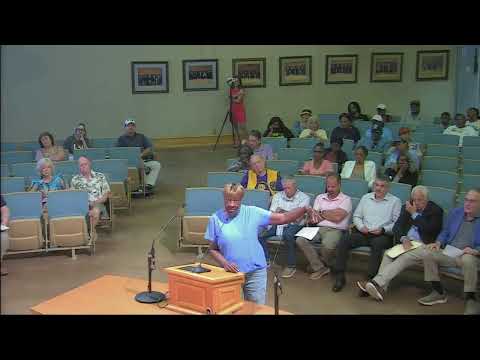
City staff presented the fee’s legal and budgetary history, what services the charge covers and alternatives that could replace the fee, including a property millage that would require voter approval. Residents who spoke during public comment raised concerns about service levels, the fee’s impact on renters, and whether apartment owners would pocket the change rather than lower rents.
Amanda Nottingham, a member of the city administration who led the presentation, said the enterprise fund (also called the Public Services and Sanitation Fund) pays for public‑facing and behind‑the‑scenes services in streets and drainage, solid waste, animal services and vegetation/mosquito control. Nottingham said the fee for services other than curbside trash is $12 per account and that the city separated the sanitation and public works line items on bills to improve transparency. She said that fee has been assessed to water accounts since February and that many residents first saw it on the March bill.
Nottingham reviewed the fund’s history. She said a city ordinance authorizing fees for maintenance, cleanliness and sanitation dates to 1958 and that an ordinance in 2001 established the Public Services and Sanitation enterprise fund. She said the city has increased sanitation or related fees multiple times (1978, 1985, 1988, 1989, 2005, 2013 and 2025) and that the public works fee itself covers services other than curbside trash collection.
Nottingham presented multi‑year fund results showing growing deficits: a loss of more than $100,000 in 2020, more than $500,000 in 2022, about $1.2 million in 2023 and nearly $2.0 million in 2024. She said reserves have covered prior shortfalls but are dwindling and that, with the current projections, the fund is expected to show a deficit of about $125,000 at year end. She also said an approximate $323,424 cost would be associated with implementing the ordinance on the table for the remainder of the year (September 1–December 31), which she broke down as about $80,856 per month.
Nottingham described specific program costs and reimbursements: animal services’ average intake cost is $233 per animal, and the city receives about $66,000 per year from the Louisiana Department of Transportation and Development (DOTD) for two mowing cycles along Interstate 20 and Interstate 220 (limits apply to what DOTD reimburses). She said the city considered alternatives including a roughly 5.7‑mill property levy (based on the 2025 budget and including capital expenses) that would require a public vote and would be expected to generate about $5.5 million annually; she also said the other option would be to reduce services.
Nottingham gave account counts the city is using for revenue estimates: 20,641 water accounts are assessed the $12 fee; of those she reported about 18,825 are residential and about 1,816 are commercial. She said there are 51 multi‑unit housing facilities in the city: 47 apartment complexes with about 6,360 individual units, and four assisted‑living facilities with about 378 units. Nottingham said the original ordinance levied fees “per unit,” and she described how past billing practices and the presence of centralized dumpsters for some complexes led to inconsistent implementation over time.
Councilman Cochran, who sponsored an ordinance that prompted the workshop, said his concern was primarily logistics and communication about implementation rather than the fee’s premise. Two council members, Councilman Maggio and Councilman Hammonds, said at the start of the workshop they were attending only to gather facts and would abstain from any future formal action on the matter.
Residents’ public comments reflected several recurring themes: questions about whether apartment complexes receive the same services as single‑family homes; concern that owners would retain the fee rather than lower rents for tenants; frustration about missed curbside or bulky‑item pickups; and requests for the council to phase increases rather than apply a single lump sum. Robert Wright, who identified himself as a resident and party official, summarized the city’s fiscal problem bluntly: “If you don't take as much money as you spend, then you have a deficit,” he said.
Other speakers described service problems in specific neighborhoods — long waits for bulky pickups, uncut rights of way and ditches that have become mosquito and wildlife hazards. Several residents asked for clearer billing lines, a longer implementation window for property owners to adjust leases, and more communication from the city staff. Some speakers praised city workers and said the city payroll adjustments approved last year were necessary; Mayor Tommy Chandler said city employees had previously been underpaid and defended the salary changes, saying a prior study raised pay to market minimums.
No formal council action or vote occurred at the workshop. Nottingham said she would correct a data slide that a resident flagged as transposed and post the updated slide deck to the city’s agenda center on the city website. The council president closed the meeting by noting the ordinance tied to the workshop would be on the agenda at the next council meeting for action.
Next steps: the council will consider the pending ordinance at the next posted meeting (no vote was taken at the workshop), city staff will post corrected budget slides to the agenda center, and councilmembers who said they would abstain will not participate in future action on this matter, the workshop record shows.