
Bossier City council defers investigative-committee recommendations, schedules executive session amid records dispute
Get AI-powered insights, summaries, and transcripts
Subscribe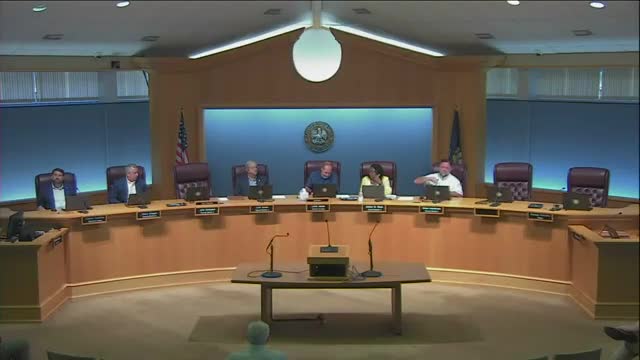
Summary
The Bossier City Council voted to postpone committee recommendations until after an executive session on Aug. 12, after public commenters and council members raised allegations about records retention and legal advice from the city attorney’s office.
The Bossier City Council on Friday, Aug. 8 voted to defer recommendations from its investigative committee until after an executive session scheduled for Aug. 12, following public comments and council discussion about alleged mishandling of public records and disputes over the council—s investigative powers.
Council President (name not specified) opened the special counsel meeting and said he had appointed Councilman Brian Hammonds (District 1), Councilwoman Deborah Ross (District 2) and Councilman Cliff Smith (District 3) to an investigative committee after a July 1 resolution and named Hammonds the committee chair. Hammonds supplied a written report to council members but the council president said the mayor—s office and the city attorney—s office requested an executive session on Aug. 12 to discuss the matter, and he recommended the council defer making final recommendations until after that session.
Nut graf: The vote to defer formal committee recommendations came as public commenters accused city officials of failing to preserve public records and questioned legal advice from the city attorney—s office. Council members and residents expressed conflicting views about whether an executive session would aid or hinder transparency; the council voted to postpone action and to address the committee report after the executive session.
The council approved a motion to defer consideration of the committee—s recommendations. Councilman Cliff Smith made the motion and Councilwoman Deborah Ross seconded it. The council conducted a voice vote; the presiding officer recorded the result as five in favor, four opposed and one absent, and declared the motion carried.
Earlier in the meeting the council approved the meeting agenda on a voice vote. That motion was made by Councilman Creighton Cochran and seconded by Councilman Vince Maggio; the presiding officer said there were no opposed votes.
Public commenters pressed for transparency and for outside review. Wes Marriott, editor of Sobo Live, told the council that members of the city attorney—s office had not preserved emails beyond 30 days and said that failure would violate Louisiana public-records law. "A public official, a an employee of this government, an attorney charged with protecting the legal integrity of Bossier City, voluntarily deletes or fails to retain public records," Marriott said, adding that "Title 44 of Louisiana Revised Statutes" establishes public-records retention obligations. Marriott also urged the council to ask the mayor to place Charles Jacobs and Richard Ray on administrative leave while an investigation proceeds.
Richard Ray, speaking in defense of the city attorney—s office, challenged several of Marriott—s factual assertions and corrected the charter citation Marriott had offered. "It's section 3.09 that ... gives the council the power ... to subpoena witnesses, meaning testimonial subpoenas, administer oaths to those witnesses, take testimony from those witnesses, and require the production of evidence," Ray said. Ray disputed the claim that the city attorney's office had failed to produce documents and said some requested materials lacked sworn statements under penalty of perjury.
Residents expressed differing views on the executive-session request. John Settle, a property owner who said he pays ad valorem taxes in Bossier City, commended the council for addressing the matter but warned that executive sessions can deepen public mistrust if decisions appear secretive. A resident identified as Lowry, a retired Bossier City employee, urged the council to avoid executive session where possible, saying "transparency goes to die" in closed-door meetings.
Councilman Hammonds said he had worked on his report for almost 60 days and that he intended to forward materials to the appropriate authorities if further review was warranted. The council president apologized to the citizens of Bossier City for conduct during a prior committee meeting and said the council should operate with "the utmost respect and decorum."
The council—s immediate next steps are an executive session on Aug. 12 (date provided during the meeting) and a subsequent full-council discussion and decision on Hammonds— recommendations after that closed meeting. The council did not adopt any substantive policy changes at Friday—s meeting; its formal action was the vote to defer the committee recommendations pending the executive session.
Ending: The meeting record shows the council will reconvene after the executive session to consider the committee report and any related formal actions; speakers at Friday—s meeting urged both disclosure to the public and, alternatively, that certain allegations may require closed discussion because of pending litigation or legal advice considerations.