
Council raises backyard chicken limit from four to six following debate over enforcement and neighborhood impacts
Get AI-powered insights, summaries, and transcripts
Subscribe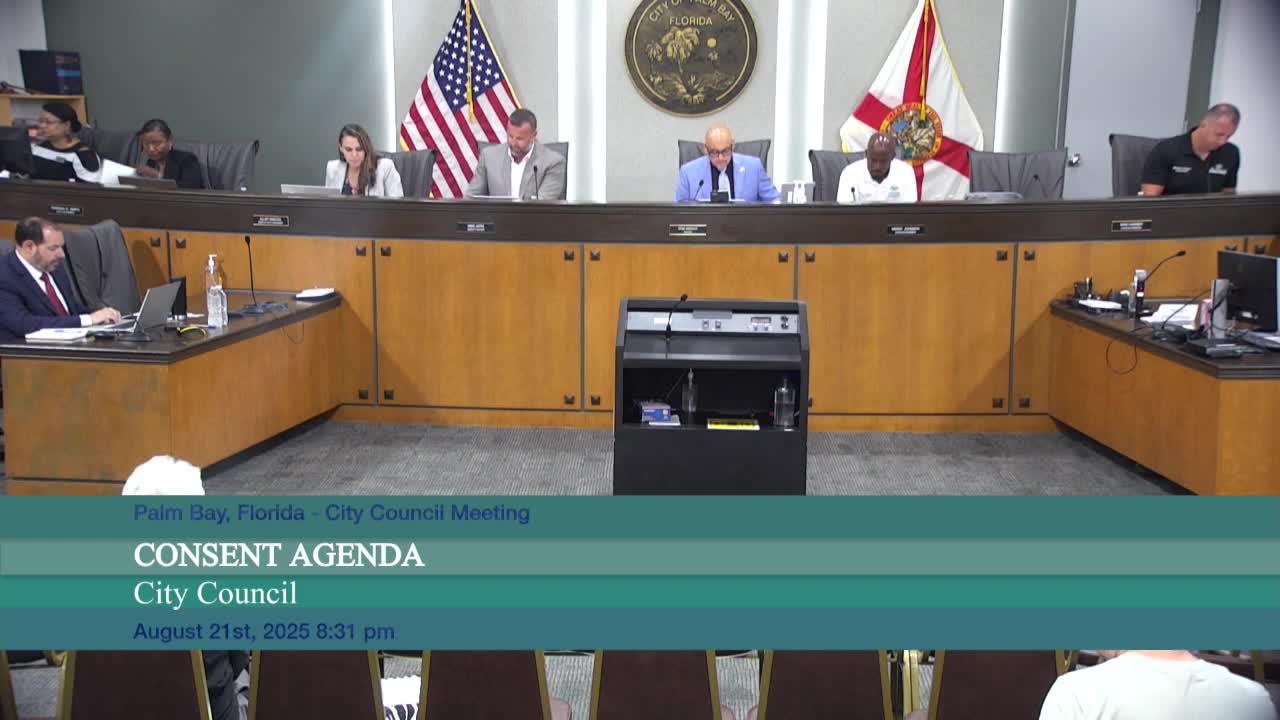
Summary
After public comment and mixed recommendations from staff and Planning & Zoning, the council voted 4‑1 to allow up to six chickens on single‑family lots in several residential zoning districts; roosters remain prohibited.
The Palm Bay City Council voted 4‑1 to amend the land‑development code to increase the number of backyard chickens allowed on single‑family lots in specific zoning districts from four to six.
Growth Management Director Lisa Fraser explained the textual amendment would change the maximum number of chickens permitted in RE, RS‑1, RS‑2, RS‑3 and SRE zoning districts. Staff recommended approval; Planning & Zoning recommended denial, citing lot‑size constraints in some neighborhoods and concerns about maintenance and nuisance complaints.
Councilman Johnson, who introduced the item, said the change was motivated in part by a desire to avoid "weaponizing" code enforcement — neighbors using animal regulations to bring complaints in other disputes — and by the reality that many residents already keep chickens. Several residents urged denial, citing noise, feral animals and difficulty enforcing backyard‑animal rules on small residential lots. Others praised the change and noted chickens commonly produce one or two eggs per day.
City staff acknowledged enforcement limits. The city’s code‑compliance officers cannot enter private backyards without cause and rely on courtesy notices and permit checks; the clerk and growth‑management staff noted that accessory structures for animal housing still require permits and that animal‑welfare complaints can be referred to Brevard County animal services.
The ordinance amendment passed on a roll call: Councilman Johnson, Councilman Hammer, Councilman Langevin and Deputy Mayor Jaffe voted yes; Mayor Medina voted no. Roosters remain prohibited by code.
Why it matters: changes to animal‑keeping rules affect homeowners, neighbors and code‑enforcement workload. Council members asked staff to use outreach and permitting to reduce future conflicts.
The change amends administrative limits for a subset of residential zones and does not affect other city code provisions on animal welfare, nuisances, accessory structures or enforcement processes.