Swannanoa planners to take updated policy map and three vision options to public after identifying engagement gaps
Loading...
Summary
Planning staff presented Version 3 of an updated Swannanoa policy map, described demographic and geographic gaps in outreach, and said a public poll with three vision-statement options and the policy map will be released for community feedback.
Planning staff for the Swannanoa Township planning process in Buncombe County presented an updated policy map and described gaps in community engagement, and said staff will release a public poll offering three vision-statement options alongside the map.
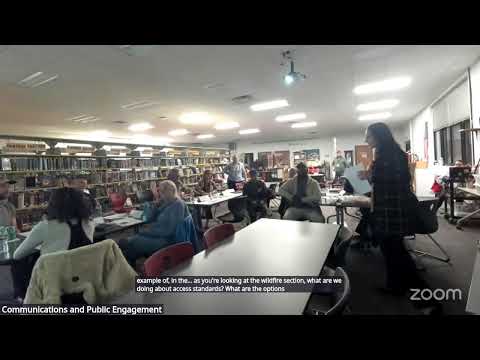
At a community workshop, planning staff showed “Version 3” of the policy map, explaining the map separates a broader green “resilience area” (which includes the orange highlight area) from smaller orange highlighted neighborhoods where policy recommendations would focus. The map’s three highlighted clusters include an area northeast around Lake Eden (streams that flow into the Swannanoa River), a southern section near Lytle Cove, and a western extension added to include communities that had been omitted in earlier drafts.
The map and the vision options will be distributed to the public along with a poll, staff said. “We will bring that policy map to them and ask them about both that green resilience area and about that orange, highlight area,” a planning staff member said. Staff said the poll will ask respondents to pick which of three draft vision statements best matches the future they want and to note anything missing.
Why it matters: staff said the map and poll will steer where future policies and actions in the plan are concentrated, and that broad public participation is important because the map will shape later policy choices.
Engagement gaps and outreach plans
Staff reviewed early engagement results and said there are notable gaps in the data. Planners reported almost 400 people took the SWOT-analysis poll, but demographic information is incomplete because many early, in-person contacts were informal interactions (including many Spanish-speaking participants) where planners collected poll responses but did not record demographic details. “One of the problems with our early engagement was that we were engaging people in person in kind of an informal manner out in the community. We talked to a lot of people that were Spanish speaking. We don't have any demographic data for them,” the planning staff member said.
Staff also reported that about a quarter of poll respondents did not disclose whether they live or work in Swannanoa. The team identified underrepresentation in several groups and places: people around age 26 (referred to as a missing age cohort), residents of three affordable housing apartment complexes along the main U.S. 70 corridor, and some neighborhoods such as Riceville and parts of the northern and southern sections of the township.
Planners described outreach steps to address gaps: partnering with Warren Wilson College, Owen Middle School and the local high school to reach younger residents, working with the county communications department to target underrepresented neighborhoods, and distributing paper postcards and flyers (Spanish and English) at local businesses and community centers. Planning staff said they will email packet materials and make paper copies available for committee members to distribute once the poll goes live.
Vision-statement poll and next steps
Committee members present agreed to produce three vision-statement options developed during the meeting to present to the public. The staff noted each table’s draft could be submitted as one of the three options, and the public poll will also include a free-text comment box to capture edits or missing ideas. Staff said the poll would likely go live the following Wednesday and will remain open into the new year to allow extended feedback.
Members raised concerns about possible effects of branding and tourism-focused development. One attendee cautioned that leaning too strongly on an outdoor-recreation brand risks displacement: “I just want to be really careful that we're not, you know…how has this worked for other areas? Like…People are pushed out of their community,” the attendee said, urging attention to affordability and accessibility for long-term, working-class residents.
Staff assignments and materials
Staff said they will provide committee members with: (1) the updated policy map and three draft vision statements for the public poll, (2) postcards and flyers in English and Spanish for local distribution, and (3) electronic and paper copies of materials. Committee members were asked to engage neighbors and community contacts and to bring comments back to the next meeting.
Ending
Staff said the poll, map and supporting materials would be posted online and in paper form, and that committee members will have a continued role in outreach and later policy development once public responses are analyzed.