Get AI Briefings, Transcripts & Alerts on Local & National Government Meetings — Forever.
Palm Bay council votes 3-2 to censure Councilman Chandler Langevin after months of controversy
Summary
The City of Palm Bay City Council adopted a resolution censuring Councilman Chandler Langevin for conduct the body called "unbecoming" and for use of city letterhead; the vote was 3-2 after several hours of public comment and legal briefing.
The Palm Bay City Council voted 3-2 on Oct. 9 to adopt a resolution censuring Councilman Chandler Langevin for remarks and conduct the council said violated the city’s code of ethics and for improper use of City of Palm Bay letterhead. The measure passed after public testimony and a legal briefing on the scope of council disciplinary powers.
The resolution says Langevin’s public remarks and use of city stationery violated chapter 8 of the city’s code of ethics, including requirements that officials "act above reproach" and avoid speech that undermines public confidence. The council decision does not remove Langevin from office or bar him from voting; instead it removes him from appointment eligibility to city boards and requires him to obtain majority council consensus before placing items on the agenda and to limit remarks during the council reports portion of meetings.
City attorneys briefed the council on U.S. Supreme Court precedent, including Houston Community College v. Wilson, telling members that elected bodies historically have the power to censure colleagues and that a censure that does not prevent a member from performing core duties is legally permissible. The city attorney said that the measures in the resolution do not stop Langevin from voting or otherwise performing the central functions of a council member.
Deputy Mayor Jaffe, who moved the censure, said the body’s action was necessary to maintain trust in government and to uphold professional standards. "Officials must support a constructive and safe workplace for city employees, residents and businesses," Jaffe said. Mayor Rahm Medina, who joined the motion, said the censure was an "expression of official disapproval" and cited the city code.
Langevin disputed the council’s judgment and defended his right to speak to constituents. In a lengthy statement on the dais he said he would not apologize for advocating immigration and sovereignty policies he said reflect the views of many of his constituents, but he did withdraw one specific remark and apologized for its language. He also said he would challenge any restriction on his ability to speak at council reports and described the council action as a dangerous precedent if it were to limit elected members’ speech.
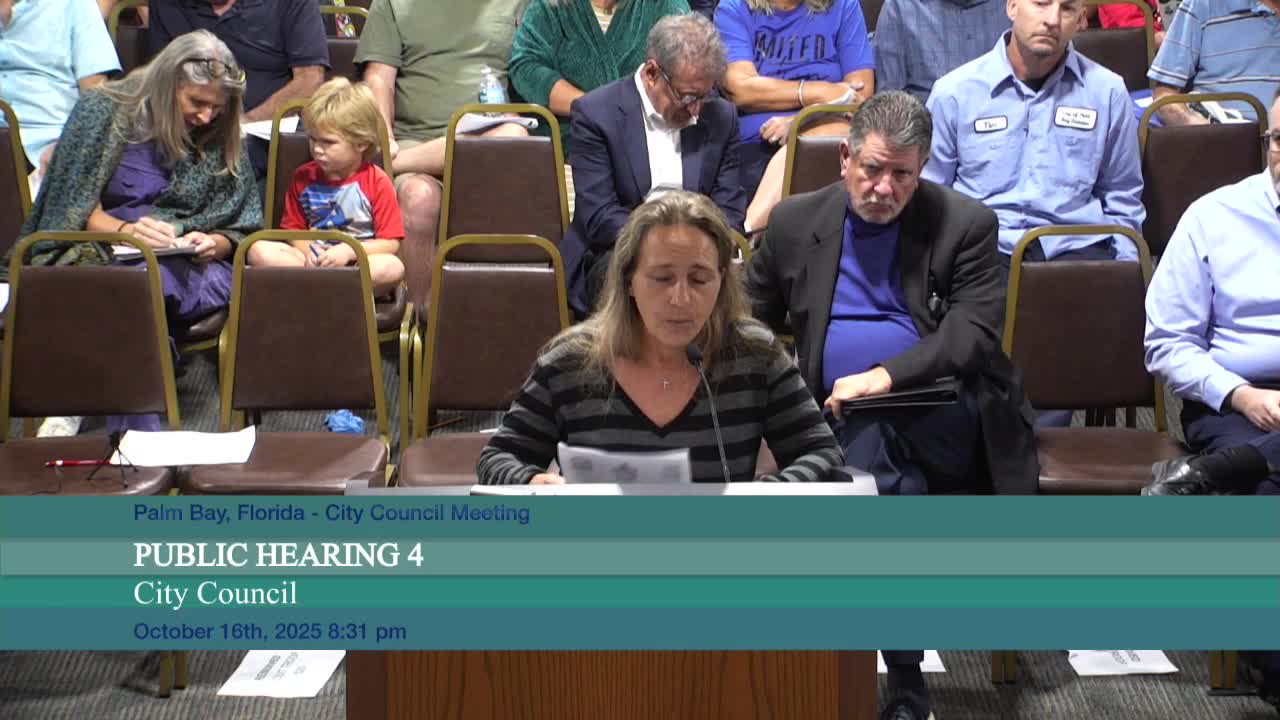
The measure prompted extensive public comment: some speakers urged the council to act, describing Langevin’s remarks as divisive; others defended him and warned that censure could chill political expression. Ross Camarillo, a Palm Bay resident, said he opposed the censure, calling it a step toward limiting political rights. Other residents said they wanted the council to move on to city business after the vote.
In a roll-call vote: Deputy Mayor Jaffe, Mayor Medina and Councilman Johnson voted in favor of the resolution; Councilmen Hammer and Langevin voted no. The council did not suspend or remove Langevin from office.
The council also discussed next steps for related inquiries. The city attorney advised that she would brief council privately if formal litigation is filed related to council action; she said no lawsuit had been served as of the meeting’s end. The council chair asked staff to monitor any official complaints or legal filings and to report back publicly where possible.
The censure ends a months‑long controversy in Palm Bay that drew regional attention and heavy public attendance at council meetings. The council’s written resolution is effective immediately and will be entered into the city record.