Get Full Government Meeting Transcripts, Videos, & Alerts Forever!
Get email alerts on the Public Safety topic
No spam. Unsubscribe anytime.
Panama City approves Red Speed contract for school-zone speed cameras; 4-1 vote follows debate on accuracy and vendor share
Summary
Panama City approved a three-year contract with Red Speed Florida LLC to deploy speed cameras in 11 school zones, with a 4-1 commission vote after questions about accuracy, independent calibration and vendor revenues.
The Panama City Commission voted 4-1 on Sept. 23 to approve a three-year contract with Red Speed Florida LLC to install a turnkey school-zone speed photo-enforcement (SPE) system at 11 city-identified school zones.
What the contract covers
Under the agreement described by staff and the vendor, Red Speed will install and maintain at least one speed-warning sign with a flashing yellow beacon at each monitored approach. Speed enforcement would be active 30 minutes before school, during school hours and 30 minutes after school; the automatic license plate recognition (ALPR) component would operate 24 hours per day but would not issue speed citations outside the authorized school-zone enforcement windows.
All alleged violations will be reviewed and verified by a qualified Panama City law-enforcement officer before any citation is mailed. The contract’s initial term is three years and allows the city to terminate the agreement with 30 days’ notice; Red Speed agreed to remove equipment at no cost upon termination.
Debate and technical safeguards
Commission debate focused on accuracy, auditability and vendor arrangements. Commissioner Granger voted no, citing ongoing community concerns about automated enforcement programs. Commissioner Hughes and others asked for a 30-day warning or monitoring period during which Red Speed would gather data and produce reports for the city; staff and the vendor said they are prepared to gather a 30-day dataset during an initial warning period and to provide granular speed-distribution data to the commission.
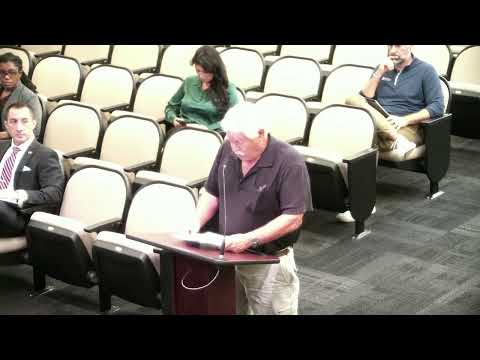
Red Speed senior vice president Greg Parks told the commission the company performs daily automated diagnostic tests and an annual independent third-party calibration. “We’re very data driven,” Parks said, offering to gather 30 days of data during a warning period and to provide public-facing data visualizations that show speed distributions and the most egregious violations.
Committee concerns included prior implementation errors Red Speed acknowledged in other Florida jurisdictions, including a Palm Bay incident in which an engineer inadvertently misconfigured a jurisdiction code; Red Speed said all affected citations were dismissed and the company implemented additional safeguards.
Revenue share and vendor fee
Commission discussion touched on the vendor’s fee structure. A figure cited during questions indicated Red Speed’s share of a standard violation fine would be approximately $21 of a $100 notice in the contract presented to the commission. Commissioners asked for clarity on revenue flows and the city’s expected net receipts; staff said administrative procedures and local ordinances would govern adjudication and revenue remittance and that citations reviewed without officer approval would not be issued.
Vote and next steps
The commission approved the contract 4-1 (Commissioner Granger opposed). Staff said the community-notification period would include media and school outreach, and that city law enforcement would validate every citation. Staff will return executed contracts and a proposed 30-day warning-data period implementation plan.