Get Full Government Meeting Transcripts, Videos, & Alerts Forever!
Get email alerts on the Budget Allocation Marina Theater topic
No spam. Unsubscribe anytime.
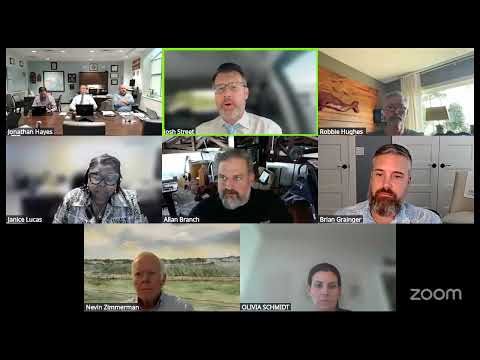
Panama City commissioners debate using roughly $5 million of FEMA funds for marina improvements or Martin Theater contingency
Summary
City commissioners reviewed three funding options for about $5 million in FEMA-eligible dollars, discussing whether to boost contingency for the Martin Theater complex or reserve the money for Panama City Marina utilities and promenade work. Officials pressed staff for cost estimates, procurement constraints and legal risks if the city reduces the
Panama City commissioners and staff spent a lengthy workshop discussion weighing whether to allocate roughly $5 million in FEMA-eligible funds to the downtown Panama City Marina or to add contingency and cover change orders for the Martin Theater complex (the Martin Theater, the Ritz building and the Tennessee House).
The question came into focus after consultants and staff presented three options that reallocate remaining FEMA funding after the larger projects have been funded. Olivia Schmidt of the Integrity Group summarized the options and the available totals, saying the city had about $4.989 million readily available and “potentially to go up to the 5.1” million depending on final scopes and costs.
Why it matters: Commissioners repeatedly said they wanted to avoid surprise local cost increases and legal exposure while also not undermining momentum on two high-profile downtown projects. The Martin Theater project has active contracts and recent change orders; staff and the contractor said much of the procurement and many materials are already committed, while other commissioners urged options to contain further escalation and preserve a viable marina redevelopment package.
Most important facts - Two competing priorities: finish and protect the Martin Theater project from additional cost escalation, or reserve about $5 million for marina uplands infrastructure (utilities, promenade, railing and other site work) to support a private marina partner and upland redevelopment. - Staff and the construction team said a large share of the Martin contracts and materials are already purchased. Jared and other staff estimated the project is largely bought out; staff repeatedly described the next round of potential change orders as a mix of items that are likely FEMA eligible and a small local cost share. Schmidt said most recent estimates show about 90% FEMA reimbursement and roughly 10% local share for the change orders under review. - Commissioners asked for clearer, line‑by‑line estimates before a final vote. Mayor Branch and other commissioners asked staff to return with a list of likely change orders, which ones would be FEMA‑eligible, and a catalog of marina upland options that could be executed quickly (for example, promenade/railing vs. longer-term upland development). - Cost figures and scenarios discussed in the meeting: options presented showed Martin Theater funding scenarios near $35 million (one iteration cited $35.5 million) and an underfunded Martin scenario in the high $27 million range that would free roughly $13 million for marina use. Staff estimated potential tariff and change-order exposure in the $0.8–1.2 million range on the most recent itemized PCOs, and commissioners referenced an overall change-order exposure approaching about $2 million to date; seating storage was cited as roughly $80,000 per year. - Marina cost estimates mentioned in the meeting: promenade (including railing, lighting and widened sidewalk) roughly $2.3–2.5 million; boat‑ramp/enhancement roughly $1.8 million. Panhandle Engineering supplied recent boat‑ramp numbers; the promenade estimate was about a year old and may be lower now. - Legal and procurement limits: legal counsel (Nevin) said the city’s contract language contemplates mediation/arbitration and potential litigation if the city unilaterally reduces scope in a way the contractor disputes; reducing work will require negotiation and could pause disputed elements of the job. Staff also noted federally funded work must meet federal procurement standards and that any marina alternate funded by FEMA would require design, EHP (environmental/historic preservation) review, state review and FEMA approval before obligation.
Discussion and differing viewpoints Several commissioners favored preserving momentum and keeping the Martin Theater project fully funded (or sufficiently funded with a contingency) to avoid later cost increases or the loss of a turnkey facility that would attract a vendor to operate it. Commissioner Brian Granger said he preferred option 2 — which keeps funding for the theater and leaves roughly $5.1 million for the marina — because the city has repeatedly voted to fund the full Martin project and a completed complex would be more attractive to an operator.
Other commissioners, including Commissioner Street, urged staff to present explicit, implementable cost‑containment options for the Martin project (for example, identifying items contractually not yet purchased that could be deferred or deleted without compromising core functions). Street asked for an itemized list showing which purchases are already committed and which remain negotiable; he told staff to bring options that reduce exposure rather than simply propose additional spending.
Staff perspective and technical constraints City construction staff and the contractor representatives said it is common on a renovation of this scale to have many subcontract awards and purchase orders in place early to protect pricing and supply lines. They noted the project’s complexity — three buildings integrated into one program — makes certain midstream scope reductions expensive because mechanical/electrical/plumbing systems and code egress paths are designed as a unified whole.
Keith (staff) and Jared (staff) said the project team believes much of the work is bought out and that the most recent change‑order exposure likely will be within roughly a 10% range for the whole project; staff called that a reasonable figure for a historic renovation of this size and complexity. They also said that some change orders are already FEMA eligible and would be mostly reimbursed, while a modest local share remains possible.
Marina options and timing Commissioner Hughes and others emphasized the practical value of dedicating the available FEMA funds to marina infrastructure (utilities to t‑dock, power to slips, promenade and railings) because utilities are a gating item for upland development and for bringing wet slips online. Staff confirmed some infrastructure (water) is present near the t‑dock but that electrical and sewer work will be costlier; FPL indicated it could provide the primary electrical supply (transformer) to the t‑dock at no cost to the city, pending engineered plans.
Staff recommended the commission identify its preferred marina priorities (for example, promenade and utilities versus boat‑ramp improvements) and asked for direction so staff could pull together updated cost estimates and a recommended alternate scope to submit to FEMA for review.
Legal risk and procurement Nevin, the city’s legal counsel, told commissioners that if the city tried to unilaterally reduce scope that Burke Construction (the general contractor) believed it was contractually entitled to perform, the contract calls for mediation and — if unresolved — potential litigation. Nevin said a negotiated deductive alternate or agreement is the likely path; it would take time and could pause disputed work. Staff cautioned that stopping work indiscriminately risks contractor damages and that some field work may be necessary for safety or to avoid greater future costs.
Next steps Commissioners asked staff to return before the scheduled commission meeting (the item is set for the September 23 agenda) with: (1) an itemized list of potential change orders with staff’s assessment of FEMA eligibility and estimated local share; (2) specific cost estimates for several marina upland options (promenade/railing, utilities to slips, boat ramp/enhancement) along with estimated timelines (short vs. long execution windows); and (3) clearly defined contingency items that would be covered if the commission adopts the option to increase the Martin Theater contingency. Staff also agreed to provide periodic updates so the commission is not surprised by developing PCOs.
Ending Commissioners did not take a final vote during the workshop. They scheduled the topic for the forthcoming commission meeting and directed staff to return with clearer cost breakdowns, legal implications of any scope reduction, and procurement constraints so elected officials can choose among the presented options with more precise financial and schedule information.