Get Full Government Meeting Transcripts, Videos, & Alerts Forever!
Get email alerts on the 1300 Cleveland Avenue topic
No spam. Unsubscribe anytime.
Wausau committee hears residents’ concerns about contamination at 1300 Cleveland Ave., directs staff to plan non‑industrial redevelopment
Summary
Residents urged officials to keep 1300 Cleveland Avenue residential and press for full cleanup after decades of contamination. Staff briefed the committee on recent site investigation work and the next regulatory steps; the committee asked staff to draft a public participation plan for non‑industrial reuse and return in November.
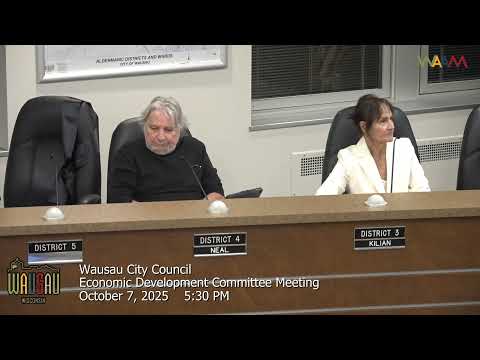
Residents from the neighborhood around 1300 Cleveland Avenue pressured the Wausau Economic Development Committee on Oct. 7 to keep the city‑owned parcel for residential or community use and to fully remediate historic contamination before any development proceeds.
Why it matters: The parcel has a long documented contamination history and was rezoned to residential in 2018. Neighbors told the committee they fear health impacts, noise from nearby industry and freight operations, and repeated broken promises about cleanup. Committee members and staff said the city is moving through state environmental procedures and needs a clear redevelopment direction from the council to pursue grant funding and a “green team” with the Wisconsin Department of Natural Resources (DNR).
Public commenters, many of them longtime residents, described decades of industry‑related problems near the site and asked the city to rule out industrial uses. “I don’t want this to become an industrial district because of noise,” said Sid Elford, who said he has lived near the site for more than 50 years. Tom Killian, who identified himself both as a resident and later spoke in his capacity as an alder, said neighbors have long opposed industrial expansion on the property and urged the city to “put an end to the poor governance” that left the site contaminated.
City staff summarized the environmental work to date. Eric Lindman, the city’s public works director, said consultants hired in 2020 carried out soil and groundwater testing after the DNR issued a responsible‑party letter. He said the formal site investigation was completed this summer and the city is moving to a Remedial Action Options Report (RAOR). “There’s a difference between capping and full excavation,” Lindman told the committee, explaining that residential (nonindustrial) cleanup standards typically require remediating a larger footprint than industrial standards.
Staff said the DNR has signaled funding opportunities but that the city needs to show a redevelopment direction to improve grant prospects. Randy Feifrick, economic development staff, said he has discussed a potential DNR “green team” and that the DNR’s Jane Gray indicated state funding could be available if the city participates.
After discussion and public comment, the committee asked staff to prepare a public‑participation plan that emphasizes non‑industrial uses, and to return with that plan at the committee’s November meeting. No rezoning or permit decisions were made at the Oct. 7 meeting. Mayor Denny and multiple alderpersons expressed support for pursuing residential or community uses and for prioritizing thorough remediation.
What’s next: Staff will develop a public engagement plan and continue DNR coordination on the RAOR and remedial options. The DNR contact told staff the agency will grant schedule flexibility if the city shows progress; staff said the RAOR submission currently being planned aimed at January but that the DNR has already granted an extension contingent on demonstrated progress.
Ending note: Neighbors urged city leaders to hold to the 2018 rezoning direction and to seek cleanup to the highest feasible standard before approving future uses.