Get Full Government Meeting Transcripts, Videos, & Alerts Forever!
Get email alerts on the Solid Waste Recycling topic
No spam. Unsubscribe anytime.
Lake County committee reviews SWALCO—s 2026 legislative priorities: food-scrap diversion, hazardous-waste EPR, mattress recycling and plastic-bag fees
Summary
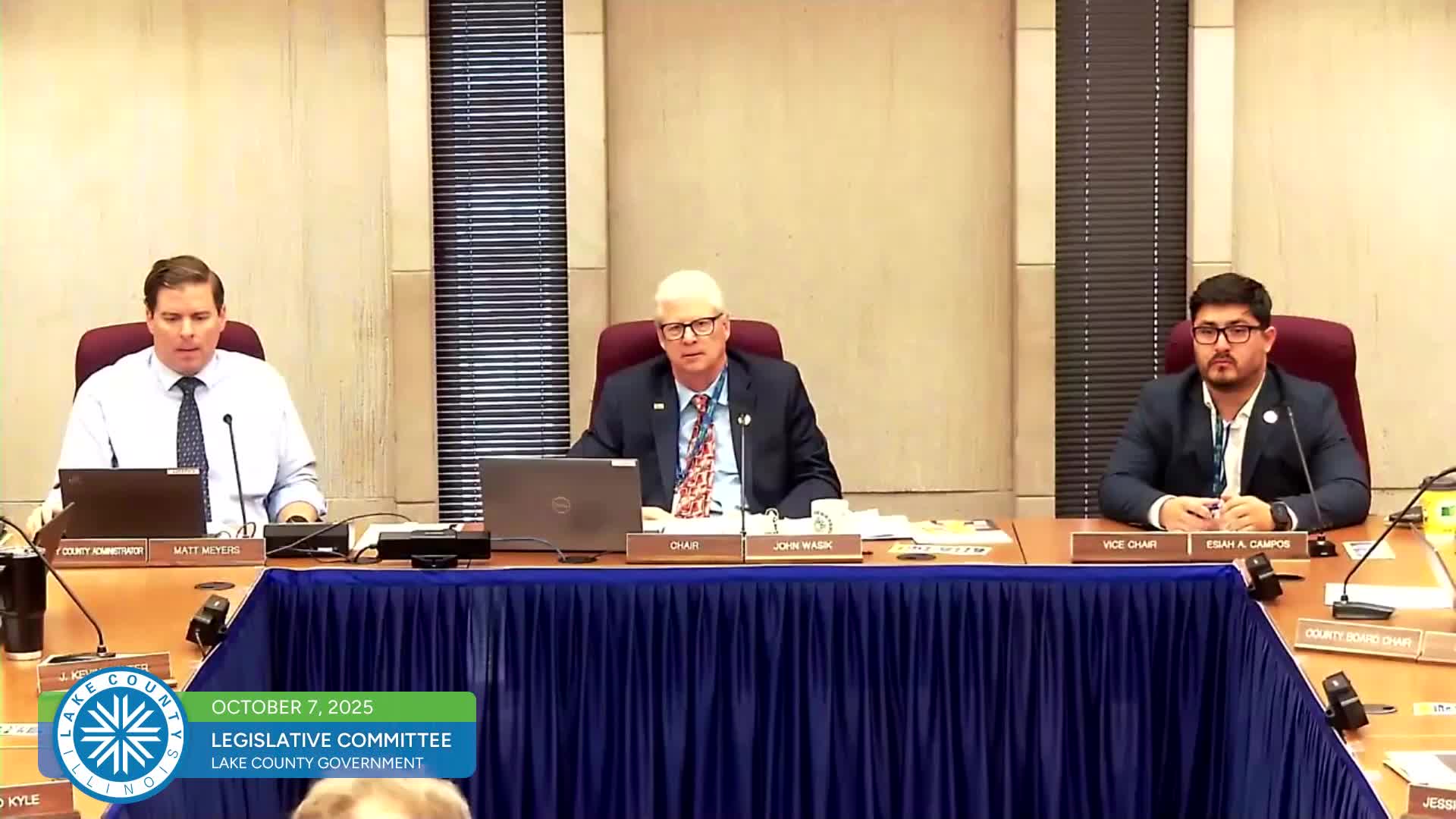
The Lake County Legislative Committee heard a multi-part presentation Oct. 7 from Walter Willis of SWALCO outlining proposed 2026 bills to expand food-scrap diversion, establish EPR for household hazardous waste, create a mattress recycling fee, and revise proposed plastic-bag legislation.
Walter Willis, executive with the Solid Waste Agency of Lake County (SWALCO), told the county legislative committee on Oct. 7 that SWALCO will seek or monitor several bills in 2026 focused on reducing landfill waste and shifting disposal costs to producers.
Food-scrap diversion: Willis asked the committee to support Senate Bills 1397 and 1398, measures he said would develop markets for compost and drive food-scrap recovery from landfills. "They've got mountains and mountains of it out there," Willis said of the county—s largest compost facility, describing market limits that leave vendors unable to accept more material.
Willis said the bills mirror laws adopted in other states and would expand food donation and composting efforts. He said SWALCO is coordinating with DePaul University on a market-impact study and the Natural Resources Defense Council on an economic-impact study to show job creation potential from increased diversion.
Household hazardous waste (HHW) EPR: Willis discussed Senate Bill 1394 and House Bill 1893, which would expand extended producer responsibility (EPR) for HHW, shifting part of collection and disposal costs to manufacturers as has already happened with paint and batteries. SWALCO said its household hazardous-waste program costs about $450,000 annually, and an EPR arrangement could reduce that burden for local budgets.
Mattress recycling fee: Willis described a proposed approach seen in four other states where an up-front eco-fee of roughly $20 paid at point of sale funds mattress recycling and recovery programs. He told the committee that mattress disposal costs at landfills have risen to $75-$100 per unit in some areas and that the fee would be intended to cover recycling without shifting the entire cost to haulers or local governments.
Plastic bag legislation: Willis critiqued pending Senate Bill 1827, which would largely eliminate single-use plastic bags in three years and impose a 10 fee on some paper bags. He said SWALCO prefers an escalating fee across paper, single-use plastic and durable reusable bags to drive behavior over time and proposed sharing proceeds with local governments for litter cleanup, recycling and composting programs. "We believe we need to go back to the old model and have the fee escalate over time," Willis said. He warned the current bill would leave retailers with much of the fee revenue and would not change consumer behavior as effectively.
Committee response and follow-up: Committee members asked detailed questions about revenue estimates, fee mechanics, producer support, and expected timelines. Several members expressed concern about creating a new revenue stream for state government; others emphasized the environmental costs of continued plastic-bag use and the potential for behavior change through fees. The committee agreed to add SWALCO items to the county—s legislative "items of interest" list and to work with staff on drafting specific language for support or monitoring when sponsors are identified.
Votes and next steps: No formal roll-call votes were taken on SWALCO—s requests during the Oct. 7 meeting; staff said they will update the committee when bill sponsors are identified and when text becomes available for specific positions.
Willis left flyers and offered to return with bill text and economic analyses for committee review.