Students, unions and residents urge council to back Harvard graduate student union after university 'carve-outs'
Loading...
Summary
Dozens of graduate student workers and union allies urged the Cambridge City Council to back the Harvard Graduate Students Union after Harvard classified many research assistant roles as non‑employees; several council policy orders were adopted later in the meeting.
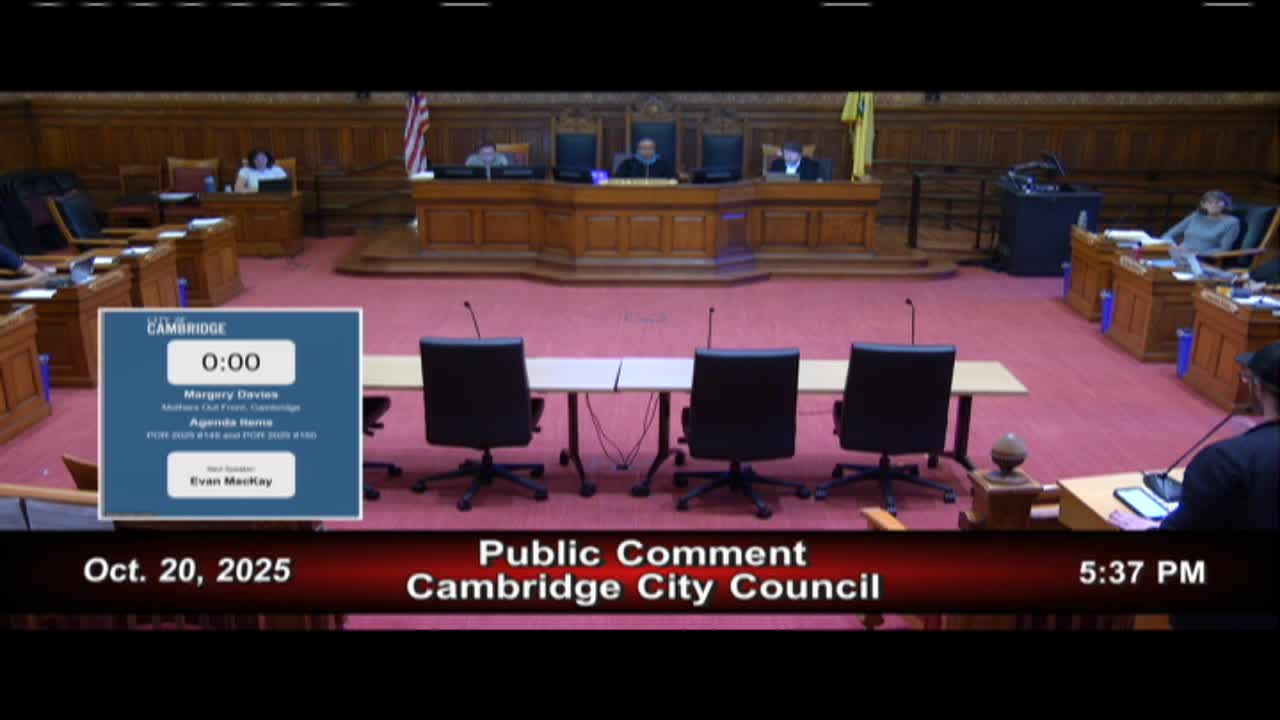
Dozens of graduate students and union allies used the public‑comment period Monday to urge the Cambridge City Council to support resolutions opposing Harvard University—s recent reclassification of hundreds of graduate student workers.
Speakers described the action as a unilateral —carve‑out— that removed many students from the Harvard Graduate Students Union bargaining unit and cut access to benefits the speakers said they rely on for dental care, emergency funds, childcare assistance and other nonwage supports. Speakers included stewards and bargaining‑committee members from the Harvard Graduate Students Union (HGSU), researchers, Ph.D. candidates and representatives of unions and labor councils.
Evan McKay of the Greater Boston Labor Council and multiple graduate students shared personal stories about how access to union benefits affected medical care, child care and immigration-related costs. Laura Chen, a doctoral student and union steward, said Harvard—s decision removed tens of dollars in benefits and left colleagues with little notice. Other students described being moved to appointments described by the university as —externships— although their duties and pay remained the same.
Speakers requested the council—s support for a policy order (referred to in public comment as policy order 8) asking the university to reverse the carve‑outs and to bargain in good faith. Commenters linked their requests to larger state-level proposals and asked the city to join an allied municipal push to protect graduate student workers.
Later in the meeting the council adopted a package of policy orders numbered 1 through 8; that set of items passed on a 6–3 vote. The public record of the meeting shows the earlier testimony and the later council actions on policy orders; councilors who opposed some of the specific orders said they had substantive concerns about the content of particular policy orders rather than the students— claims.
Ending: Students and union advocates said they would continue outreach to the council while urging public pressure on Harvard; the council—s adoption of several policy orders in the same meeting means the body took formal action on a set of measures that include higher‑education and labor‑support items.