
Internal audit finds procurement largely compliant but flags board-advertising and documentation gaps
Get AI-powered insights, summaries, and transcripts
Subscribe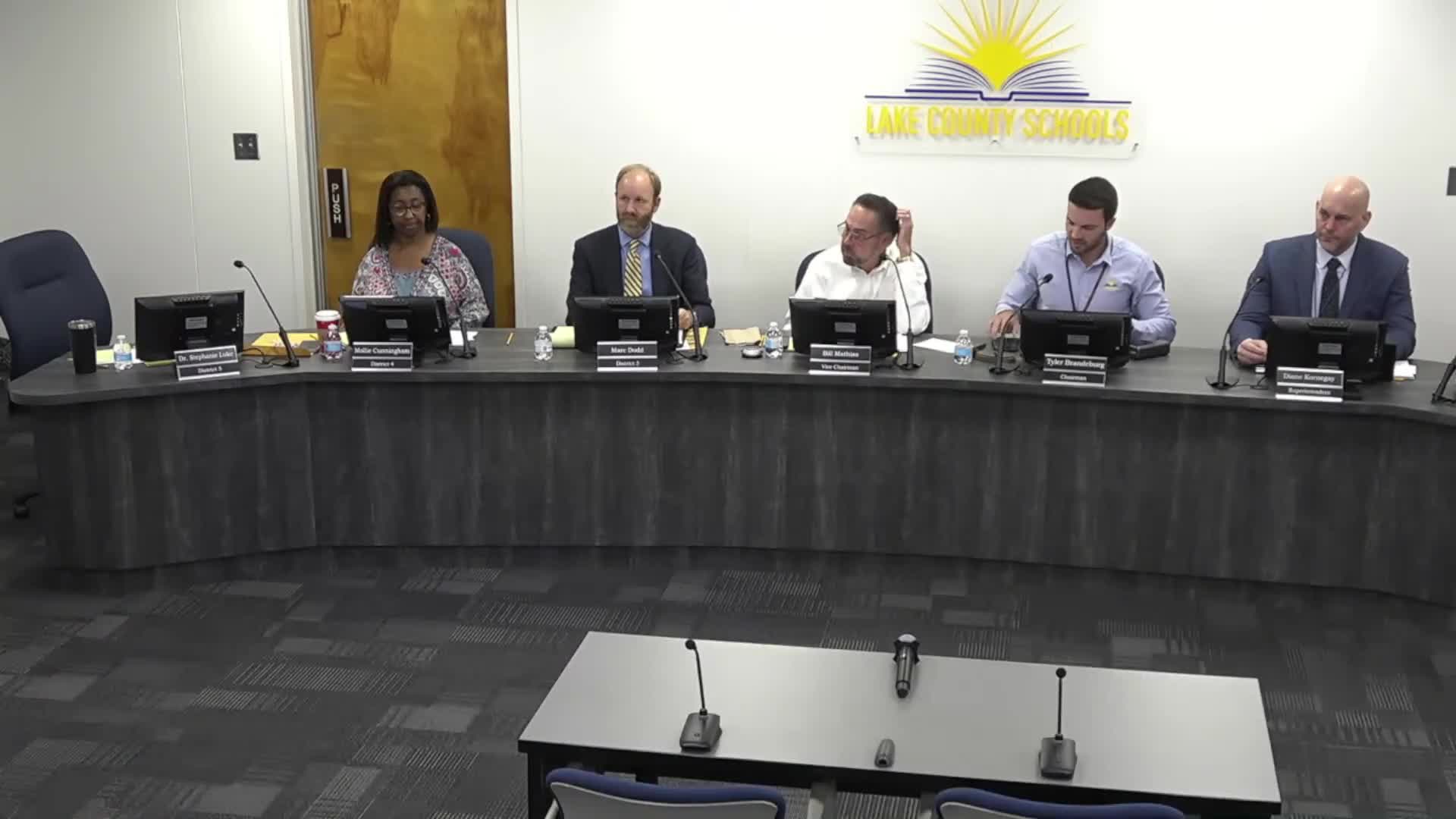
Summary
An internal audit of Lake County Schools’ competitive procurement found generally strong controls but noted gaps in formal advertisement for construction solicitations, a missing executed contract for one sole-source purchase, and recommendations to tighten selection-committee and vendor documentation practices.
An internal audit presented to the Lake County School Board on Sept. 30 found the district’s competitive-procurement controls overall were “clean” while identifying several procedural and documentation gaps that the auditors recommended the district fix.
The audit firm told the board it reviewed procurement processes and sampled construction- and nonconstruction solicitations, vendor files and selection-committee practices. Auditors reported they found: no consistent, documented process for advertising construction-related solicitations in the newspaper as cited in board policy 3 2322; one sole‑source procurement whose file did not contain a finalized, executed vendor contract; one vendor file missing an up‑to‑date IRS Form W‑9 (with no payments made while the W‑9 was expired); and several critical procurement activities that lacked a detailed written procedure manual.
The auditors recommended that procurement either implement an internal process to ensure formal advertisement in the manner the policy prescribes or propose a policy change to the board to reflect current practice using the VendorLink system. The report also recommended the district consider adding conflict‑of‑interest attestations for public members who serve on selection committees, or revise the board’s role so the selection committee performs evaluation scoring of shortlisted vendors before the board’s final decision.
Auditors told board members they observed that selection committees were often composed primarily of end‑user staff and that the files reviewed lacked clear evidence that committees solicited financial expertise when evaluating bids. Auditors cautioned that members of the public sometimes serve on construction selection committees and that the district’s current conflict‑disclosure relies on self‑declaration; auditors recommended a stronger attestation process for outside members.
District staff and the audit team agreed the procurement report was largely positive. Management told auditors it is finalizing a comprehensive procurement procedure manual intended to supplement existing board policies, and auditors noted that vendor documentation was generally cleaner than in many districts they audit.
Board members discussed the recommendations and asked whether the statutory advertisement requirement cited in the report applied to the district; auditors said their citation referenced board policy 3 2322 after legal counsel opined the state statute’s application to the district was unclear. The audit team recommended procurement either adopt new internal steps to comply with the current policy or present a board policy amendment to reflect actual advertising via VendorLink.
The audit package included a management action plan and timelines. Auditors and staff said they would bring back follow up as the district finalizes its procedure manual and considers changes to the selection‑committee process.
The district and auditors emphasized that the issues flagged were procedural, not evidence of widespread wrongdoing, and that the procurement team’s controls were otherwise sound.