Get Full Government Meeting Transcripts, Videos, & Alerts Forever!
Get email alerts on the Shoreline Resilience topic
No spam. Unsubscribe anytime.
Planning board approves Inlet Drive shoreline resilience project after public debate over access and views
Summary
The City of Saint Augustine Planning and Zoning Board approved a city-led project to build a landward retaining wall, upgrade stormwater infrastructure and design a living shoreline along Inlet Drive to improve flood protection, while noting limits on public access and a tight federal grant deadline.
The City of Saint Augustine Planning and Zoning Board on Oct. 7 approved the Inlet Drive Shoreline Resilience Project, a city capital improvement effort to build a new landward retaining wall, upgrade stormwater systems and design a living-shoreline enhancement along Inlet Drive in North Davis Shores.
City Chief Resilience Officer Jessica Beach told the board the project would build a 692-foot precast segmented concrete retaining wall landward of the existing wall, tie into existing bulkheads at 117 and 151 Inlet Drive, replace two curb lengths to improve stormwater access and install tide check valves. "The goal of this project is to provide a higher level of flood protection for a portion of Inlet Drive, a critical road in the North Davis Shores neighborhood," Beach said.
The project stems from repeated shoreline damage dating to hurricanes Matthew and Irma and was awarded funding through the Florida Department of Environmental Protection’s Resilient Florida grant program, Beach said. The city has $1,100,000 in grant funding (federal ARPA funds administered by DEP) for design, permitting and as much construction as can be completed before the grant closeout date, which the city said is June 30, 2026. Beach said getting work started before that deadline is time-sensitive.
Nut graf: The board approved the project after hearing supporters who live on Inlet Drive and multiple residents who said the existing coquina block wall is failing. City staff emphasized the project will be land-based, keep work above mean high water where possible, and pair a hard retaining wall with a separate living-shoreline pilot to reduce wave energy and help habitat recruitment.
Board and staff said the primary objective is protecting an identified emergency access road. Beach said the work addresses three flood types: storm surge (wave action), nuisance high-tide flooding and rainfall-compounded flooding. The project design includes oyster gabions, reef-wall wave-attenuation devices, backfill between existing and new walls, and tide-run storm upgrades. Beach said the work will avoid impacts to mangroves and wetlands where possible and that the team secured an exemption verification from the Florida Department of Environmental Protection and a no-permit-required determination from the U.S. Army Corps of Engineers for the landward wall work.
Public comment was strongly in favor. Multiple residents who live on or near Inlet Drive described repeated shoreline erosion, past hurricane damage and frequent flooding. "It would be wonderful not to worry every rainstorm whether we're gonna flood or not. So I strongly support the project," said Roger White, who said he launches kayaks within walking distance of the site. Longtime residents including Toby Thorpe and Robert Thousand recounted historical shoreline loss and urged construction to protect homes and the road.
Opposition and concerns focused on public access, views and the living-shoreline design. Speakers and some board members asked whether the wall would block views and whether the project could include formal public access such as stairs, ADA access or benches. Beach and staff said adding formal access would change the project's scope, require additional permitting, and was not allowed under the current grant; they said access improvements could be considered in a later, separate project. Beach said the exposed portion of the wall would be roughly three feet above current ground elevations and that mangroves are more likely to limit views than the wall itself.
The board’s discussion emphasized urgency and grant constraints. Charles Pappas, a board member, said he was "in favor of this project" and encouraged leveraging neighborhood grants for benches later. Members asked whether the living-shoreline design would return to the board; staff said the living-shoreline concept is at roughly 30% design and that the board would likely see final plans for that element when permits and funding approach construction.
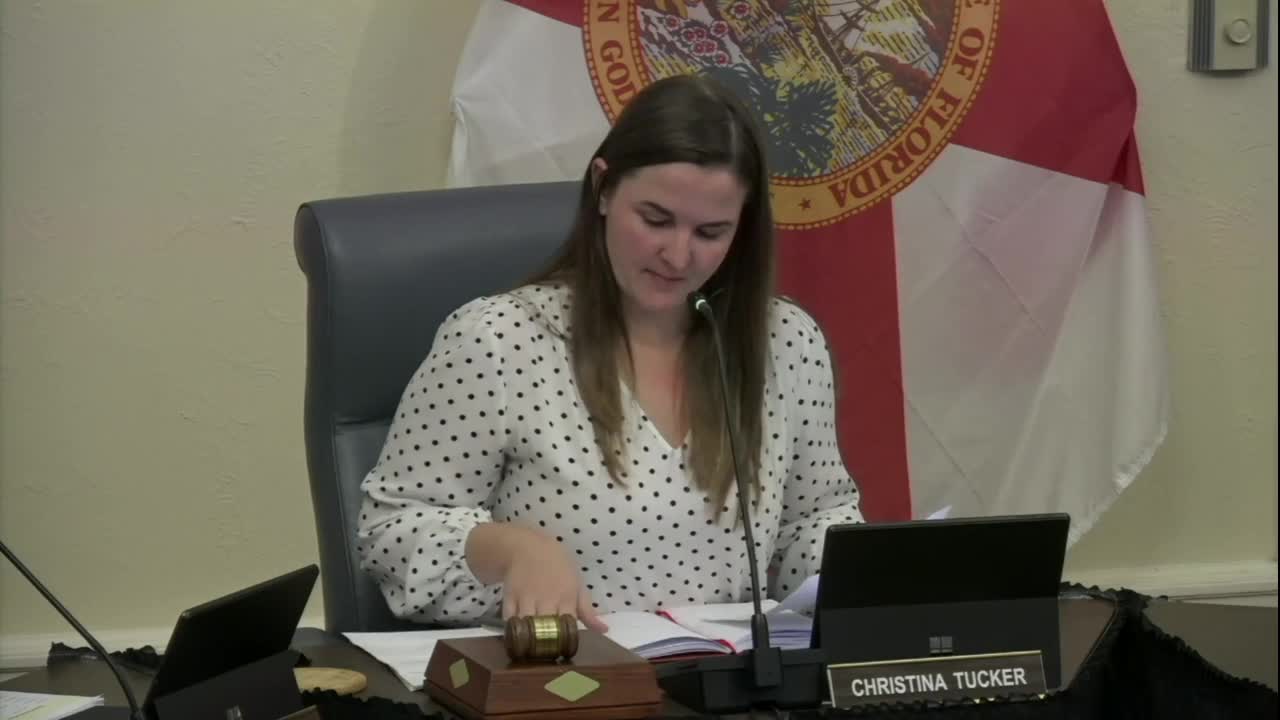
Action: Planning and Zoning Board member Susan Johns made a motion to approve application PZB 2025-0077 for development within Conservation Overlay Zones 1 and 2 for the retaining wall, living-shoreline element (design/permitting) and stormwater upgrades at 117, 124, and 134 Inlet Drive. The motion passed on roll call with members Pappas, Tucker, Johns, Blow and one other voting yes. The board approved the application as presented; staff noted construction timing is tied to grant reimbursement rules.
Ending: Staff said design is complete for the landward wall and that permits are in place for the wall and storm upgrades; construction bidding will follow. Beach reiterated the June 30, 2026 grant timeline and said the city will work to maximize reimbursable work within that deadline. The board recorded public-opinion materials submitted as part of the record and directed staff to return with living-shoreline permitting updates when available.