Interim monitor: Cleveland shows gains under consent decree; crisis-intervention found in compliance
Loading...
Summary
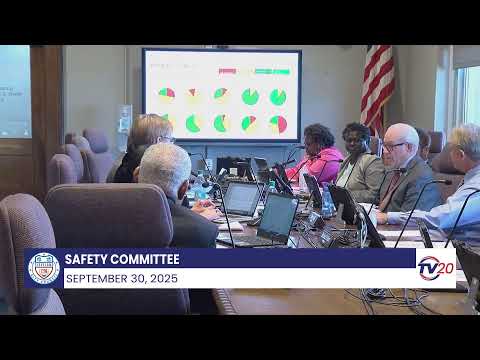
Christine Cole, the interim monitor for the federal consent decree, told the Cleveland City Council Public Safety Committee that the monitoring team’s 17th semiannual report, filed on or about Sept. 15, finds the city in substantial or general compliance in the crisis-intervention area while other assessments remain in progress or under city review.
Christine Cole, the interim monitor for the federal consent decree overseeing the Cleveland Division of Police, told the Cleveland City Council’s public safety committee that the monitoring team’s 17th semiannual report, filed on or about Sept. 15, shows marked progress in several areas while other reviews remain in progress or under city review.
Cole said the monitoring team completed nine assessments in 2025 and filed the crisis-intervention assessment with the court. “In every category or in every paragraph, they were deemed to be in either general compliance … or in substantial and effective compliance,” she said of the crisis-intervention findings.
The monitoring team described a mix of completed, in-progress and delayed reviews. One assessment — crisis intervention — is complete and graded at the highest levels; reviews of wearable-camera imagery are written and awaiting city comment; use-of-force, recruitment/hiring and staffing reports are in draft; equipment/resources and training are in active review; and community/problem-oriented policing and performance/promotions were delayed by agreement.
The report tracks progress across 10 substantive areas of the consent decree and, Cole said, shows 81 upgrades and nine downgrades across roughly the last two years of reporting. “In the seventeenth annual report, there was 0 downgrades,” she said, urging focus on the larger number of upgrades.
The monitoring team also reported specific sampling and review numbers. The search-and-seizure review covered close to 650 cases drawn from roughly 17,000 stops in 2023, the team said, and the use-of-force assessment examined about 268 level-1 and level-2 cases plus roughly 47 level-3 cases drawn from 2023–24, for a total of about 315 use-of-force cases reviewed in this cycle.
Council members and monitoring-team members highlighted operational improvements the team observed: expanded community-oriented policing coordinators in each district, increased officer outreach (coffee-with-a-cop, playground checks, porch checks), wider use of crisis-intervention training and more engaged supervision during post-incident reviews. Monitoring-team members said body-worn and wearable-camera review is informing after-action changes and training.
Council President Blaine Griffin commended recruitment and retention steps but emphasized limits: “We cannot force anyone to join the Division of Police,” he said, while urging continued investment in recruitment and pay. Griffin also told the panel the city has spent “over $10,000,000” on federal monitoring and oversight.
Committee members raised operational and policy questions the team flagged. The biennial community survey required by the consent decree has not been completed since 2018; the monitor and parties are discussing methods and costs (Cole recalled prior surveys costing roughly $50,000–$100,000). Members also pressed for clarity on when monitoring will end and how civilian oversight functions will be organized after the monitor departs.
The panel discussed potential overlaps among civilian oversight bodies — the Community Policing Commission (CPC), Community Relations Board (CRB), civilian review bodies and the inspector general — and committee members asked the monitor and city staff to consider streamlined roles once the consent-decree work ends. The monitoring team said it will work with the city and stakeholders on transition planning.
Council members asked about technology and bias, citing tools such as drones, ShotSpotter and algorithmic systems. Cole said the monitor has not yet done comprehensive algorithmic reviews but has provided input on some policies (for example, drones) and can include technology questions where within the monitoring team’s assignment.
Committee members asked the monitor to share the recently filed crisis-intervention report and other filings; the monitoring team agreed to provide copies to council members. The meeting closed with the monitor reiterating a goal many on the team expressed: to finish oversight as efficiently as possible while leaving civilian systems and procedural safeguards in place.
Ending: The committee did not take formal votes on policy changes at the meeting; the session concluded with a reminder of an upcoming status conference in federal court and a request that the monitoring team keep council staff informed of filing and assessment schedules.