
Committee hears broad push to expand Massachusettsdefinition of "veteran" to include USPHS, NOAA and long-serving reservists
Get AI-powered insights, summaries, and transcripts
Subscribe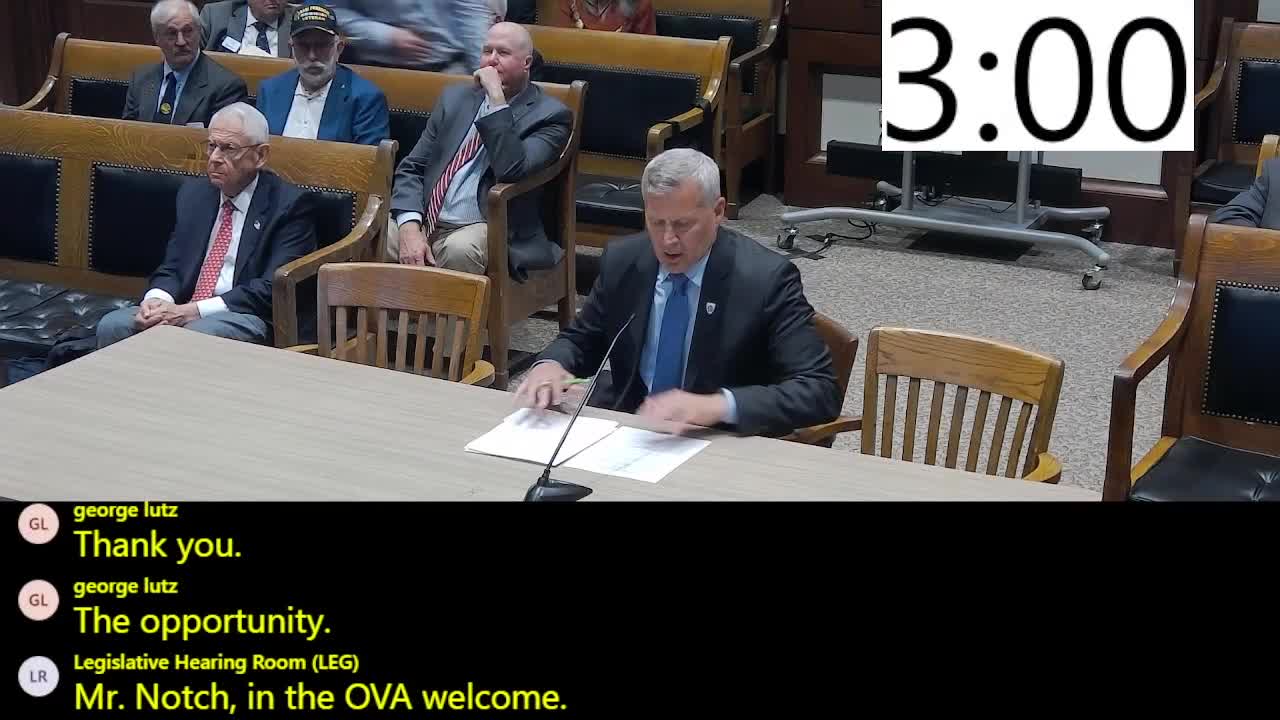
Summary
A joint veterans committee heard hours of testimony urging changes to Massachusetts General Laws to align the statedefinition of "veteran" with federal and uniformed-services practice, including recognition of U.S. Public Health Service and NOAA commissioned officers and certain reserve-component service.
The Joint Committee on Veterans and Federal Affairs heard testimony supporting House Bill 3,871 and Senate Bill 24,67, which would amend MassachusettsGeneral Laws definitions so more people who served in uniform are eligible for state veterans' benefits and recognition.
Supporters said the current mismatch between the HERO Act and the primary statutory definition in chapter 4 has created inconsistent treatment for people seeking state benefits. "These bills aim to create consistency and fairness across Massachusetts General Laws for individuals defined as veterans," said Robert (Bob) Notch, the Commonwealth's veteran advocate, in testimony submitted to the committee.
Advocates who testified included veterans-service organizations, retired officers and members of uniformed federal services. Captain Carl Chancey, U.S. Public Health Service (ret.), described the USPHS Commissioned Corps and the NOAA Commissioned Officer Corps as "uniformed services" that deploy in disasters and integrate with military operations. "The US Public Health Service Commissioned Corps is the only uniform service whose weapon is not a gun. The weapon is science," he told the committee.
Jasmine Stewart, director of legislative affairs for the Commissioned Officers Association of the Public Health Service, said the change would "ensure a clear and universal understanding of the definition of a veteran by making certain that the service of US Public Health Service officers is recognized here in Massachusetts just as it is at the federal level." Lisa McPhee testified for the American Legion Department of Massachusetts in support, and Albert Paquin spoke for the Military Officers Association of America.
Veteran advocates who work directly with Guard and reserve members urged inclusion of long-serving drilling reservists. Cassandra Sullivan, a former National Guard member, described a typical six-year enlistment and said the bills would extend parity to people who completed multi-year reserve commitments even if they were not federally activated.
Committee members and witnesses discussed trade-offs. Several testifiers and legislators noted fiscal and eligibility consequences if the state adopts a broader definition, and some veterans said a wider statutory definition could complicate access and funding for existing benefits. "Consistency is important," the committee chair observed while asking witnesses to consolidate technical proposals and supporting data for follow-up work.
No vote was taken. Committee members requested additional written materials and counts of people who would become newly eligible under the bills. The committee will consider the sponsors' language and submitted exhibits before reporting recommendations to the legislature.