
House bill to modernize Pennsylvania public-notice law splits publishers and local governments
Get AI-powered insights, summaries, and transcripts
Subscribe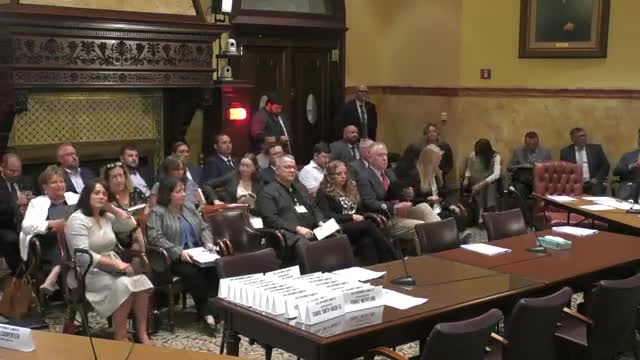
Summary
House Local Government Committee members heard competing views Thursday on House Bill 1291, which would require public notices to appear in print newspapers, on newspaper websites ahead of paywalls, and on a centralized statewide public-notice portal at no additional taxpayer cost.
House Local Government Committee members heard competing views Thursday on House Bill 1291, legislation that would update Pennsylvania's public-notice law to require notices to appear in print newspapers, on those newspapers' websites in front of paywalls, and on a centralized statewide public-notice website at no additional cost to taxpayers.
The bill’s prime sponsor, Representative Freeman, called the measure an effort to “update Pennsylvania's public notice law to address changes that we are seeing in technology, while also recognizing the vital role that newspapers play.”
Supporters led by the Pennsylvania News Media Association argued the layered approach preserves independent, verifiable publication and protects people with limited Internet access. Melissa Moleski, in-house counsel for the Pennsylvania News Media Association, said, “Citizens cannot hold government accountable if they are unaware of proposed government actions. Public notice is not a formality.” She and other publisher witnesses emphasized statewide and county-level data they said show substantial numbers of households without reliable Internet and warned that moving notice responsibility solely to government websites would fragment access and increase the risk of missed or altered postings.
Publishers also presented examples intended to show notice costs are modest. Jennifer Bertetto, president and CEO of Trib Total Media, said newsletters and newspaper websites now reach millions of page views; she told the committee Trib Total Media reported $984,606 in public-notice revenue in 2024, of which $535,167 was privately funded. Publishers pointed to voluntary infrastructure already in place: the Pennsylvania News Media Association has operated a centralized public-notice portal for more than a decade.
Local-government and municipal associations countered that HB 1291 preserves an outdated, print-centric monopoly and fails to give local governments meaningful alternatives that would reduce costs and improve timeliness. Frank Mazza, director of government relations for the County Commissioners Association of Pennsylvania, said counties need a “menu of options” — including official government websites and online-only news outlets — to match local conditions such as limited broadband. Amy Sturges of the Pennsylvania Municipal League and the State Association of Township Commissioners described cases where once-a-week print publication delayed zoning hearings and where a sewer authority's audit advertisement grew from $800 to more than $3,000 in one year.
Representatives from boroughs, townships, municipal authorities and school boards pressed for more flexibility. Ron Gritza of the Pennsylvania State Association of Boroughs asked the committee to allow municipal websites, local broadcasters’ websites, online-only publishers and competitive portals to qualify; Holly Fischel of the Pennsylvania State Association of Township Supervisors and Jenny Shade of the Pennsylvania Municipal Authorities Association urged standards for any private portal and said townships alone spend about $4 million annually on public notices, with a median municipal spend around $2,800.
Several witnesses cautioned about taxpayer cost and administrative burden if government agencies had to build and maintain new statewide posting infrastructure. Publishers responded that governments already struggle to meet basic online posting requirements: Melissa Moleski cited Office of Open Records findings of widespread noncompliance with a single posting requirement in some areas.
The committee also heard independent evidence. Delphine Samuels, an academic who studies disclosure and civic engagement, summarized a peer-reviewed study of a Florida law that allowed counties to post notices on county websites instead of newspapers. Samuels said counties that moved notices away from newspapers saw a roughly 36% drop in notices published in newspapers, a 16% decline in unique speakers at public meetings, and a 35% increase in commercial building permits — results she presented as evidence that moving notices out of newspapers can reduce public scrutiny and participation.
Witnesses from procurement and bid-notification services and from online-only local publishers urged both competition and standards. Freddy Lutz of PenBid described a variety of notification tools used by agencies and urged that any reform address procurement timelines and alignment with local codes. Tom Sofield, publisher of several online-only community sites, said many online publishers meet practical notice requirements today, noting his sites reach a high share of adults in their coverage areas and arguing that some online-only publishers should be eligible under a modern law.
Committee members asked technical and legal questions: Chairman Miller probed whether the bill’s language — which defines a statewide portal as a statewide association representing print and digital news media organizations — could run afoul of constitutional rules about single-entity designations; witnesses said PNA fits that description and that similar models exist in other states. Representative Cooper and others questioned whether online-only local publications would be eligible; witnesses said the current draft requires print where a print paper exists and that Representative Freeman indicated he was working on language addressing “digital descendants” (sites that succeed defunct print editions).
No vote was taken and no formal committee action was recorded. The hearing record includes written testimony both supporting and opposing the bill; members said they will continue discussions and that sponsors are working on clarifying language. The committee adjourned to return to floor business.
Why this matters: HB 1291 addresses where legally required public notices appear — a technical change with direct consequences for how residents learn about budgets, zoning, bids and other government actions. Supporters say layered publication preserves independent verification and helps bridge the digital divide; opponents say the bill locks governments into paying for shrinking print channels and limits locally appropriate digital options. The committee continues to weigh those trade-offs.