
O'Fallon presents five-year capital improvement plan with parks, library and public-works projects highlighted
Get AI-powered insights, summaries, and transcripts
Subscribe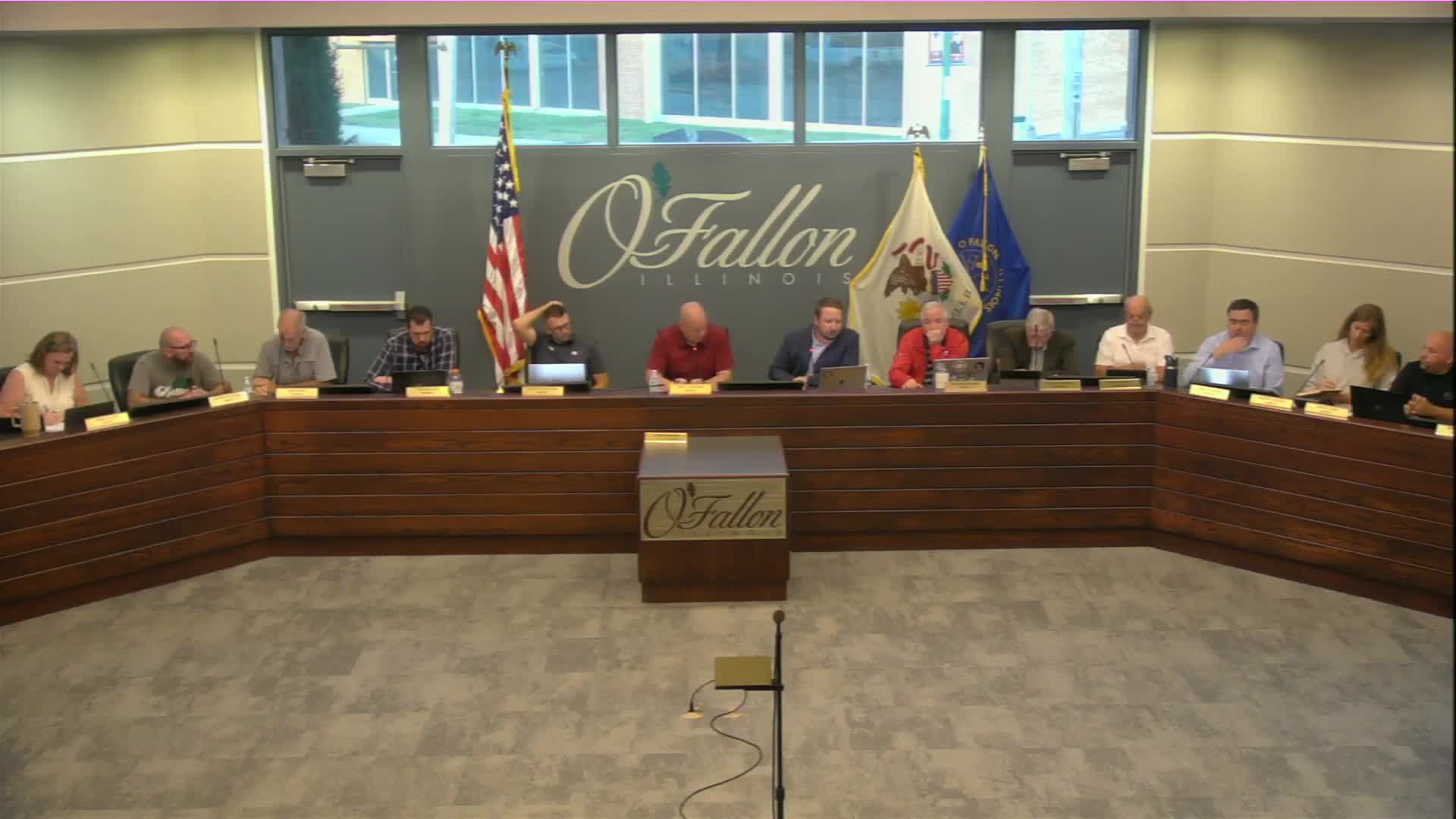
Summary
City staff presented a draft five-year Capital Improvement Plan that lists projects across departments, identifies several grant-funded public-works projects and flags many parks and library items as ‘stretch’ projects with funding not yet identified.
O'Fallon City staff presented a draft five-year Capital Improvement Plan at the Committee of the Whole on Sept. 29, outlining proposed projects by department and asking council for feedback before a resolution to adopt the CIP appears on a future council agenda.
The CIP groups projects by fund and department and lists year-by-year priorities; staff said years one and two are largely fixed while years three through five are “stretch projects” that will need further planning and funding identification. Interim City Administrator Grant Litekin told the committee the CIP is “more or less the unofficial start of our budget season.”
Why it matters: the document guides which capital projects the city will budget for and save toward, and it shows where funding is identified and where it is not. Finance Director Sandy Evans and department heads described how reserves, grants and dedicated funds feed projects and which items remain unfunded.
Major departmental highlights discussed included the library, parks and recreation, public works, public safety and information technology. The CIP lists a potential new library project with large placeholder figures; staff said the library has its own governing board and levy and that funding sources for a possible new building remain to be determined.
Parks and Recreation Director Andrew walked the committee through numerous park projects on the plan, including a field-house feasibility study, playground replacements across the system, trail and parking projects at the sports park and future neighborhood park sites. He said many playgrounds are about 20 years old and will need replacement in the coming 3–5 years.
Public works staff reported several grant-funded projects added to this year's CIP: Highway 50 at Green Mount/Green Mile intersection improvements were entered after the city received a $1.5 million grant (staff said about 80% of eligible costs will be covered by the grant with the remainder from Motor Fuel Tax); a Hartman Lane repair project was awarded Surface Transportation Program (STP) funds covering 75% of construction with MFT toward the match; and a Bethel Lift Station replacement will be covered from sewer funds at an estimated $1.1 million for engineering and construction.
On pavement maintenance, staff said the annual paving allocation in the CIP has been increased to $2 million per year to maintain road-condition targets from the pavement management program. Grant Litekin explained that the city uses an engineering firm to score streets and prioritize repaving, and that overlay or full rebuild decisions follow those scores.
Public safety departments flagged vehicle and apparatus schedules: EMS Chief Sherman listed an EMS chief vehicle and a replacement ambulance on a multi-year timeline; Fire Chief White discussed an apparatus replacement schedule and noted heavy-rescue and ladder replacements are expensive and can be delayed if current equipment remains serviceable. White said a third ladder truck could be required if new development proceeds and estimated a ladder truck at roughly $2.5 million with a 3–4 year build time.
Information Technology Director Dan Gentry said IT’s CIP is mostly recurring replacement cycles for servers, desktop equipment and a small number of physical capital items such as an uninterruptible power supply for the public-safety data center and aging vehicles.
Staff cautioned that listing a project in the CIP does not constitute budget approval. Evans and Litekin said the CIP is used to plan and build capital reserves so the city can pay for larger purchases over time rather than bond for the full amount at once. As an example, staff said using reserves to fund the community park project cut interest costs compared with bonding.
What’s next: staff will update the draft per council feedback and return the CIP as a resolution to the city council during the formal budget season. Several department heads who were not present will follow up with specifics on certain public-works items.
Quotations in context: Interim City Administrator Grant Litekin said the CIP presentation was “the unofficial start of our budget season.” Parks and Recreation Director Andrew said many playgrounds are “going to reach a point where the replacement parts are not available,” and IT Director Dan Gentry described an upcoming UPS purchase for the public-safety data center as “about a 45,000 item.”
Ending note: the CIP frames projects and potential timelines; staff and the council will use the coming budget cycle to identify which items will be funded in year one and what to save for in years three through five.