
Evanston council tables 31-story 605 Davis plan for more review after months of debate
Get AI-powered insights, summaries, and transcripts
Subscribe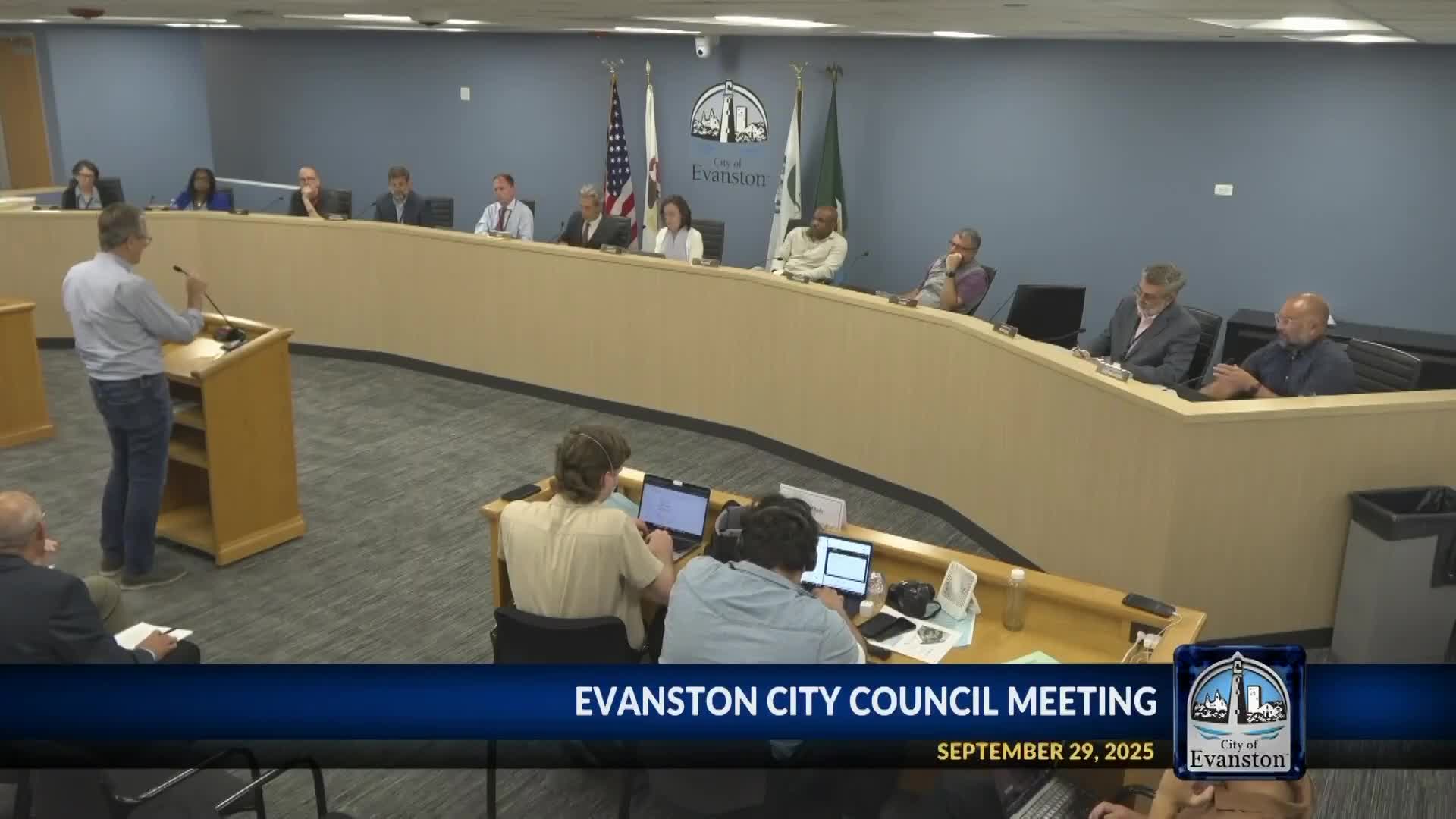
Summary
The City Council voted 8-0 to table action on a developer proposal for a 31‑story, 430‑unit mixed‑use building at 605 Davis Street until Oct. 27 after extensive public comment and council concerns about height, traffic and a long-term tax incentive.
A divided City Council agreed late Wednesday to delay a final decision on a proposed 31‑story, mixed‑use development at 605 Davis Street, voting 8-0 to table the project to the Oct. 27 meeting to allow further review and negotiations.
The measure matters because the project would add 430 apartments — including 86 units set aside as affordable — to downtown Evanston and asks the city to approve a long-term tax incentive that several council members said would sharply reduce property tax revenue in the near term.
Council member Nussma said the building “is just too much of a good thing” and that while she supports high-rise development downtown, the 31‑story scale exceeded what she could accept. Public commenters, both for and against, highlighted competing priorities: proponents said the building would bring residents, jobs and tax revenue; opponents cited traffic, wind, design and potential long-term tax loss.
Public comment began during the meeting’s public-comment period and continued well into council debate. Roger Williams, a local real-estate broker, described the projected tax revenue from the site if developed, saying the property currently yields “only $21,450 in property taxes” and citing a developer projection that property taxes could reach roughly $581,416 by 2031 and more in later years as the building’s assessed value ramps up.
Opponents repeatedly cited traffic and pedestrian impacts on Chicago and Davis avenues and questioned a developer-conducted traffic study; Julia Forgash, a Fourth Ward resident, criticized the study’s timing and conditions, saying data had been gathered on a holiday and an unusually cold day and “that study should be unacceptable to you.” Supporters including downtown business owners and housing advocates said the building’s residents would help local businesses and that the project would create 86 affordable apartments and other economic activity.
Council debate focused on three recurring concerns: height and massing versus the previously approved 18‑story baseline; the structure and timing of the state-backed property tax incentive being requested (the developer proposed a tiered schedule that postpones substantial property tax receipts for the city for many years); and potential mitigation of traffic and pedestrian impacts. Council member Kelly said she was “deeply concerned” about the size of the tax break and noted that under one program tier the city would receive about 35% of expected taxes in the first 12 years instead of roughly 75% under an alternate tier.
David Riefman, an attorney for the developer, told council that the application before the body was for the 31‑story building as submitted and warned that sending the project back to the Land Use Commission “creates a problem” because the commission had already recommended approval on most standards; he asked the council to define conditions for approval so the developer could respond.
After extended discussion and an unsuccessful attempt to refer the application back to the Land Use Commission, Council member Newsom moved to table the ordinance to the Oct. 27 council meeting; the motion carried 8-0. The tabling preserves the existing application while giving council members and staff time to pursue specific changes and to negotiate conditions with the applicant.
The project is before the council as ordinance 66‑O‑25; it was reviewed previously by the Planning & Development Committee and the Land Use Commission, which returned a recommendation with concerns. Council members who spoke asked staff and the developer to continue talks on building scale, street-level design, loading and service areas, and the town’s desired balance between near-term tax receipts and affordable units.
If negotiations produce material changes that alter the scope of zoning relief requested, staff told council the application could require additional public notice and might need to return to the Land Use Commission for formal review. The council’s Oct. 27 meeting will be the next opportunity for action.