
Public commenters at PURA hearing largely support Charter’s proposed acquisition of Cox; community-access advocates seek protections
Get AI-powered insights, summaries, and transcripts
Sign Up Free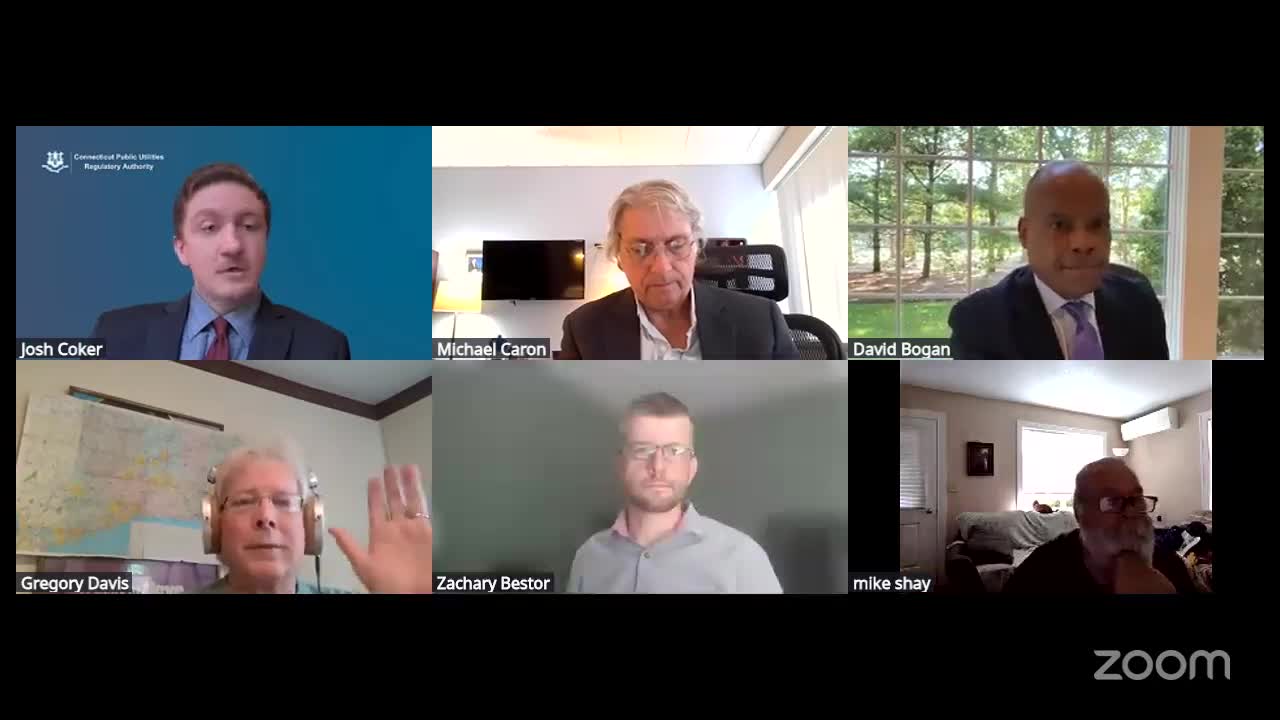
Summary
Public comment at a Public Utilities Regulatory Authority hearing on docket 250811 overwhelmingly favored Charter Communications’ proposed acquisition of Cox Communications, with business groups, municipal officials and local nonprofits stressing jobs, investment and community partnerships — while one long‑time cable advisory council member urged conditions to protect community access television and related funding.
Public comment at a Public Utilities Regulatory Authority hearing on docket 250811 overwhelmingly favored Charter Communications’ proposed acquisition of Cox Communications, with business groups, municipal officials and local nonprofits stressing jobs, investment and community partnerships — while one long‑time cable advisory council member urged conditions to protect community access television and related funding.
The hearing was convened by PURA staff attorney and hearing officer Josh Coker. Coker opened the proceeding as a “listening only” public comment hearing and told attendees that the record will be transcribed and that an evidentiary hearing will be scheduled later in the docket. “At the evidentiary hearing, additional testimony will be presented, and the applicants and parties submitting testimony will be available for cross examination,” Coker said.
Why it matters: PURA and federal agencies will review the transaction for its effects on consumers, competition and service reliability. Supporters argued the deal would expand investment and workforce programs in Connecticut; at least one commenter asked regulators to impose specific conditions to preserve community access operations and funding.
Support for the transaction came from a range of Stamford and statewide organizations. Pete Myers, senior public policy associate at the Connecticut Business and Industry Association, said CBIA “strongly support[s] the Charter Communications proposed acquisition of Cox Communications,” citing Charter’s investment and workforce programs. Myers told the authority that “in 2024 alone, Charter invested $134,000,000 in Connecticut and contributed $18,000,000 in taxes and fees,” and that the company serves roughly 115,000 customers in the state and employs nearly 2,000 people at its Stamford headquarters.
Local municipal and business leaders echoed those themes. Peter Talbot, chair of the Cheshire Town Council and Cheshire ceremonial mayor, described his telecom background and called the merger a chance to combine “the best of both companies,” saying Charter’s pricing is “a strong plus for the 19 municipalities served by Cox and would save their customers money.”
Stamford organizations that spoke in favor included Heather Kavanagh, president and CEO of the Stamford Chamber of Commerce; Michael Moore, president of the Stamford Downtown Special Services District; Daryl Johnson, executive director of the Stamford Partnership; and Alicia Wettenstein, vice president of Mill River Park. Several speakers highlighted Charter’s Stamford Tech Hub, a workforce‑training initiative supported by a $5 million, 10‑year commitment from Charter. Daryl Johnson said that investment “has allowed the Stamford Partnership to launch a holistic program that doesn't just teach skills but provides the wrap around support that folks need to succeed.”
Nonprofit endorsements included Bob Mazzone, vice president of development at SoundWaters, which said Charter has been a steady partner for its education and workforce programs, and Michael Moore of Stamford Downtown, who described Charter’s local economic footprint and philanthropic involvement. Moore noted Charter’s 900,000‑square‑foot Stamford headquarters and said the company’s presence supports the city’s economy.
A contrasting set of requests came from Gregory Davis of Roxbury, who identified himself as an appointed member and long‑time chairman of his town’s cable advisory council under Connecticut statute he cited during his testimony. Davis urged PURA to require a plan “to divest Spectrum Cox of cable company‑owned community access provider operations” and to ensure community access channels receive proper high‑definition distribution and are available to all subscribers at the lowest cost tier. He said Connecticut statute 16‑331a and franchise agreements require financial support for community access programming and that many community access providers in Connecticut operate as independent 501(c)(3) organizations.
Several speakers also cited local price comparisons and charitable contributions. Talbot compared a Cox plan at 250 megabits per second priced at $55 per month with a Charter 500 Mbps plan he said is $50 per month. Stamford representatives described Charter’s charitable and in‑kind support for local nonprofits and workforce programs totaling millions of dollars.
No formal action was taken at the hearing. Coker closed by reminding participants that discovery is ongoing and that the case will proceed to an evidentiary hearing, with dates to be posted to the docket. He also provided instructions for submitting written comments to the record at PURA.executivesecretary@ct.gov and said all public comments filed in the proceeding will be available through the case management system on PURA’s website.
The record from this hearing will be part of the administrative docket and may be referenced at later hearings where witnesses can be cross‑examined and parties offer evidence.