
Attorney explains charter counties, warns SB 180 limits local authority
Get AI-powered insights, summaries, and transcripts
Subscribe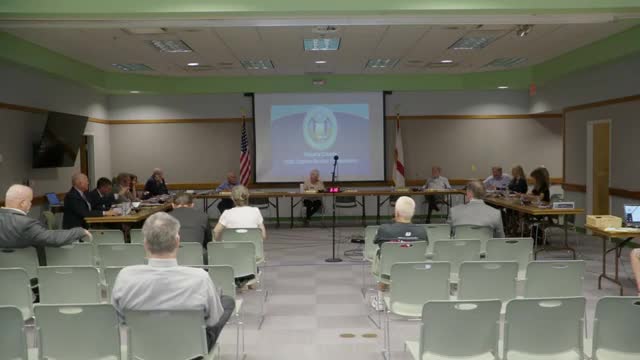
Summary
At a Volusia County Charter Review listening session in New Smyrna Beach, commission attorney Mike Dyer summarized how charter status changes local authority and said recent state law SB 180 and other preemptions restrict counties’ ability to adopt local land-use rules.
Attorney Mike Dyer told the Volusia County Charter Review Commission’s listening session that charter counties generally have broader local authority than non‑charter counties, but that state preemptions — most recently SB 180 — have narrowed local control over land use.
Dyer said charter governments do not need an express grant of authority for many local regulations, explaining: “With a charter county, it's the opposite. You do not need an express grant authority.” He traced Volusia’s charter government to the 1971 start date after a 1968 constitutional change and said the charter model is now common among mid‑ and large‑size Florida counties.
The lawyer warned that state preemptions have proliferated and cited “over 200 different preemptions” that shape what local governments may regulate. He described SB 180 as a recent law that “basically would prohibit counties from proposing or adopting more restrictive or burdensome… land development regulations, until ’27,” and said that the statute includes a mechanism by which the preemption could renew if another hurricane made landfall within about 100 miles of a county border. Dyer said a court challenge could alter how the law applies: “If it’s found unconstitutional ultimately by the court, it's gonna be rendered ineffective for everybody.”
A participant asked whether an injunction obtained by two cities that joined a coalition against SB 180 would lift the restrictions for the entire county. Dyer said the ultimate effect depends on how a court frames relief but added that a final judicial ruling striking down a statute would apply broadly.
Dyer also reviewed why the charter form of government emerged in Florida, noting that before charters many local authorities had to obtain special acts from the Legislature and that consolidation of functions followed the adoption of charters.
No formal actions were taken on the charter topic during the session; the presentation was informational and the commission accepted public input for the record.
The commission said it will maintain a public clearinghouse email address for submissions and intends to add materials received to the public record for future agendas.