
Montana Supreme Court hears arguments over who controls veto procedure after SB 442 veto
Get AI-powered insights, summaries, and transcripts
Subscribe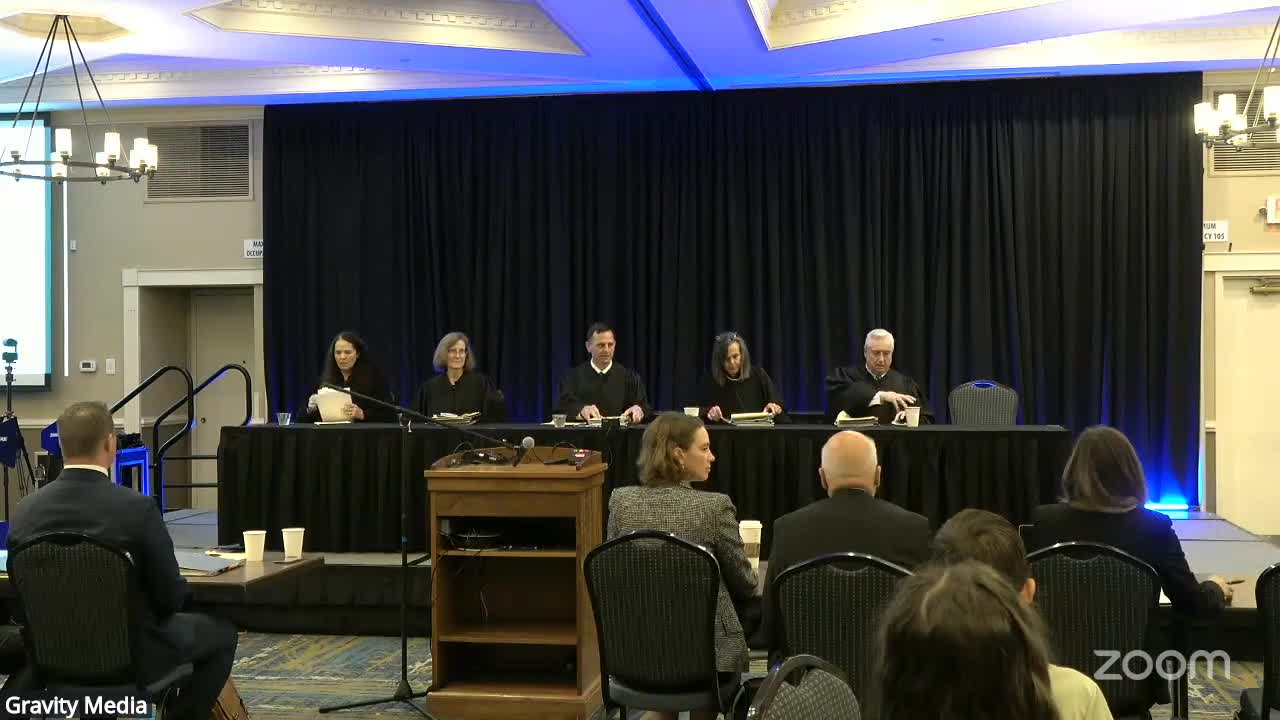
Summary
The Montana Supreme Court heard argument on whether the state constitution or statute governs how vetoed bills are processed when returned near adjournment, and whether private groups may compel a post-adjournment poll to override a governor’s veto.
The Montana Supreme Court heard argument on whether the state constitution or statute controls how vetoed bills are processed after adjournment, and who may force a post-session polling to override a veto. The case, filed by Wild Montana, the Montana Wildlife Federation and the Montana Association of Counties against Governor Greg Gianforte and Secretary of State Christy Jacobson, arises from the governor’s veto of SB 442 and a district-court order directing a polling procedure the plaintiffs sought to trigger.
Why it matters: The court’s interpretation could change which branch or official has responsibility to ensure legislators know a vetoed bill exists and when polling or special-session remedies apply — and whether private interest groups may bring such claims. The case implicates Article 6, Section 10 of the Montana Constitution, Montana Code Annotated provisions addressing returns and polling, and doctrines including standing, political-question, mootness, and the proper reach of a writ of mandamus.
Counsel for Governor Greg Gianforte argued the constitution provides two lanes for vetoes — in session and out of session — and that the governor followed the in-session procedure when he returned SB 442. Dale Schoenger, representing the governor, told the court that “the constitution provides 2 lanes for vetoes, not 3, and the governor followed the in-session procedure the text commands.” Schoenger urged reversal of the district court on three principal grounds: the district court usurped legislative authority by creating a new veto procedure; private interest groups lack standing to litigate on behalf of the legislature; and the case is not saved from mootness merely by the parties’ positions.
Austin James, arguing for Secretary of State Christy Jacobson, told the court the secretary has no independent constitutional duty to decide whether legislature members were aware of a returned veto before a house moved to adjourn sine die. James described the secretary’s traditional role as ministerial, guided by Montana Code Annotated procedures, and said the office’s post-session duties are statutory and not a constitutionally independent obligation. As James summarized, the statutory process includes receipt of the bill with a veto message, preparation of polling ballots and a five-day window to distribute them under MCA provisions the office administers.
Petitioners’ counsel said the district court correctly ordered the polling remedy to protect the override process in Article 6, Section 10. Riley Summers Flanagan (arguing for Wild Montana and Montana Wildlife Federation) told the justices the constitutional text must be read with context and purpose, and that the provision protecting the legislature’s ability to override vetoes after adjournment can require an effectual delivery notice so members have the opportunity to act. Flanagan urged the court that the provision is self-executing in the circumstances before the court and that the district court’s order enforced Article 6, Section 10’s purpose.
A separate counsel for the Montana Association of Counties, Mike Black, focused on standing and framed the petitioners’ claim as a civic right to participate in a constitutionally recognized override process. Black argued the petitioners were directly involved in the legislative effort and had a concrete interest in the polling remedy.
Several major legal issues dominated argument:
- Standing: The defense teams told the justices it would be “dangerous precedent,” in the governor’s words, to allow private groups to sue to vindicate a legislature’s procedural prerogatives when the legislature itself has not authorized that suit. Petitioners responded they are asserting civic rights to petition and participate in processes the constitution recognizes, and that their involvement in lobbying and the override effort gives them a particularized interest.
- Political-question/separation-of-powers: The governor’s counsel emphasized that procedural rules for how a legislature receives and processes veto messages are internal legislative matters, arguing courts should be cautious about substituting constitutional instruction for legislative rulemaking. Petitioners said the constitutional text and its purpose permit judicial enforcement when constitutional rights to an override are implicated.
- Mandamus standard: The secretary of state’s counsel argued the district court lacked the clear, precise legal duty required for mandamus relief and that an adequate legal remedy existed (for example, legislative mechanisms like calling a special session under MCA 5-3-105). Counsel said the district court’s mandamus order created an unprecedented constitutional obligation for the secretary’s office.
- Mootness and post-session statute (SB 344): Petitioners warned that changes in the law may not fully moot the constitutional question; defense counsel argued the March statutory change (identified in argument as SB 344 and incorporated at MCA 5-4-306 for returns when the legislature is not in session) altered the legal landscape and could render the dispute nonjusticiable. Petitioners urged the court to address the merits or, if it deems the case moot, to decline to apply narrow vacatur doctrines wholesale.
Factual and record points disputed at argument included whether the vetoed copy of SB 442 was delivered to the Senate before the Senate’s motion to adjourn sine die. Counsel for the governor and the secretary argued the record establishes the veto was returned while the legislature was in session and that any lack of awareness by some members reflects internal legislative notice practices, not an external constitutional defect. Petitioners and intervenors pointed to declarations in the record that do not establish the time or recipient of delivery and argued that absent effective notice some members could not act.
The justices asked detailed questions about sequencing — whether the court must decide mootness or standing first — and about whether the district court’s factual findings supported issuance of mandamus. Several justices pressed both sides on whether the statutory fixes enacted after the underlying events supply relief or guidance sufficient to avoid a judicial remedy.
The case was submitted at the close of argument; the court has taken the matter under advisement and made no ruling during the session. The justices did not state a timetable for opinion.
Ending: The court’s upcoming decision will determine whether the judiciary will enforce the form of notice or polling the district court ordered, clarify the secretary of state’s role when vetoes are returned near adjournment, and set limiting principles for when private groups may litigate procedural claims that the legislature did not bring as a body.