
District staff proposes slightly lower tax rates as assessed values rise; public hearing set for approval
Get AI-powered insights, summaries, and transcripts
Subscribe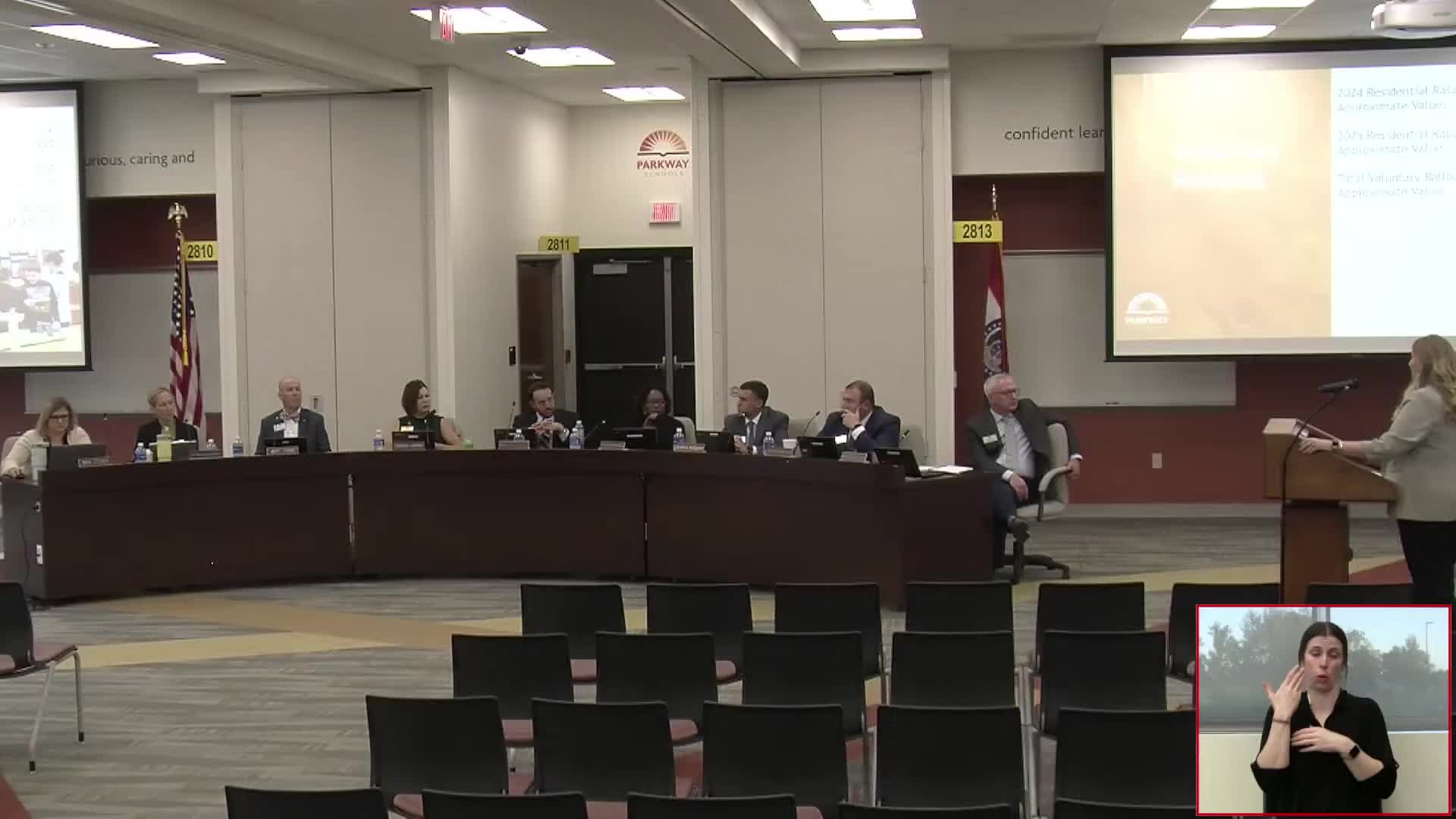
Summary
District staff presented proposed levy rates that reduce the per-thousand tax rates because overall assessed value rose; staff said the proposal would still produce roughly $7.4 million in additional revenue and will be scheduled for approval at the next regular meeting after public comment.
Carrie, a district staff member, told a public tax-rate hearing that staff is recommending slightly lower per-thousand levy rates for the next tax year because overall assessed value in the district rose, even as total property-tax revenue is expected to increase.
The staff presentation showed proposed fund allocations and rates: a general fund levy of 1.084 (per $1,000 of assessed value), a teacher fund levy of 2.0132, a capital projects levy of 0.046, and a debt-service levy that remains unchanged at 0.49. Carrie said the blended operating rate in the presentation (excluding debt service) declined and that, when debt service is included, the blended rate staff used in the revenue example was 3.6332.
Why it matters: the district’s allowable growth is constrained by the Hancock Amendment and the growth cap used for the district’s calculation this year is tied to the consumer price index; Carrie said CPI for tax year 2025 is 2.9 percent. Staff showed that, despite the lower rates, higher assessed values would generate more local property-tax revenue — Carrie reported an estimated roughly $7.4 million increase in revenue from the prior year in the presentation. She also noted that the district uses a historic tax-collection assumption of about 96–97 percent when converting levy rates to expected revenues.
During public comment Samantha, who identified herself as a teaching assistant at Paramount, asked whether the proposed rate reductions meant the district would receive less money. Samantha asked, “Is this is this something that's going to be a decrease in funds for our district, or is this no?” Carrie answered the decrease in the rate per $1,000 exists because assessed value rose; she said that if the district kept prior-year rates it would collect more revenue than allowed under the growth limits and that, even with the lower rates, the district is projected to collect additional revenue next year.
Carrie also said the district will not levy recoupment for the year, citing reporting complications with St. Louis County as the reason: “I am not proposing to levy recoupment this year as well.” She added that although there have been legislative proposals discussed publicly — including proposals that would change how assessed value is calculated or reallocate gambling revenue — no change to the district’s assessment or state formulas has taken effect and she has not been notified of any change to assessment calculations for the coming year.
Staff presented a worked example showing a sample homeowner would see an increase of about $127 on the combined real- and personal-property tax bill from the prior year, given an average 13 percent assessed-value increase applied in the example and a 2 percent decrease in the personal-property (vehicle) class used in the sample. Carrie described the mechanics: market value is multiplied by the statutory assessment percentages (cited in the presentation as 19 percent for homes and 33 percent for vehicles), divided by $100 of assessed value, then multiplied by the applicable class rates.
The tax-rate proposal and the public hearing were informational; Carrie said the proposed rates will be placed on the agenda for approval at the district’s next regularly scheduled meeting. The hearing was adjourned by motion; the board’s motion to adjourn the annual tax-rate hearing carried 7–0.
The presentation and public comments covered: the proposed levy-rate allocations by fund; the district’s use of a 96–97 percent collection assumption; the 2.9 percent CPI figure used to calculate allowable growth this year under the Hancock Amendment; staff’s recommendation not to levy recoupment due to county reporting issues; and public questions about whether legislative proposals could change assessment methods. No formal vote on the proposed tax rates occurred at the hearing; staff said the district will take formal action at the next regular meeting.