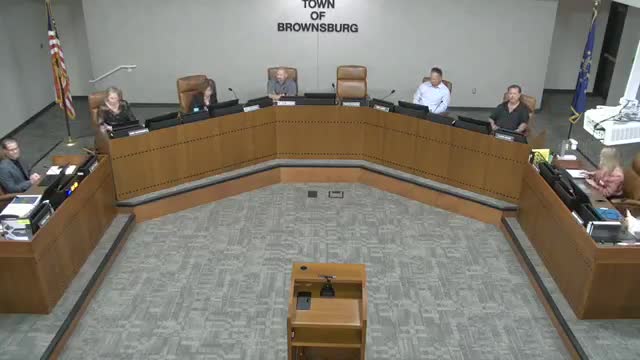
Brownsburg staff unveil $83.6 million 2026 budget; capital projects, firefighters and levy appeal highlighted
Loading...
Summary
Town staff presented a proposed $83,614,643 2026 budget that includes about $14 million in capital projects, wastewater work exceeding $7 million, a possible hiring of 15 firefighters tied to a SAFER grant, and a planned excess-levy appeal to shore up revenue.
Town of Brownsburg staff presented a proposed $83,614,643 2026 budget at a council meeting, emphasizing more than $14 million in capital projects, an anticipated $7 million-plus in wastewater work, and personnel requests that include funding for 15 additional firefighters contingent on a federal SAFER grant, staff said.
The budget overview matters because the town’s service area and population have grown roughly 20% since 2020 while staffing has not kept pace, town presenter Debbie (staff member) told the council. “We have a bigger area. We’re serving more people,” Debbie said, adding that total budget requests for departments add up to $83,614,643.
Staff said the capital program’s largest single item is design work for an I-74 interchange bridge. Other planned projects cited in the presentation include improvements to the North Green Street corridor, a County Road 309 roundabout, White Lick Creek streambank stabilization, resurfacing and rehabilitation work at Williams and Arbuckle parks (including pickleball court repairs), a matching grant request for additional park resurfacing, and design or signal work at Northfield Drive and County Road 625. The town also budgeted monies within the North Beltway TIF to meet bond obligations and engineering fees.
Wastewater and water needs are a major driver of the plan: staff said wastewater plant projects total just over $7 million and noted ongoing bond and electricity costs. The water fund includes line potholing, lead service line investigation (a federal requirement), well maintenance and testing, booster generators, and purchase of water for resale. Sean (staff member) said the town has drilled multiple wells — “we went 250 feet down several, six, seven wells” — and that finding sites with sufficient capacity is not guaranteed and can be limited by private-property access.
Public safety and personnel costs are significant budget pressures. The fire territory’s operating budget rose — in part because the fire department submitted later adjustments and requested funding for 15 additional firefighters. That hiring is tied to a SAFER grant application; Chief Larry (Fire Chief) confirmed the department’s equipment and vehicle requests in the capital plan and staff noted that if the SAFER grant is not awarded, the planned hires would not proceed. Travis Chan (council member), asked for confirmation about that contingency; he was told the department’s hiring depends on grant approval.
Staff also pointed to an anticipated one-time or transitional “extra pay” effect in 2026 (described during the presentation as an additional pay-period cost) and higher insurance and liability costs as contributors to year-over-year increases. The general fund is budgeted at just over $20 million. Staff said the town expects to use some cash and investment reserves for the water fund because budgeted needs exceed estimated revenues in that enterprise.
To offset pressure from state-level changes, staff recommended pursuing a three-year excess-levy appeal. Debbie said the town will file the levy appeal by the current deadline; staff estimated that approved appeals could yield roughly $1 million for civil purposes and about $1.5 million for fire, depending on state approval and how much of the requested amounts are granted. The presentation cautioned that the town’s share of property tax distributions has declined over time and that recent state legislation (referred to in the meeting as SEA 1) could reduce local revenues by 2027 unless changed.
Other budget details discussed at the meeting included vehicle and equipment replacement (budgeted police fleet purchases and fire apparatus work, including a $275,000 re‑chassis estimate for a medic truck), park maintenance and programming funds, engineering fees for pavement evaluation tied to state grant applications, and a roughly $3 million budgeted to meet North Beltway TIF bond obligations and related project engineering. Staff also noted an expected excess of about $1.6 million in projected revenues versus the amount being budgeted, meaning the proposed budget does not fully spend forecast receipts.
Council members asked for follow-up on several items: whether developer commitments for a traffic signal at Northfield and CR 625 had been collected (staff said they would confirm contributions from developers such as Pulte and Greystone), the durability and maintenance cycle for pickleball and basketball court surfacing (Amber, parks staff member, said the surfacing typically needs renewal every three to five years), and timing for SAFER grant decisions (staff said award decisions were expected around Oct. 1). The town must also decide whether to adopt a local wheel tax to maximize Community Crossings Grant eligibility; staff said the local adoption would need to occur by July 1 next year to be eligible for full matching funds.
The budget presentation is the first reading; staff said the next reading and public hearing are scheduled for Oct. 9, with the Gateway budget submission deadline noted as Oct. 28. Council members and staff agreed to follow up on developer contribution records, grant outcomes and other clarifications ahead of subsequent hearings.