Get Full Government Meeting Transcripts, Videos, & Alerts Forever!
Get email alerts on the Drone First Responders topic
No spam. Unsubscribe anytime.
Syracuse council committee presses police for tighter limits, transparency on ‘drone as first responder’ pilot
Summary
City officials reviewed a proposal to launch a pilot “drone as first responder” program, pressing the Syracuse Police Department for stronger privacy safeguards, clearer retention rules and public reporting before the council considers final approval.
Syracuse Police Department leaders and city councilors met to revisit a proposed “drone as first responder” (DFR) pilot and to discuss changes to the department’s existing unmanned aircraft system (UAS) policy.
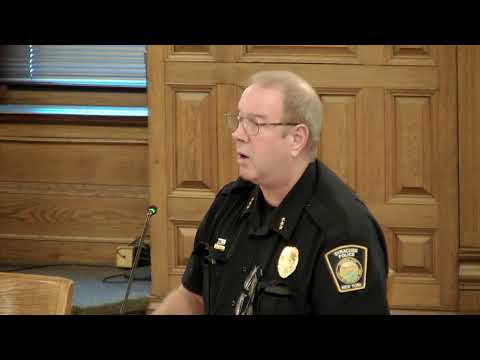
Syracuse Police Chief said the department will add guardrails to the policy and described past uses of drones for scene assessment, brush-fire mapping and tracking suspects without vehicle pursuits. “It’s our data, we’re not sharing it with anybody,” the chief said when asked whether footage would be shared outside authorized channels.
Council members and police staff focused on four central issues: (1) when and by whom a drone can be authorized; (2) limits on protest and random-patrol uses; (3) video retention, access and redaction; and (4) community transparency, including a promised public dashboard showing flights.
Why it matters: Councilors said the program could speed situational awareness and reduce risky vehicle pursuits, but residents and some commentators at a prior public hearing raised privacy and civil‑liberties concerns. The committee asked the department to spell out explicit prohibitions and review procedures before the pilot begins.
Key details and staff positions
- Authorization and oversight: The department proposes supervisor approval before each drone use, at the level of a commanding officer (lieutenant or captain); the chief said the department will consider allowing FAA‑certified sergeants (Part 107 holders) to authorize flights in some cases. Lieutenant Williams said periodic internal reviews of drone flights already occur and staff would add a formal random-review process to the policy if the council requests it.
- Prohibited and limited uses: Police staff told the committee they will add explicit language to prohibit use of DFR for protests “absent an articulable danger to safety.” The chief also proposed language banning random patrol flights.
- Retention and evidence handling: Sergeant Ivek confirmed drone footage would be uploaded to Axon’s evidence platform (evidence.com) and follow the department’s body‑worn camera retention rules. The chief said routine retention “is 30 days, generally speaking, unless it’s evidence,” and suggested longer holds for cases that become evidence; at the meeting staff also noted some routine recordings (example: a parking ticket) follow a three‑year retention minimum on the evidence platform. Councilors pressed for the department to provide the exact retention schedule in writing.
- Access, redaction and FOIL: The chief and staff said access to evidence.com requires permission and that the Attorney General’s office and the Civilian Review Board may be granted access when appropriate. They noted city data remain subject to court orders or FOIL requests. The department said it can redact or blur faces and license plates before public release.
- Pilot scope, equipment and timeline: The department intends to start with a single DFR unit, map coverage intended to reach the whole city, and aims ultimately for up to five units if the pilot proves successful. Staff said the drone typically provides on‑scene views much sooner than an arriving patrol car—often within 30 to 60 seconds of dispatch—and the city has committed to returning to the council after one year to review program results.
Points of contention and council direction
Councilors and the chief discussed whether drones should be permitted for lower‑level calls such as noise complaints, and how the policy’s language changed from a 2022 draft that explicitly prohibited recording where residents have a “reasonable expectation of privacy.” Councilor Manto and others said they were concerned the revised draft watered down privacy language; the chief said that was not intentional and that department staff would reintroduce stronger protections.
Several councilors asked for clearer accountability steps if operators violate the policy. The chief described progressive discipline options and said the chief of police would make final discipline decisions after Civilian Review Board review. Councilors asked the department to add written procedures for proactive and random review of drone footage, not only complaint‑driven review.
Transparency commitments
The police chief reiterated an earlier pledge to publish a public dashboard showing when drones flew, flight areas and the nature of calls; staff said the dashboard would be posted before the program begins. The department offered to arrange demonstrations with nearby agencies that have active DFR programs and to provide public education sessions through neighborhood groups.
Action requested and next step
Committee members asked the department to draft and circulate a revised UAS policy incorporating the meeting’s clarifications (explicit protest prohibition for DFR, supervisor authorization language, retention details, random review procedures and dashboard timing). The committee scheduled reconsideration in two weeks.
Ending
Councilors emphasized that the pilot should proceed only after the department produces clearer, written limits and public reporting measures. The committee closed the discussion by directing the department to return with the revised policy and related materials for further review.