Get Full Government Meeting Transcripts, Videos, & Alerts Forever!
Get email alerts on the Animal Control Facility topic
No spam. Unsubscribe anytime.
Cheshire council hears independent report that finds animal‑control failures; town pledges reforms
Summary
At a special Town of Cheshire meeting, the council reviewed a $60,000 independent investigation that found failures in animal care at the municipal pound. Town Manager Sean Kimball and Acting Police Chief Fred Jortner accepted responsibility and outlined immediate reforms, while advocates demanded accountability and legal action.
TOWN OF CHESHIRE — The Town of Cheshire on Monday held a special town council meeting to review an independent investigative report that found “a failure to meet the basic standards of animal care” at the municipal animal control facility, town officials said.
Town Manager Sean Kimball told the council and a packed public gallery that the report’s “findings are clear, and everyone who reads the report should be concerned and upset.” He said the town accepts responsibility for failures in the animal control division and police supervision and outlined a performance improvement plan. “I accept this responsibility as well,” Kimball said.
The report, which the town commissioned and paid about $60,000 to produce, was released to council members two days before the meeting, Kimball said. Acting Police Chief Fred Jortner described the report’s findings as undeniable. “Serious failures in animal care occurred. There’s no way to sugarcoat it,” he said, adding, “The responsibility lies with this department and with me. I accept responsibility fully.”
Why it matters: The investigation follows the seizure of animals linked to an animal cruelty case that drew sustained public attention over more than a year. Advocates and residents pressed the council for transparency, for changes to daily operations at the pound, and for accountability for employees the report identified as negligent.
What officials announced and actions under way
- Staff changes and recruitment: Kimball said the current animal control officer has submitted resignation and retirement papers and that the town will begin recruiting for a new animal control officer the next day.
- Facility repairs and standards: Kimball said major repairs and renovations have been underway since January, including fencing upgrades, new kennel flooring, connected kennels with individual runs, and HVAC improvements. He stated the work is scheduled for completion in about four weeks and that the town intends to meet or exceed upcoming statewide enclosure standards ahead of their 2029 deadline.
- Operational reforms: Kimball and Jortner said the town has funded staff training through the National Animal Care and Control Association, improved intake and tracking (including photo and veterinary records when needed), implemented monthly progress reports on the town website, and plans to install surveillance cameras at the ACO facility. Jortner said he will restructure operations so “multiple levels of sworn officers will oversee and supervise day to day work” and require ACOs to wear body‑worn cameras similar to police officers.
Public demand for accountability
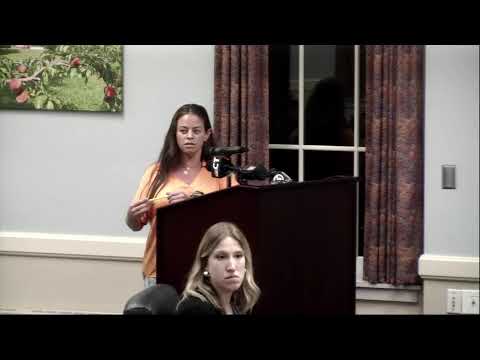
During an extended public comment period, dozens of residents, volunteers and animal‑welfare advocates addressed the council. Speakers credited long‑running volunteer efforts for prompting the investigation and pressed for legal accountability.
Jean Melendez, an advocate who organized volunteers and public rallies, told the council, “Our work will not end, and our group will not disband,” and said volunteers will keep pushing for systemic change. Several speakers cited numbers in the investigation and press coverage: advocates said roughly 32 dogs were seized in the original case and that three animals died; the acting police chief noted that a separate arrest involved three individuals and the seizure of “over 20 animals.”
Questions about criminal prosecution and enforcement
Multiple speakers asked whether state prosecutors would pursue criminal charges. Town officials and counsel said they cannot discuss pending personnel matters in public. Town Attorney and council representatives told the meeting that the Connecticut Department of Agriculture (DOAG) had applied to the state’s attorney for an arrest warrant that was denied; meeting remarks indicated the DOAG application was returned with a “do not reapply” notation, though town officials said they could not provide further detail because of rules on attorney‑client confidentiality and the limits of what they could discuss in public.
Several attendees urged the council to seek further state‑level involvement. Councilor Don Walsh, in a written statement read at the meeting, said, “Mistakes were made at multiple levels,” and thanked advocates for persistent reporting that surfaced problems. Others asked whether the town could pursue its own actions after the independent report was completed; town counsel and officials said arrest warrants are a matter for the state’s attorney, not the council.
Council reaction and next steps
Council members and the town manager repeatedly acknowledged responsibility and said they would continue implementing the improvements described in the report. Kimball said progress reports will be posted monthly and that the town is in contact with DOAG to confirm progress on the consent order tied to state regulatory requirements.
The meeting closed with the council taking no formal disciplinary votes in public on individual employees. Council business concluded with a motion to adjourn that was approved without recorded roll‑call detail.
Ending: Town officials said they expect the facility renovations to be complete in about four weeks and reiterated plans for continued oversight, recruitment of a new animal control officer and monthly public updates. Advocates said they would continue monitoring implementation and press for criminal or administrative accountability where they believe it is warranted.