
N.D. Supreme Court hears appeal challenging murder conviction in no-body case and jury instruction on circumstantial evidence
Get AI-powered insights, summaries, and transcripts
Subscribe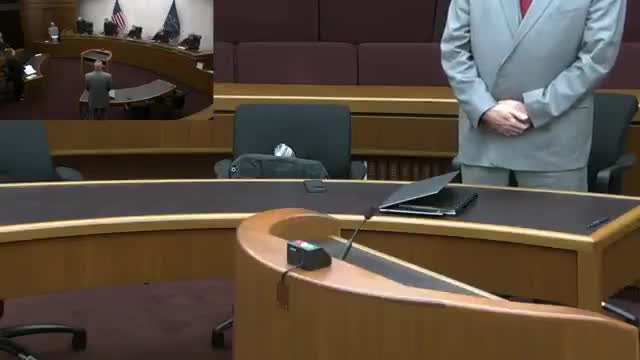
Summary
The North Dakota Supreme Court heard oral argument in State v. Kroll on whether evidence was sufficient to show the defendant caused the victim's death in a case without a recovered body and whether the trial court erred by refusing a particular circumstantial-evidence jury instruction.
The North Dakota Supreme Court heard oral argument Friday in State of North Dakota v. Shawnee Lynn Kroll, an appeal that asks whether the evidence at trial was sufficient to prove that Kroll caused the death of a woman who disappeared and whether the trial court should have given a requested instruction on circumstantial evidence.
At issue is both the sufficiency of circumstantial evidence in a case where no body was recovered and the wording of jury instructions describing how jurors should treat circumstantial evidence. The appeal was argued before the court during a public session held at Flasher High School.
Sam Jurasic, attorney for appellant Shawnee Kroll, told the justices that the state presented no evidence of cause of death and “No rational fact finder can find the defendant guilty when that just simply isn’t there.” Jurasic argued the record showed plausible, innocent explanations for the woman’s disappearance — including her documented medical vulnerabilities — and that the district court should have given a requested instruction that, in his view, would have required the jury to “exclude every reasonable hypothesis of innocence.”
Tiffany Sorgen, Deputy State’s Attorney for Ward County, countered that the pattern instruction the trial judge used adequately stated the law and did not impermissibly raise the state’s burden of proof beyond the constitutionally required standard of proof beyond a reasonable doubt. “I could not disagree with Mr. Jurasic more,” Sorgen said, adding that, viewed in the light most favorable to the verdict, the circumstantial evidence supported reasonable inferences that a death occurred and that Kroll caused it.
Argument and questioning touched on several factual points the parties relied on at trial: the victim’s routine daily check-ins with family, the presence of the victim’s personal belongings in her residence, surveillance video showing the defendant’s movements at the residence, and testimony from a jailhouse informant, identified at trial as Mr. Williams, who testified that Kroll had made incriminating statements while jailed. Sorgen told the court the jury heard testimony that the victim’s last message to her mother arrived about 6:18 a.m. the morning she disappeared and that no one who knew her had heard from her in the roughly four years between the disappearance and trial.
Jurasic pressed that the record contained no direct evidence of cause of death — no autopsy or medical cause reported to the jury — and that the defense had been prevented from emphasizing alternative explanations for the disappearance because the trial court had forbidden mention of the absence of a body. He also argued the jailhouse testimony referred to a body and thus risked leading jurors to assume facts not in evidence.
The justices questioned both counsel about whether the wording difference between the requested instruction (that circumstantial evidence “must be conclusive and must exclude every reasonable hypothesis of innocence”) and the standard pattern instruction (that circumstantial evidence may suffice if it is sufficiently probative to permit a finding beyond a reasonable doubt) is a meaningful legal distinction or merely a linguistic variant that adequately conveys the same burden.
Courtroom discussion included the timing of instruction conferences and objections: counsel said the judge, identified in the record as Judge Lausser, and the parties discussed and finalized jury instructions over a two-day period during trial, with the state lodging an objection to the requested circumstantial-evidence instruction the day before closing arguments. The court also asked questions about the surveillance videos, the timing gaps produced by the footage, and whether alternative innocent explanations for the defendant’s conduct were feasible.
The court took the case under advisement at the close of argument. No opinion was announced from the bench.
The appeal raises legal questions about how courts should instruct juries in circumstantial, no-body homicide prosecutions and the standard for sufficiency review where the manner or cause of death was largely matter of inference at trial. The justices’ questions during argument suggested they are weighing whether the requested instruction would have altered the jury’s understanding of the state’s burden or whether the pattern instruction adequately communicated the law to jurors in the circumstances of this case.
The Supreme Court session record indicates the panel will issue a written decision at a later date.