
North Dakota Supreme Court hears argument on whether judicial sale moots partition "great prejudice" question
Get AI-powered insights, summaries, and transcripts
Subscribe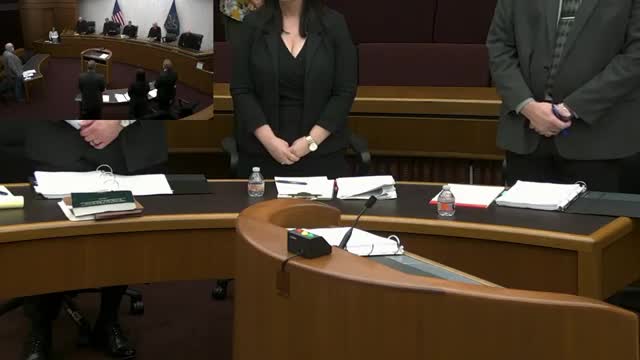
Summary
The North Dakota Supreme Court heard arguments over whether the completed sale of disputed real estate to third-party buyers renders moot a district court’s required "great prejudice" analysis in a partition action when no stay was obtained on appeal.
The North Dakota Supreme Court heard oral argument Tuesday on a certified question from the district court about whether a completed judicial sale to third-party buyers renders moot further consideration of whether a property could have been partitioned in kind without "great prejudice" when no stay of sale was obtained on appeal.
The question matters because the district court ordered the property sold by auction after finding partition in kind would cause great prejudice to the owners; appellants asked the Supreme Court to decide whether that post-judgment sale makes any additional district-court proceedings on "great prejudice" academic. If the court answers in the affirmative, intervening buyers who paid for parcels at auction would generally see their titles insulated from reversal; if the court answers in the negative, the case could return to the district court for further factfinding.
Elliot Stoll, attorney for appellant Terry Olsen, told the court the certified question should be answered "in the affirmative" because the property already was sold to what counsel called disinterested third-party purchasers and the sale cannot be undone. "The sale cannot be undone," Stoll said, citing precedent the attorneys believe supports finality of a judicial sale absent a stay.
Jessica Klein, who represents appellants Kyle and Angela Simonson, told Justices her clients purchased two of four advertised parcels in a three-day online auction through Piper’s Auction for "just over $1,600,000," have a mortgage on the property and have incurred costs, and therefore should be treated as bona fide purchasers whose interests cannot be affected by subsequent reversals of the partition order. "It's kind of like trying to put the toothpaste back in the tube at this point," Klein said, arguing further district-court factfinding would not change the purchasers' interests.
Anthony Anderson, counsel for intervener Hetland Family Limited Partnership, likewise urged the court to answer the question in the affirmative and discussed authority treating purchasers at judicial sales as bona fide purchasers for value, citing secondary authority from 50 A CJS on judicial sales.
Kevin Olsen, representing himself, and his pro se filings were the focal point of several exchanges after he argued the court should enforce prior mandates, raise unresolved probate issues and alleged irregularities in the sale process, and treat certain record facts as not finally adjudicated. Olsen argued the district court and the record have not fully resolved questions about testamentary instruments and alleged probate-related defects, and he urged the court to consider those matters when deciding the certified question.
Justices pressed counsel on whether answering the certified question would "wholly or principally" resolve the case, a threshold in the court's rule for accepting certified questions. Justice Douglas Barr queried whether a negative answer would require further district-court proceedings; counsel acknowledged a negative answer could lead to an evidentiary hearing at the trial level, while arguing that, on these facts, the sale has already occurred and cannot be unwound.
Counsel cited multiple precedents in support of their positions, including the court's past decisions and out-of-state authorities they said treat judicial-sale purchasers as protected when no stay is obtained. Counsel also discussed Rule 62(h) of the North Dakota Rules of Civil Procedure (addressing stays when a judgment directs sale or delivery of real property) and the parties debated whether seeking but not obtaining a stay differs from not seeking one.
The court took the case under advisement. The justices announced the court will adjourn and reconvene on Tuesday, Sept. 16, at 1:30 p.m., at which point the court will consider its decision on the certified question.