Get Full Government Meeting Transcripts, Videos, & Alerts Forever!
Get email alerts on the Crime And Policing topic
No spam. Unsubscribe anytime.
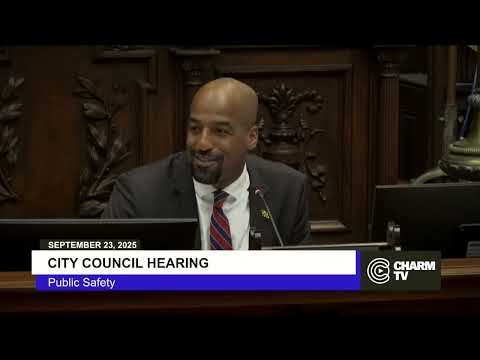
Baltimore police report higher clearance rates, fewer fatal crashes and steady recruitment at committee hearing
Summary
Baltimore Police Department officials told the Baltimore City Public Safety Committee that the department has seen rising case clearance rates across major crime categories and a sustained drop in traffic fatalities, while continuing recruitment and youth‑pipeline efforts.
Baltimore Police Department officials told the Baltimore City Public Safety Committee that the department has seen rising case clearance rates across major crime categories and a sustained drop in traffic fatalities, while continuing recruitment and youth pipeline efforts.
The department reported a 60% homicide clearance rate and told the committee that most crime categories are down compared with recent years. Ryan Lee, chief of patrol, said traffic enforcement and targeted motor‑unit deployments helped drive a year‑to‑date reduction in traffic fatalities from 40 to 22 (about 43 percent).
The numbers matter, committee members said, because higher clearance rates both reflect investigative capacity and influence residents' willingness to cooperate with police.
Commissioner Flushers, Commissioner, Baltimore Police Department, credited partnerships and community cooperation: “None of the stuff that we accomplished would we be able to do by ourselves if it wasn't for all the great partnerships of everybody working together to make the city safer.” The commissioner told the committee the department has made nearly 1,000 gun arrests in patrol work so far this year and that most districts show year‑to‑date declines in homicides and shootings compared with recent years.
Lee said traffic enforcement is a citywide priority: “Traffic enforcement is one of the few things in policing that we know by increasing enforcement and education, we actually see significant reductions.” He described a redeployable fatal‑crash reduction team and said the department is moving to place a dedicated traffic officer in each district to sustain the work.
Officials said narcotics arrests and some quality investigations have increased, handgun violations are down slightly, stolen autos and burglaries have fallen, and the central reorganization of the Criminal Investigation Division has helped improve robbery clearance rates.
On policing strategy, committee members pressed for clearer measures of proactive work. The committee referenced a consent‑decree goal of roughly 40% of officer time spent on proactive duties (foot patrols, business checks) and asked how close BPD is to that target. Commissioner Flushers said the department is likely in the “20s” for proactive time, limited largely by a roughly 500‑officer shortage and operational demands from calls for service. He said expanding academy class size and faster graduation will help free patrol officers for proactive work.
Youth and recruitment programs drew sustained attention. Lisa Reynolds, chief of youth and community partnerships, said juvenile arrests are down as booking functions were centralized and weekly case reviews with the Department of Juvenile Services increased. Major Arnold Jenkins described expansion of the junior cadet and cadet pipeline across more than 20 Baltimore high schools and noted 17 cadets hired in 2025 versus 6 in 2024; the department reported about 90 junior cadets and plans for more cadet classes.
Officials gave a quick overview of pay and progression for cadets and trainees: cadets are generally aged roughly 18 to 20½ in a paid position (the department cited a starting cadet salary around $31,000), and a trainee who advances to sworn officer earns a starting police salary the department noted at about $74,000. Jenkins said the cadet path can reduce the time to retirement by crediting years served as a cadet toward pension eligibility.
Committee members and department leaders also highlighted community engagement programs tied to youth outreach, including a summer mentoring program coordinated with the Baltimore Orioles and the Cal Ripken Sr. Foundation; those partnerships were described as helping build relationships between officers and young residents.
What’s next: council members asked the police department to (1) provide more longitudinal data showing how proactive time has changed over multiple years, (2) share metrics the department uses to record community contacts that are not captured in CAD entries, and (3) give a follow‑up on traffic enforcement outcomes after the district traffic officers are fully deployed.
Ending
Committee Chair Mark Conway thanked department leaders for the presentation and noted follow‑up items. The committee scheduled further questions and data requests; no formal votes or ordinances were taken during the session.