Get Full Government Meeting Transcripts, Videos, & Alerts Forever!
Get email alerts on the Historic Preservation topic
No spam. Unsubscribe anytime.
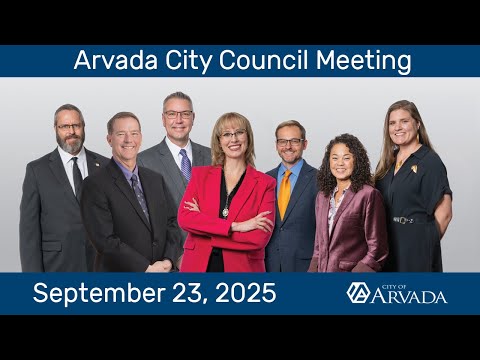
Arvada council workshop hears proposal to seek Certified Local Government status to expand preservation grants and local oversight
Summary
Senior Planner Chris Sandeen told the Arvada City Council at a Sept. 23 business workshop that the city can pursue Certified Local Government (CLG) status through History Colorado and the National Park Service to access preservation grants and formalize local preservation processes.
Senior Planner Chris Sandeen told the Arvada City Council at a Sept. 23 business workshop that the city can pursue Certified Local Government (CLG) status through History Colorado and the National Park Service to participate in the national preservation program and access grant funding.
Sandeen said CLG status would let Arvada apply for no-match grants through History Colorado for work such as updated surveys, preservation plans and design-guideline updates, and could make additional grant programs and tax-credit opportunities available to property owners. "Cities with CLG status are eligible to apply for a no match grant through History Colorado that can help pay for new preservation plans, design guideline updates, outreach campaigns, or celebration events," he said.
The presentation summarized Arvada’s historic resources and current protections: surveys done in 1997 and subsequent work led to three National Register historic districts (Old Town, Reno Park and Stockiewalter) and a separate Church’s Ranch historic district near Long Lake Regional Park. Sandeen noted that surveys capture a moment in time and recommended updating them to reflect demolitions, remodels or new findings.
Sandeen outlined basic CLG requirements described by History Colorado: enact a local preservation ordinance; establish a commission with at least five members, 40% of whom should have professional qualifications (history, architecture, archaeology or similar); maintain a system of survey and inventory; provide for public participation and notice; submit an annual report; and agree to periodic evaluation by the state. He said the city’s existing Old Town design-review process and survey files provide needed groundwork, but some updates and ordinance language would be required.
Council members discussed benefits and concerns. Council member Davis said she learned at a Colorado Municipal League session that "we were the only city that was not a certified local government on the front range" and urged moving forward to align Arvada with neighboring communities. Several council members, including Ambrose and Mayor Pro Tem Tim Worman, said they were broadly supportive of staff further developing a proposal and engaging the public.
Council member Marriott raised concerns about property rights and the potential cost burden on homeowners, particularly if strict standards were enforced. "They only come with restrictions. They don't come with more freedom or flexibility," Marriott said. She argued the city should consider financial assistance if stricter standards increase owners’ costs: "If the city of Arvada is serious about something that holds property owners harmless from the harm that this may cause... the city ought to share in, holding those property owners harmless." Marriott also warned against mechanisms that would allow others to nominate a homeowner’s property without protections and urged deeper discussion before adoption.
Sandeen and other staff addressed potential ordinance choices, including whether nominations must come from property owners, thresholds for district formation and how the current Design Review Advisory Committee (seven members) might be retooled or renamed to meet CLG requirements. He said the design-review body currently reviews projects within the Old Town zoning district and would need its purview adjusted to cover other historic districts if the city pursued CLG status.
No formal motion or vote to apply for CLG status was recorded at the workshop. Multiple council members expressed support for staff to draft a proposal and return with ordinance language and community outreach plans, and Council member Davis urged staff to "go forth and conquer." Staff noted work on a comprehensive plan update could align with outreach on preservation policy.
The presentation listed potential funding sources tied to CLG status: federal CLG grant funds routed through History Colorado, the State Historical Fund (supported in part by limited state gaming tax revenues), and other state and private grants that often require a property to be landmarked or contributing to a district. Sandeen said State Historical Fund grants can be substantial—up to $250,000 for eligible projects—but typically require a public benefit and apply most often to commercial or nonprofit properties.
Next steps as discussed at the workshop: staff will draft ordinance options, outreach and commission structure for council review and consider timing the CLG effort alongside the city’s comprehensive plan update. No implementation timeline or vote date was specified at the meeting.