Get Full Government Meeting Transcripts, Videos, & Alerts Forever!
Get email alerts on the School Budget topic
No spam. Unsubscribe anytime.
Bridgewater and Raynham officials cite rising class sizes, staff cuts and propose operational review
Summary
Officials from the Bridgewater-Raynham regional school district and the two towns met to review opening enrollment, staff reductions, rising unemployment costs tied to layoffs, and next steps including an independent operational/financial review and a motion to authorize the school committee chair to consult with town leaders.
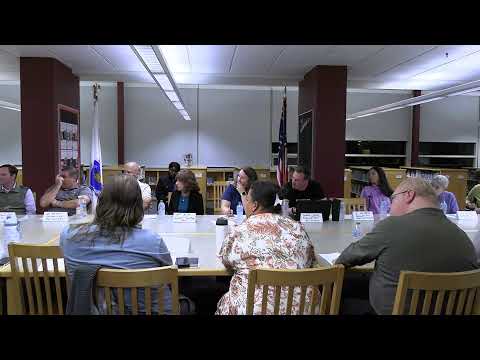
Bridgewater and Raynham officials met Sept. 17 to review the Bridgewater‑Raynham schools’ opening enrollment, staffing reductions and budget pressure and to discuss commissioning an independent operational or financial review ahead of next year’s budget cycle.
School district presenter Mr. Powers said the district opened this school year “to 5,446 students,” and added that the district’s opening enrollment was about 236 students lower than the previous year while there were about 73 pending registrations that could change the count. Powers summarized staff changes and said the high school lost 21 positions overall (including retirements, transfers and layoffs) and listed subject‑area impacts: three ELA, three math, four social studies, three science, two world language, four business, one unified arts and one guidance counselor. He also said district unemployment payments rose from roughly $18,000 in June to about $43,000 in July and approximately $92,000 in August as laid‑off staff filed claims.
The meeting’s nut graf: officials from the Bridgewater Town Council, the Raynham Select Board and the Bridgewater‑Raynham School Committee agreed that the shortfall exposed by last year’s failed override requires both short‑term and longer‑term action — continuing collaboration between the three bodies, a public education campaign about fiscal needs, and consideration of an outside review to build public confidence and identify operational savings or structural changes.
In the discussion, multiple speakers described how staff reductions and transfers were used to try to balance class sizes across the district. Powers said the district had tried to preserve student services and recalled laid‑off student services positions where possible; he also noted a reduction in unified arts positions at the middle‑school level (band and chorus) compared with prior years. Powers said Bridgewater State University has started dual‑enrollment courses for Bridgewater‑Raynham students in business subjects to partially address lost electives.
Town and school officials debated whether an independent review would change voters’ views and whether it would expose meaningful savings. Bridgewater Town Council President Johnny Loretti urged an aggressive operational review to “give the public confidence,” and others at the meeting said the review should be paired with an early public education effort if the communities plan to seek another override. Several speakers also emphasized that some residents cannot afford higher property taxes and that educating the public is only part of a multi‑pronged approach that also looks for additional revenue and operational efficiencies.
On next steps, participants discussed scope and timing: the Collins Center has been engaged by the district to review some financial practices but its present scope does not include certain staffing or special education strategy work unless that scope is expanded. The two towns indicated they could appropriate funds at upcoming town meetings to pay for an outside review (participants discussed an estimated cost in the tens of thousands of dollars and a possible split proportional to enrollment, roughly 60/40 Bridgewater/Raynham), and officials discussed issuing an RFP and developing a scope that the towns and school committee would approve.
During the meeting, School Committee member Mr. Pinsky moved “to authorize the chair to consult with the town council president and the select board chair on these next steps as needed and continue to bring updates in between,” a motion that was seconded; the transcript does not record a final roll‑call vote on that motion.
The meeting closed with agreement to continue smaller working‑group meetings among the three bodies before a larger joint meeting in January to review the superintendent’s preliminary budget and public outreach materials prepared with help from the Collins Center.
Votes at a glance: The transcript records a motion by Mr. Pinsky to authorize the chair to consult with town leaders on next steps; the mover is recorded (Mr. Pinsky) and a second is indicated, but no formal tally or final outcome is provided in the transcript.