
Planning Commission receives refresher on roles, procedures and state planning law
Get AI-powered insights, summaries, and transcripts
Subscribe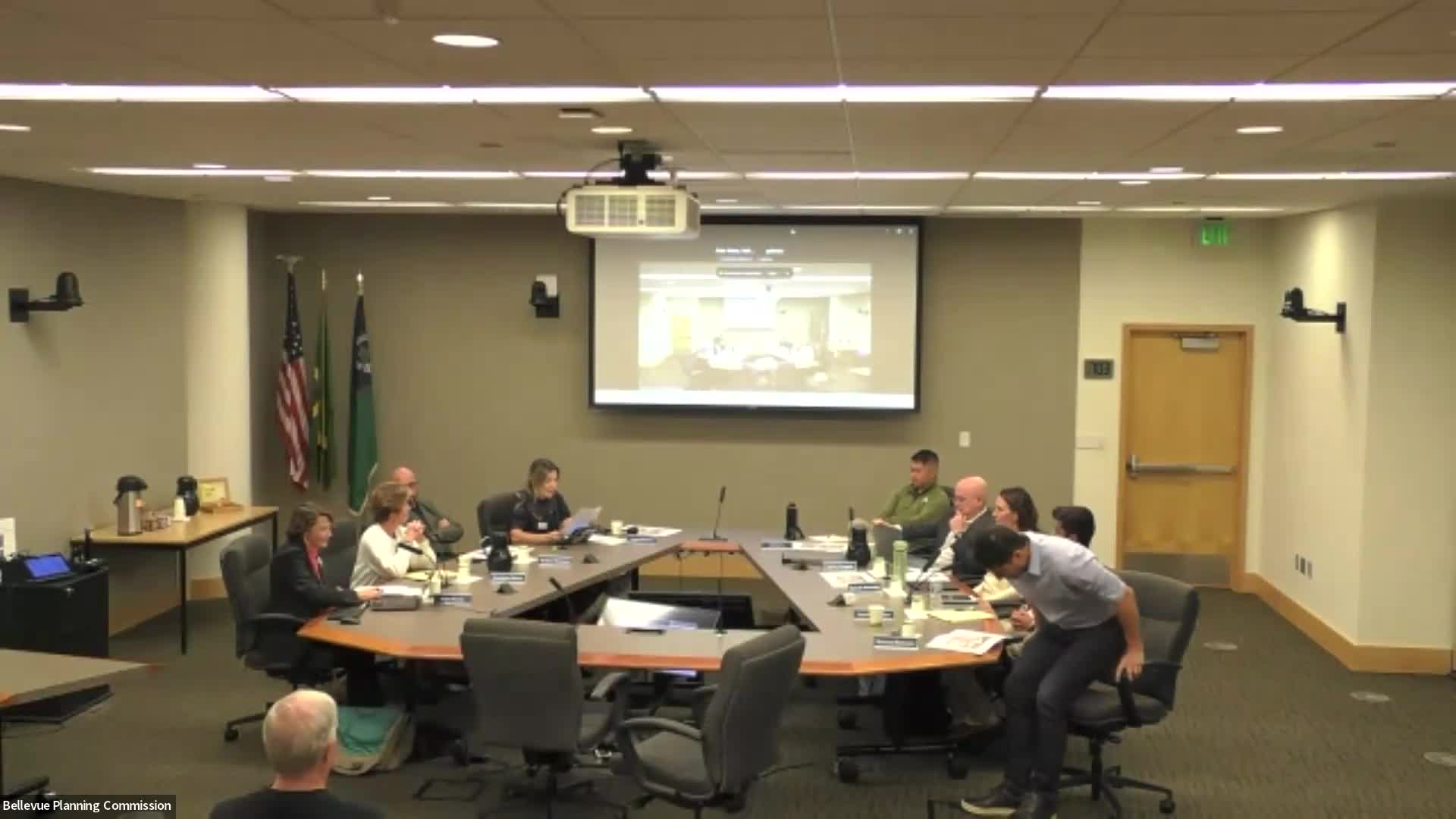
Summary
Commissioners attended a required refresher on their statutory roles, the Growth Management Act, SEPA, Open Public Meetings Act and public records obligations, given by the City Attorney's Office and Community Development staff.
The Bellevue Planning Commission devoted part of its Sept. 24 meeting to a refresher presentation on the commission’s roles, responsibilities and the statutory and procedural guardrails that shape local land‑use decisions.
Assistant City Attorney Matt (last name as spoken in the meeting) and new assistant attorney Heather Jones led the training, which covered the Planning Commission’s advisory role to the City Council, the requirement that planning and development regulations be consistent with the Comprehensive Plan, and procedural rules for legislative land‑use decisions such as comprehensive plan amendments and land‑use code amendments.
Staff emphasized that the commission is an advisory, fact‑finding body and not a substitute for the City Council’s legislative authority. Presenters reviewed the ‘‘process 4’’ code pathway that the commission uses for legislative land‑use decisions, the role of SEPA (State Environmental Policy Act) in disclosing environmental impacts prior to final council action, and the public‑meeting and public‑records rules that apply to commissioners under the Open Public Meetings Act and the Public Records Act.
Heather Jones, introduced as an assistant city attorney who previously worked in planning and transportation, told commissioners the city provides OPMA and Public Records Act training and reminded members that ‘‘all communications you send or receive in connection with your planning commission work are public records’’ and should be preserved or produced in response to public‑records requests.
The training also included practical guidance on the comp‑plan amendment process (threshold review then final review), the relationship between the Growth Management Act and local planning documents such as King County planning policies and the City’s comprehensive plan, and the difference between legislative and quasi‑judicial (project‑level) decisions. Matt and Heather used illustrative examples and quiz questions to highlight procedures and common pitfalls.
Commissioners asked questions about the standard of review the City Council applies to planning commission recommendations and about the commission’s ability to propose procedural changes; staff reiterated that council sets the commission’s scope and that council decisions are legally de novo, though in practice council often gives weight to staff and commission work because of the robust public process undertaken during the commission’s review.
The session concluded with reminders about code of ethics rules for boards and commissions, the importance of not disclosing confidential information, and available training resources from the city and outside counsel. The refresher was positioned by staff as a routine but timely review ahead of the commission’s work on the year’s comp‑plan and land‑use amendments, including the critical areas ordinance under discussion.