
Advocates back bill to require closed captioning on public‑space TVs when requested
Get AI-powered insights, summaries, and transcripts
Subscribe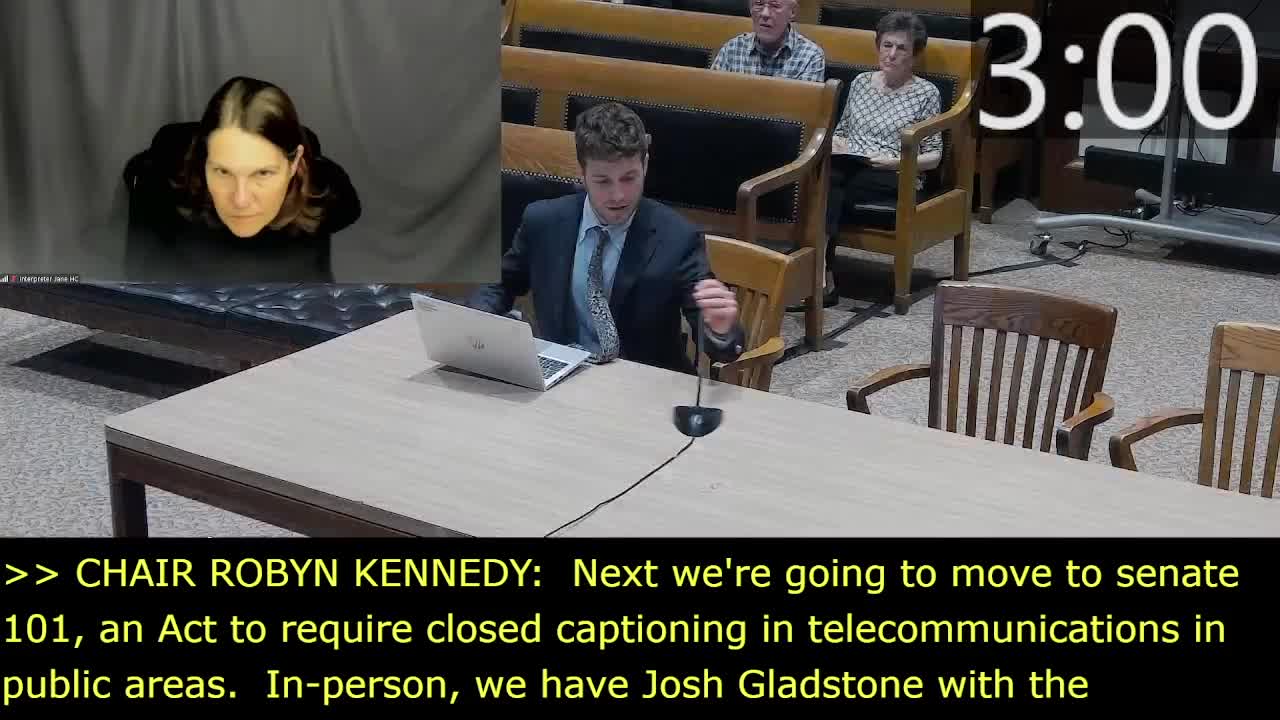
Summary
The Massachusetts Developmental Disabilities Council told the committee Senate Bill 101 would reduce exclusion for people with hearing loss by requiring businesses to enable closed captioning on public televisions upon request, with the Massachusetts Commission Against Discrimination to handle complaints.
A disability policy specialist from the Massachusetts Developmental Disabilities Council urged the joint committee to support Senate Bill 101, which would require closed captioning on telecommunications (televisions) in public spaces when requested and provide a compliance path enforced through the Massachusetts Commission Against Discrimination.
Josh Gladstone, disability policy specialist at the MDDC, said closed captioning can reduce the digital divide for people with hearing loss and is particularly important for people with developmental disabilities, who have higher rates of untreated hearing loss. “At least 30 percent of adults with IDD experience some form of hearing loss, twice that of the general population,” Gladstone said, and added that closed captions improve communication, socialization, safety and quality of life for affected individuals.
Testimony included a personal note from an MDDC citizen council member: Austin Carr said his twin brother Andrew had to make special requests for captioning devices at movie theaters and that captioning in public venues is essential even for people who use hearing aids or cochlear implants to avoid miscommunication in noisy settings. The bill would classify noncompliance as an issue within the purview of the Massachusetts Commission Against Discrimination, giving those with hearing loss a complaint mechanism, Gladstone said.
The committee heard the testimony, accepted written materials and held no vote at the hearing.