
DOC describes statewide tablet rollout; agency says tablets expanded education, family contact and surveys
Get AI-powered insights, summaries, and transcripts
Subscribe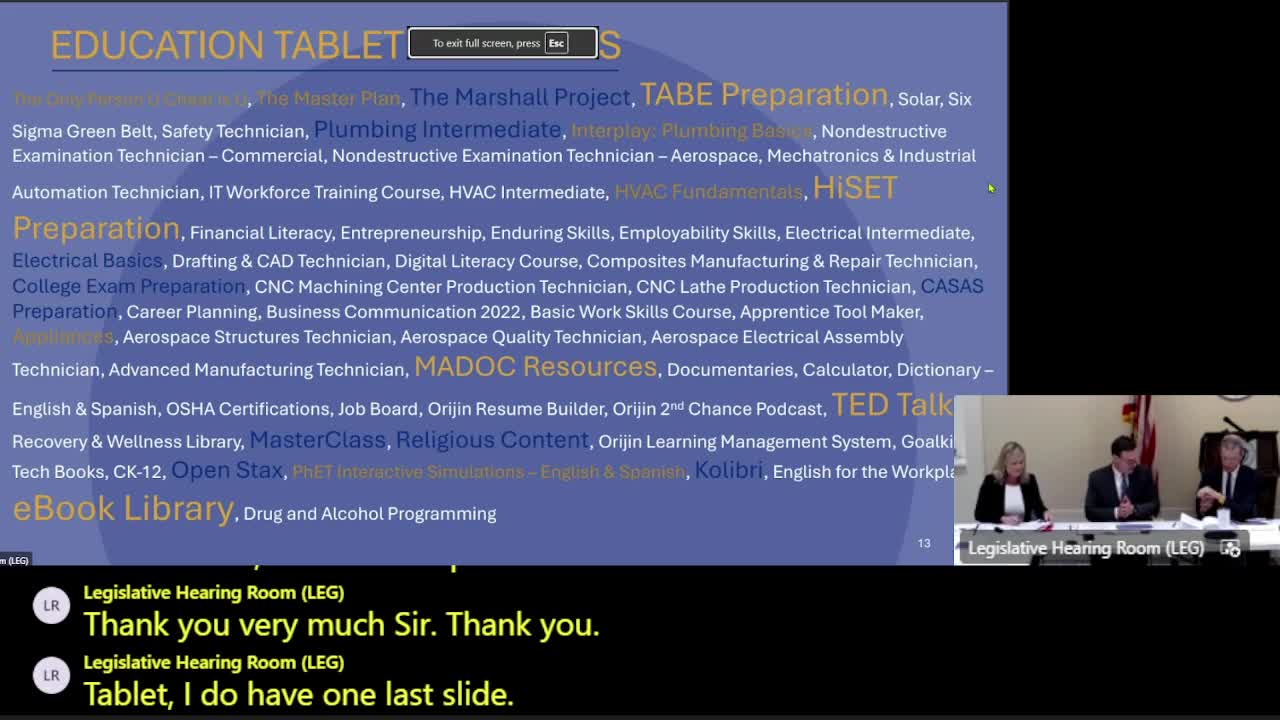
Summary
The Department of Correction told the commission that tablets issued to people in custody are being used for education, no‑cost phone calls, video visits, surveys and an 'earned good time' application, and that the technology has expanded access to programming while enabling direct communication and feedback.
The Massachusetts Department of Correction described to commissioners how a statewide tablet rollout has become a central tool for programming, communication and reentry planning at DOC facilities.
Commissioner Jenkins said the DOC has issued tablets to every person in custody across its facilities and that the devices are being used for no‑cost phone calls, email, video visits, education, asynchronous learning and program surveys. “The rollout of tablets to the incarcerated population at our facilities has really kind of expanded our ability to deliver a lot of these services,” he said.
Nut graf: DOC officials told the commission tablets are supporting education, program enrollment and family contact through phone and video, while also enabling surveys and administrative messaging. The department said tablets can host an ‘earned good time’ app to show people what programming they’ve completed and said they plan to expand features such as medical message access and automated sick‑call submissions.
DOC staff said tablets helped the agency convert phone services to the device, avoiding the need to install additional room‑based phones; audio phone calls are conducted through the tablets with headphones. Kyle Pelletier and Deputy Commissioner Mitzi Peterson said the devices have enabled asynchronous classroom sessions, recorded tutoring, expanded evening programming and monthly educational usage that the department quantified: DOC staff reported substantial hours of educational content accessed in 2024 and said roughly 58 percent of people in custody used tablets as a learning platform in an average month that year.
Commissioners and sheriffs discussed how tablets can support family reunification, survey feedback and reputational information about programs: a commissioner suggested using surveys or user‑feedback mechanisms to help people in custody learn whether a program helped others with similar needs. Jenkins and staff confirmed the department already uses the tablets for surveys and that the devices allow near‑instant communication from administration to people in custody for policy changes, health notices and other operational messaging.
The department described pilot work with Recidiviz on an earned‑good‑time application and said the tablets can eventually give people access to their medical test results and streamline sick‑call processes. DOC staff also said tablets have an educational and motivational effect by exposing users to new career options, online certificates, TED Talks and coding courses partnered with outside organizations.
Ending: The commission did not take action but asked DOC to include tablet usage metrics and examples of survey results in follow‑up materials. No changes to visitation policy were voted on in the session.