
County administrator presents land-ownership survey showing large federal holdings, limited taxable acreage
Get AI-powered insights, summaries, and transcripts
Subscribe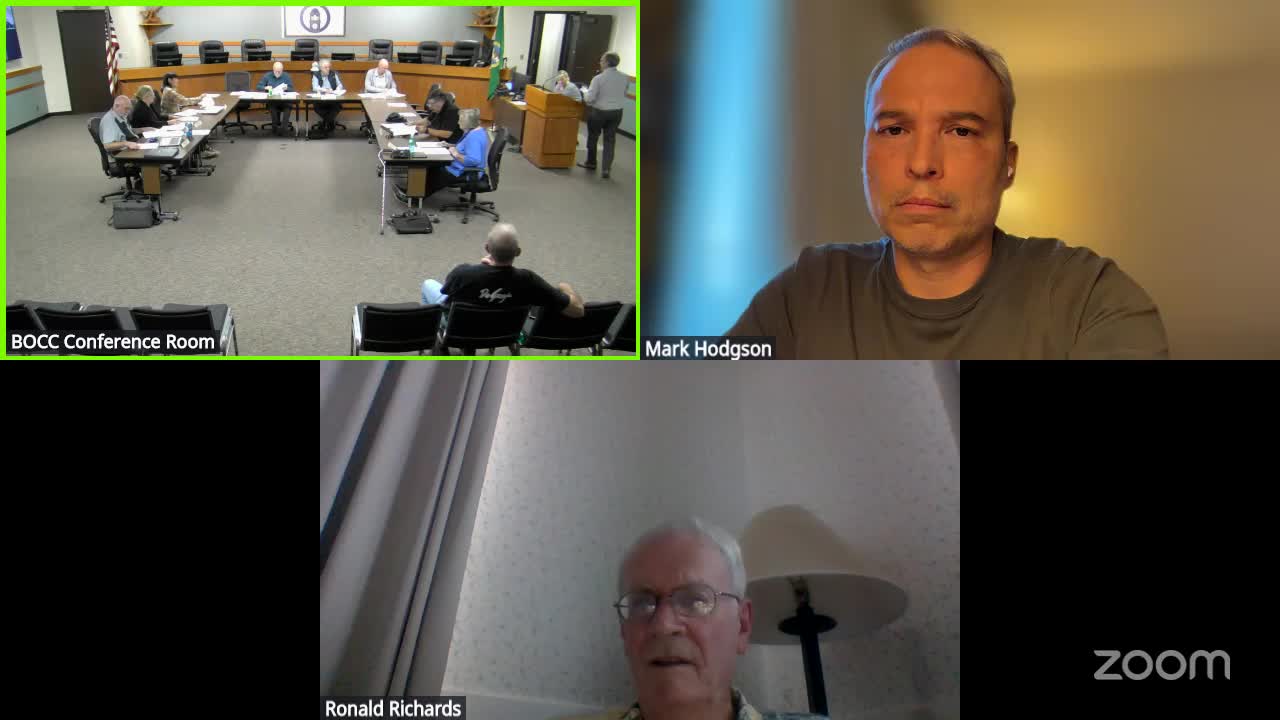
Summary
County Administrator Todd Milke told the Charter Review Commission that federal ownership — chiefly Olympic National Park and Olympic National Forest — makes up the largest single landholding category in Clallam County, leaving a substantially smaller share of acreage subject to property tax.
Clallam County Administrator Todd Milke presented a county land-ownership analysis to the Charter Review Commission outlining how federal, state, tribal and local land holdings affect the county’s taxable acreage and revenue base.
Milke told commissioners that federal ownership — primarily Olympic National Park and Olympic National Forest — accounts for the single largest category of land in Clallam County. "Overwhelmingly, the largest property owner in Clallam County is the federal government," he said, and he reported approximate acreages from the county’s research: about 525,000 acres federal out of roughly 1.1 million total acres, roughly 166,000 acres state-managed (largely Department of Natural Resources trust lands), and about 4,629 acres listed as local government holdings in the study packet. Milke said tribally owned lands were listed at roughly 32,600 acres in the county material compiled from a 1999 interagency study and later updates.
Why it matters: property taxes are a primary revenue source for county governments. Milke said the county has a limited taxable base because large tracts are publicly or tribally held; that constrains the property-tax revenue available for county services and heightens the fiscal importance of agreements such as payments-in-lieu of taxes (PILOTs).
Milke described the methodology and limitations: the county used the Interagency Committee for Outdoor Recreation’s 1999 study (published 2001) and a later, limited 2011 update as starting points. He warned that the update was not comprehensive and that some categories — such as school district lands, certain state offices and rights-of-way — may be undercounted in the dataset. He emphasized that a full, up-to-date inventory requires detailed work with the county auditor’s records.
Commissioners asked specific questions about tribal trust lands and tax implications. Commissioner Richards asked whether PilOT-like agreements could approximate lost property tax revenue; Milke pointed to a recent agreement with a tribe for payments intended to approximate prior tax revenue on the parcel and observed that such agreements are relatively rare and require specific negotiation and legal waivers.
A math clarification: Milke cited a 32,000-acre figure for tribal land holdings and described it in context of the county’s 1.1 million acres; a commissioner later noted the proportion equals roughly 3% (not 0.3%), highlighting the need for precision when quoting percentages from the dataset.
Outcome: The commission received the presentation and asked for additional data. Commissioners asked staff to refine the land inventory, verify current acreages and gather examples of negotiated payment agreements for parcels converted to trust status.
Next steps: County staff will continue populating the data set, work with the auditor’s office on up-to-date title records and prepare follow-up material that clarifies taxable acreage, categories omitted from the initial inventory (K–12 school lands, some state agency holdings), and examples of PILOT agreements.