Get Full Government Meeting Transcripts, Videos, & Alerts Forever!
Get email alerts on the PrEP Coverage topic
No spam. Unsubscribe anytime.
Health groups urge Massachusetts to remove insurance barriers to PrEP and cover long‑acting options
Summary
Community health groups, clinicians and HIV advocates asked lawmakers to favorably report H1245 and S717 to prohibit cost sharing and prior authorization for PrEP and related services, including long‑acting injectable formulations.
Community health organizations, clinicians and HIV-prevention advocates urged the committee to pass House Bill 1245 and Senate Bill 717 to reduce insurer barriers to pre-exposure prophylaxis (PrEP) for HIV, including long-acting injectable formulations now on the market.
Speakers said PrEP is a cornerstone of HIV-prevention strategy and that out-of-pocket costs, prior authorization requirements and other utilization-management practices create persistent racial, ethnic and geographic disparities in uptake. They asked the committee to prohibit cost sharing and prior authorization for PrEP medications and recommended ancillary services (labs and follow-up visits) so patients can access the full package of care recommended by CDC guidelines.
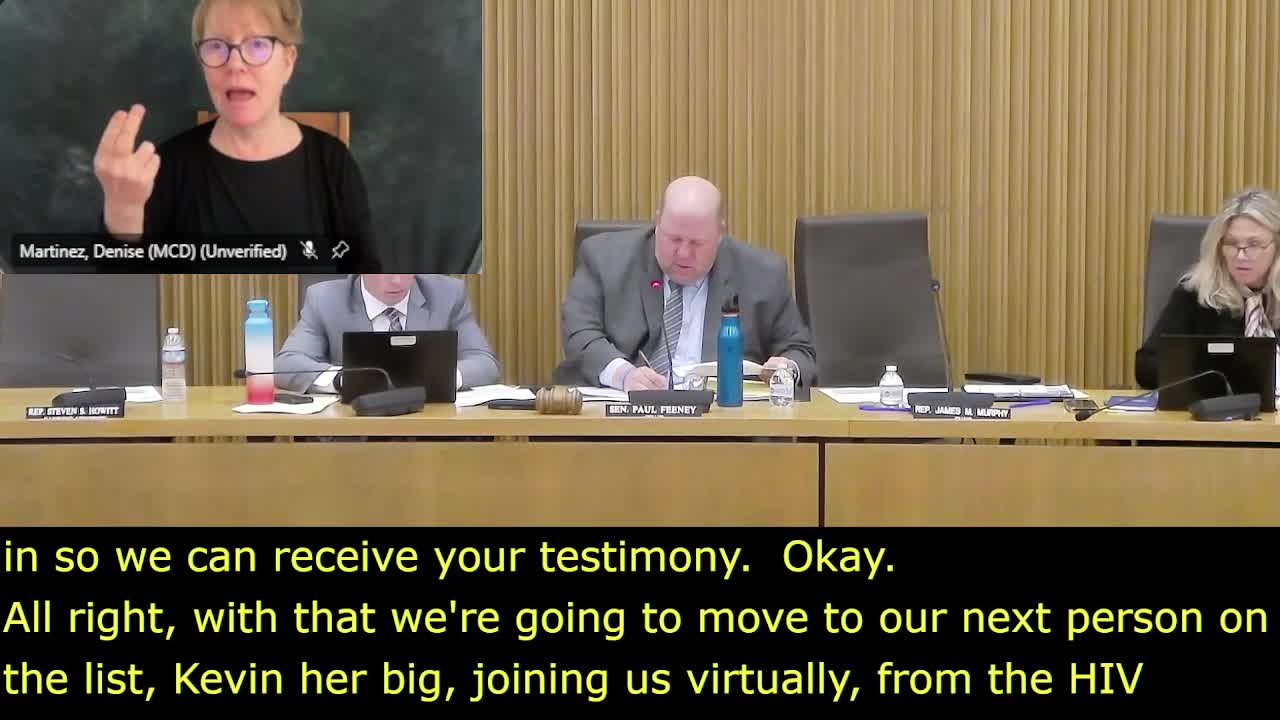
Kevin Herwig, health policy manager at the HIV and Hepatitis Policy Institute, said long-acting forms of PrEP have been available since early 2022 and singled out a twice-yearly injectable (described in testimony as a major scientific advance) that reduces adherence burdens for some patients. He said 18 states have banned cost sharing for PrEP, but only a minority do so without relying on USPSTF recommendations; Massachusetts should provide statutory protections, he argued.
Dr. Kenneth Mayer of Harvard Medical School and Fenway Health urged the committee to reduce prior authorization and co-pay barriers so clinicians can offer PrEP to patients who would benefit most, including people who use drugs and young people of color. Fenway Health Executive testimony noted the provider’s large PrEP caseload and the potential public-health benefits of broader access.
Community organizations including the AIDS Support Group of Cape Cod, Tapestry and the Multicultural AIDS Coalition emphasized the importance of removing cost and administrative barriers for populations that experience housing instability, stigma, or unequal access to care.
Speakers requested a favorable report for H1245 and S717; no legislative votes were taken during the hearing.
Ending: Witnesses asked the committee to adopt statutory protections that prohibit cost sharing and prior authorization for PrEP medications and related services and to ensure state-regulated plans cover long‑acting PrEP formulations without financial or administrative barriers.